
Flare Nut Wrenches
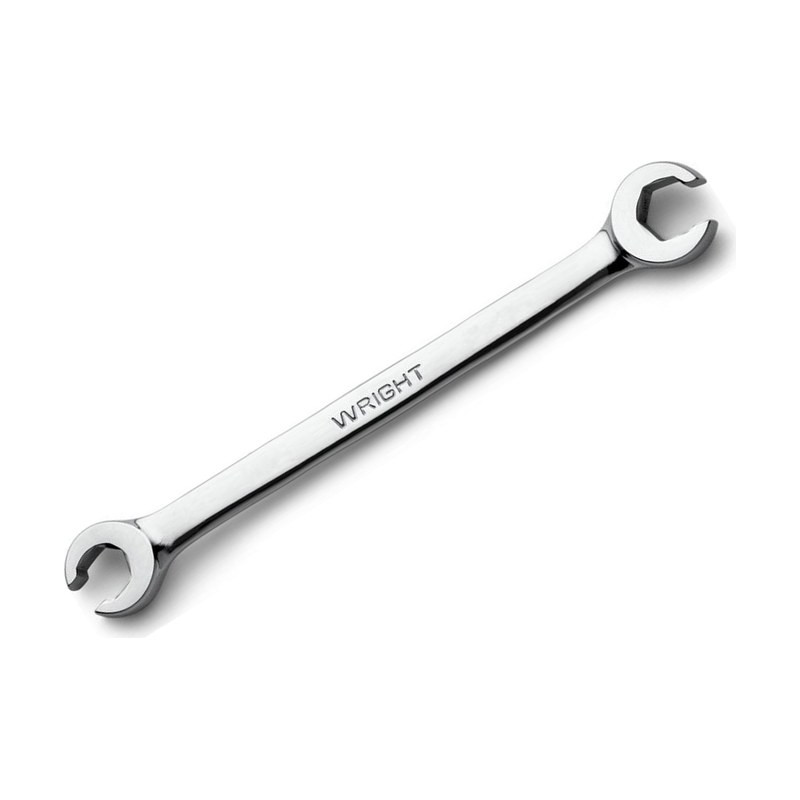
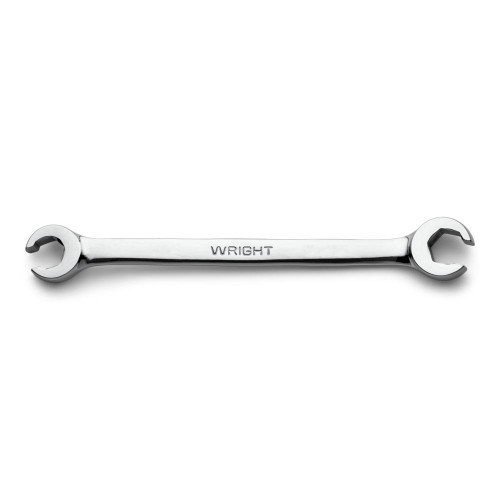
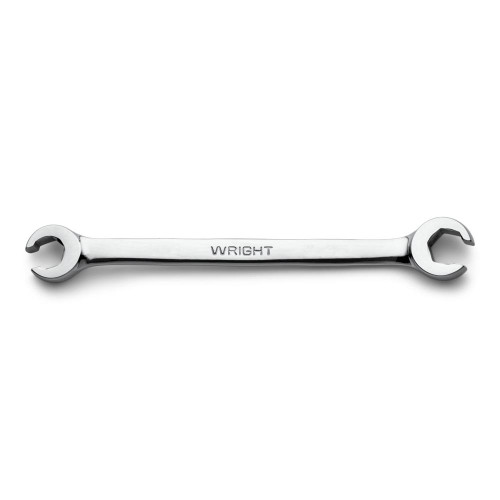
A flare nut wrench wraps most of a tube nut's hex and still slides over the line through a slot in the head. Mechanics also call it a line wrench. At BRAIGG, every Wright Tool flare nut style here is 6 point. You'll find double end SAE wrenches from 3/8 x 7/16 up to 3/4 x 7/8 inch, metric from 9 x 11 to 19 x 21mm, and combination wrenches with an open end on one side. Finishes are satin or black industrial. Read on for sizing help and a few tricks for seized brake fittings.
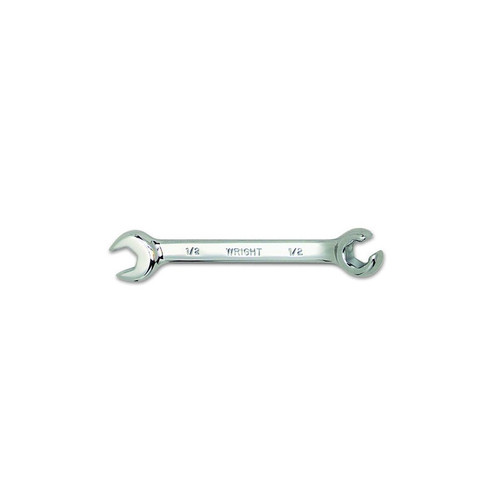
What is a flare nut wrench, and why not just use an open end?
Brake, fuel and transmission cooler fittings are thin-walled nuts, often brass or soft steel, and years of road salt lock them to the line. An open end wrench pushes on two corners. Under a hard pull its jaws spread a little and the corners round off, and then you're cutting and flaring a new line. A 6 point flare nut wrench wraps almost the whole hex and pushes on the flats, not the corners. That's the difference between a fitting that breaks loose and one that turns into a circle.
Flare nut wrench sizes we carry
- SAE double end, satin: 3/8 x 7/16, 1/2 x 9/16, 5/8 x 11/16 and 3/4 x 7/8 inch.
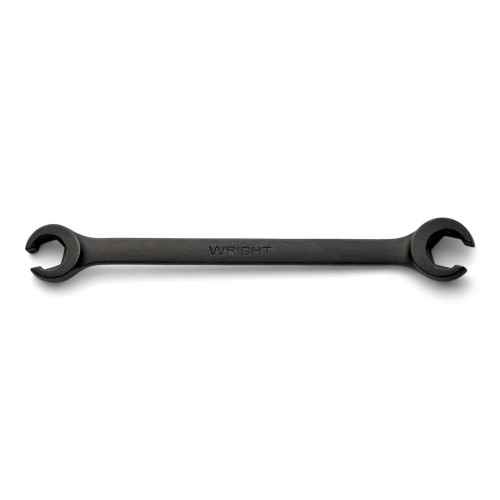
- SAE double end, black industrial: 3/8 x 7/16, 1/2 x 9/16 and 5/8 x 11/16 inch.
- Metric double end, satin: 9 x 11, 10 x 12, 13 x 14, 15 x 17 and 19 x 21mm.
- Combination, open end plus 6 point flare nut: single sizes 3/8, 7/16, 1/2, 9/16, 5/8, 11/16 and 3/4 inch.
Most brake line fittings on American cars and light trucks fall in the 3/8 to 1/2 inch range, and on imports 10, 11 and 12mm are the usual suspects. If a nut sits between sizes, check it against our SAE to metric chart rather than forcing the close one.
Double end or combination flare nut wrenches
The double end style gives you two sizes per tool, which matters at a fitting where the tube nut and the mating hex differ by one size. Put one wrench on each and turn against each other. The combination style has a single size, with a 6 point flare nut end and an open end. Use the flare end to crack the fitting, then flip to the open end to spin it off quickly.
Satin or black industrial finish
Satin wipes clean and is easy to read in a drawer. Black industrial is a darker finish that many plant and fleet techs prefer because it doesn't glare under work lights. Both share the same 6 point head, so choose by preference.
Buying flare nut wrenches as a set
Sets are the simplest way to stock a brake job drawer. Wright's 743 three piece set covers 3/8 to 11/16 inch, the 744 metric set covers 9 to 21mm, and the 742 combination set has seven sizes from 3/8 to 3/4 inch.
Tips for stubborn line fittings
Soak the fitting with penetrating oil and give it time. Seat the flare nut wrench all the way down on the nut, not halfway up the flats. Push with the heel of your hand in short, sharp moves instead of a long slow pull, and hold the mating fitting with a second wrench so the line doesn't twist. If you need to ratchet a long fitting in a tight spot, Wright also makes a 12 point ratcheting version in the 1640 ratcheting flare nut set. To torque a tube nut you can't reach with a handle, use a crowfoot wrench on a torque wrench. For the rest of the wrench lineup, see our types of wrenches guide.
Frequently asked questions
What is the difference between a flare nut wrench and a line wrench?
There is no difference. Line wrench, flare nut wrench and tubing wrench all describe the same tool: a box end with a slot cut through it so it slides over a brake, fuel or hydraulic line. Most catalogs, Wright's included, use the name flare nut wrench.
Why are Wright flare nut wrenches 6 point?
A 6 point opening pushes on the flats of the nut instead of the corners. Tube nuts are soft and thin, so that grip is the best way to keep them from rounding off. A 12 point head needs less swing, but it holds the corners and is more likely to slip on a rusty brake fitting.
What size flare nut wrench do I need for brake lines?
Most American cars and light trucks use 3/8, 7/16 or 1/2 inch brake line nuts, and many imports use 10, 11 or 12mm. Check the fitting before you buy. A 3/8 x 7/16 SAE wrench and a 10 x 12mm metric wrench cover a large share of brake jobs between them.
Can I use a flare nut wrench on regular bolts?
You can, since the head is a 6 point box with a slot. The slot makes it a little less rigid than a solid box end, so for a seized bolt reach for a box end wrench or a socket. Keep flare nut wrenches for tubing, where nothing else fits over the line.
Do I need SAE or metric flare nut wrenches?
It depends on the vehicle or machine. Older American vehicles and much US built equipment use SAE fittings, while most imports and many newer domestic models use metric. If you work on a mix, Wright's 743 SAE set and 744 metric set together cover 3/8 to 11/16 inch and 9 to 21mm.