
-
-
Norseman Drill & Tool
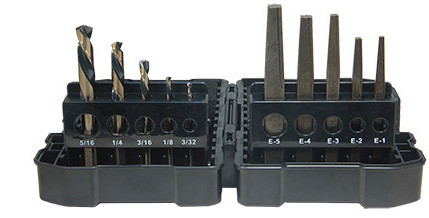
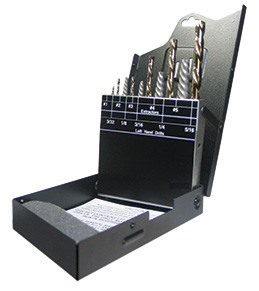
Norseman BR-10 10-Piece Bolt Extractor Set, Left-Hand Drills and Spiral Extractors
$92.46 -

-

Norseman Drill & Tool
Norseman 190-AL Left-Hand Jobber Drill Bits, 1/16" to 1/2"
Choose options for price
-

-

-

-

-

-

-
-

-

-

-

-

-

-

Screw & Stud Extractors
A screw extractor set gives you several sizes for broken bolts, but the first choice is where to grip. A fastener broken flush needs an extractor that bites inside a drilled pilot hole. A stud with enough end showing may come out with an external-grip tool instead. At BRAIGG, this category brings together KUKKO series 49 screw extractors, internal-tooth stud tools and Norseman drill-and-extractor sets. Options include six-piece wide-groove sets for 3 to 24 mm threads, roughly 1/8 to 15/16 in, plus tools for short stud ends and confined spaces. Match the tool to what remains of the fastener before choosing a size.
Choose a screw extractor set by groove style and size range
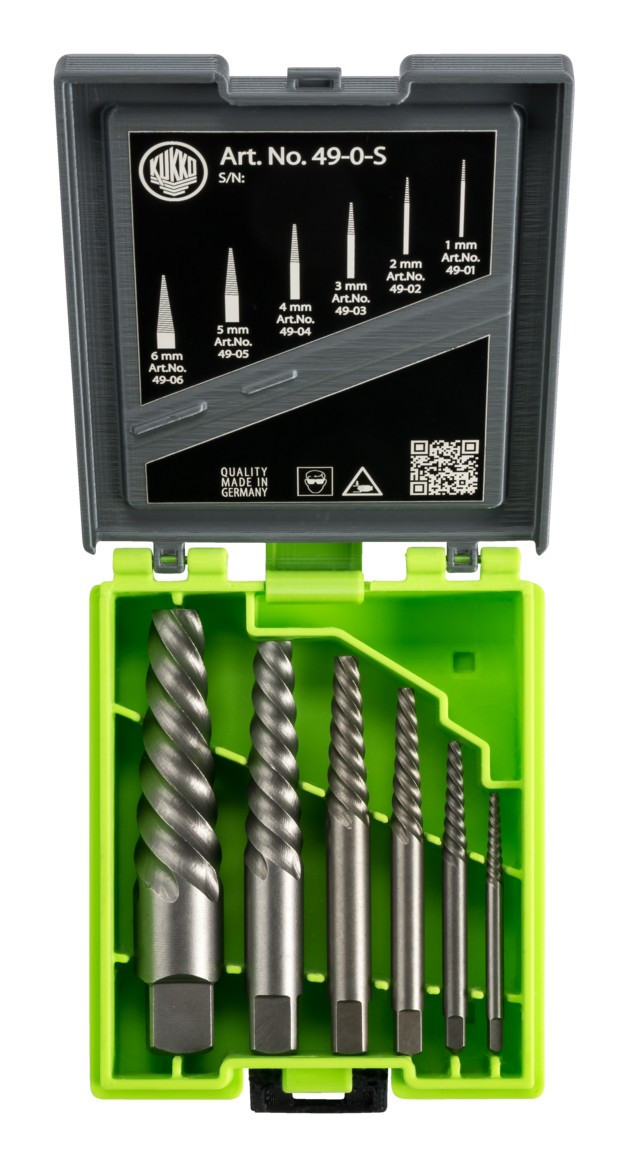
The KUKKO 49-0-S wide-groove set contains six extractors covering thread diameters from 3 to 24 mm. KUKKO recommends the wide-groove series for soft fastener materials such as brass and aluminum. That refers to the material being extracted, not a blanket recommendation for every bolt stuck in an aluminum housing.
For fine-groove options, the series 49 sets cover thread diameters starting at M3. The upper limit depends on the version: M18 for 49-A, M24 for 49-B or M45 for 49-C. Check the specific set rather than assuming every case covers the same range. A screw extractor set must cover the fastener sizes you work on; a small extractor is not a substitute for the correct larger size.
The narrow-groove 49-T-A Super Traction set covers 4 to 20 mm threads, approximately 5/32 to 25/32 in. If you already have a case and only need to replace one size, individual wide-groove and fine-groove extractors are listed separately.
Check what the case includes
Piece count alone does not tell you how many extractor sizes you get. The 10-piece K-49-B screw extractor set covers broken right-hand-thread screws and bolts from 4 to 20 mm. It includes six extractors, a ratchet, two chucks and an adapter. Those accessories account for four of the ten pieces.
The 49-0-S, by contrast, contains six wide-groove extractors. Decide whether you want extractor sizes alone or a case with turning accessories. Then check the available space above the broken fastener: room for the extractor is not necessarily room for its handle.
Choose a bolt extractor set with left-hand drills
A Norseman bolt extractor set pairs left-hand drilling with internal extraction. The BR-10 10-piece set includes left-hand drills and spiral extractors. The BR-10SQX 10-piece set combines left-hand drills and square extractors instead. Choose the extractor style and check its instructions, not just the number of pieces in the case. A spiral extractor and a square extractor do not necessarily use the same engagement method.
Try the left-hand drill before fitting an extractor. Norseman says its left-hand spiral drills often remove a broken bolt while drilling, eliminating the need for the extractor. For a conventional right-hand-thread bolt, the drill cuts counterclockwise, in the same direction that loosens the fastener. A seized bolt may stay put.
Keep the hole centered. If the bolt stays put, stop drilling at the pilot diameter and depth specified for the selected extractor. Browse left-hand drill bits or the Norseman left-hand jobber drill sets if you already own a suitable screw extractor set. Turn the extractor by hand.
When a stud extractor is the better starting point
If the fastener still projects above the surface, check external grip before drilling it. A stud extractor uses a grooved knurled wheel to press the stud against internal teeth. It needs enough exposed material for a secure bite. Rust flakes or a thin, damaged tip are not a sound gripping surface.
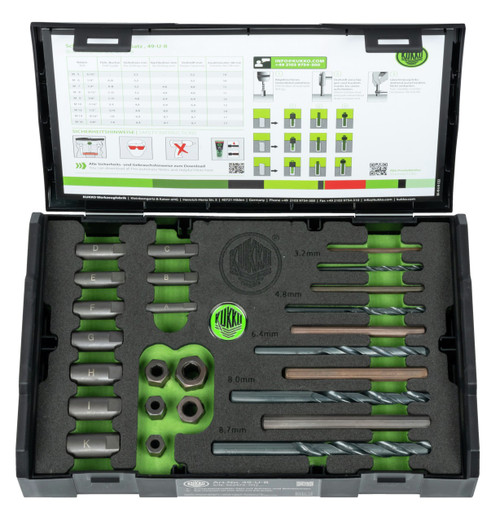
The KUKKO series 51 internal-tooth tool is one option for exposed studs. Series 52 has a deep-set wheel intended to grip short ends and covers 5 to 19 mm, about 3/16 to 3/4 in. Check body clearance as well as the stud diameter; a neighboring flange can prevent the tool from seating fully.
For confined access, series 53 operates with a ring or socket wrench. The 53-A stud extractor set includes 6, 8, 10 and 12 mm sizes, approximately 1/4, 5/16, 3/8 and 1/2 in. When choosing a broken stud extractor, the break height matters as much as the nominal diameter. An external tool cannot grip a break hidden below the housing face.
Match the extractor, pilot hole and turning tool
A bolt extractor tool that enters a drilled hole must match both the fastener range and the pilot-hole instructions. An M10 bolt has a nominal 10 mm thread diameter; that is not permission to drill a 10 mm hole through it. Use the pilot diameter and depth specified for the exact extractor. A centered hole leaves material around the tool and reduces the risk of cutting into the housing threads.
Turn by hand and keep the handle aligned. Wear eye protection and secure loose work before drilling. Stop if the extractor twists while the bolt stays still; a broken hardened tool makes the next repair harder. Our guide to using a screw extractor walks through preparation and stop points.
If a seized nut is the obstacle, review nut splitters before sacrificing the stud. Other removal tools are grouped under pullers and extractors. Before choosing a screw extractor set, check whether its smallest extractor covers the smallest fastener you expect to remove.
Frequently asked questions
What is the difference between a screw extractor and a stud extractor?
A screw extractor bites inside a pilot hole drilled into a broken fastener. A stud extractor grips the outside of an exposed end. Start by checking the break height and clearance. If nothing projects above the surface, an external-grip tool has no sound material to hold.
Which screw extractor set suits brass or aluminum fasteners?
KUKKO identifies its wide-groove series 49-0 as suitable for soft materials such as brass and aluminum. The 49-0-S contains six extractors for 3 to 24 mm thread diameters, about 1/8 to 15/16 in. Match the extractor to the fastener material and size, then follow its pilot-hole instructions.
Can I use an impact wrench on a screw extractor?
Use hand operation for a tapered screw extractor, not impact blows. A hardened extractor can break if overloaded, leaving a difficult obstruction in the bolt. Keep the turning handle aligned and stop if the tool twists without moving the fastener. Increasing force is not a substitute for checking the setup.
Which tool can grip a short broken stud?
KUKKO series 52 has a deep-set knurled wheel intended for short stud ends. Its clamping range is 5 to 19 mm, roughly 3/16 to 3/4 in. It still needs exposed material to grip. A flush or recessed break calls for a different method, commonly a centered pilot hole and screw extractor.
Does an extractor set's diameter range give the pilot-hole size?
No. A range such as 3 to 24 mm describes the screw thread diameters covered, not the holes to drill. Each extractor needs its own specified pilot diameter and engagement depth. Read the instructions for that model before drilling; copying a hole size from another extractor can spoil the fit.
Can a left-hand drill remove a bolt without an extractor?
It can. Norseman says its left-hand spiral drills often loosen broken bolts while drilling. On a right-hand-thread fastener, their counterclockwise cutting direction is also the loosening direction. If the bolt stays put, follow the selected extractor's pilot-hole instructions and turn the extractor by hand rather than forcing the drill.