
-
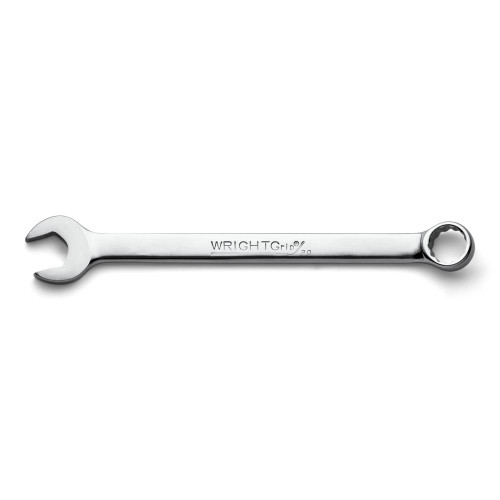
Wright Tool
Wright Tool Combination Wrench WRIGHTGRIP 2.0 12 Point Metric Full Polish
Choose options for price
-
-
-
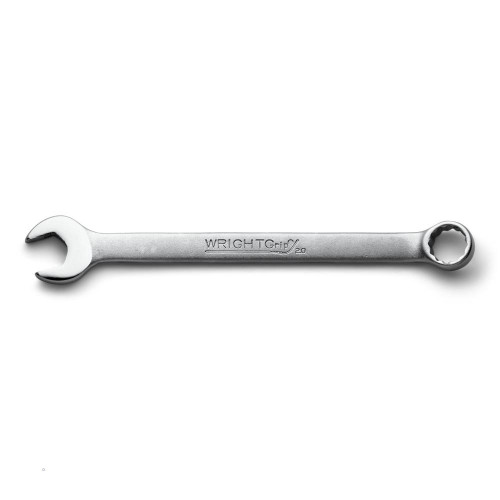
Wright Tool
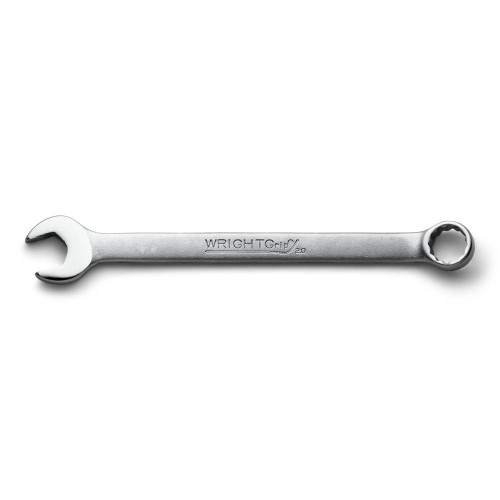
Wright Tool Combination Wrench WRIGHTGRIP 2.0 12 Point Metric Satin
Choose options for price
-
Wright Tool
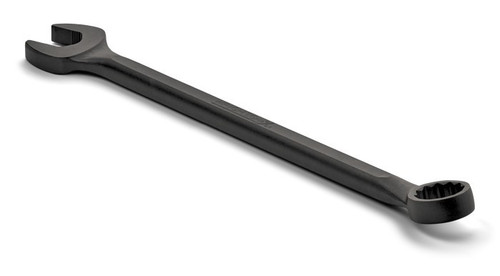
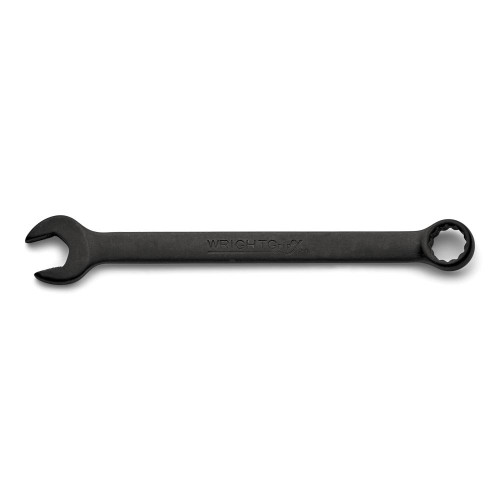
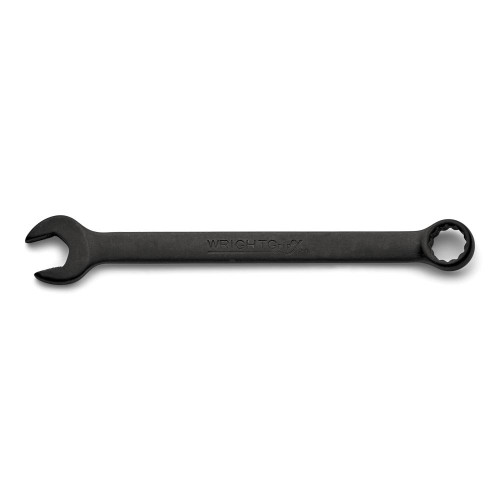
Wright Tool Combination Wrench WRIGHTGRIP 2.0 12 Point Metric Black Industrial
Choose options for price
-
Wright Tool
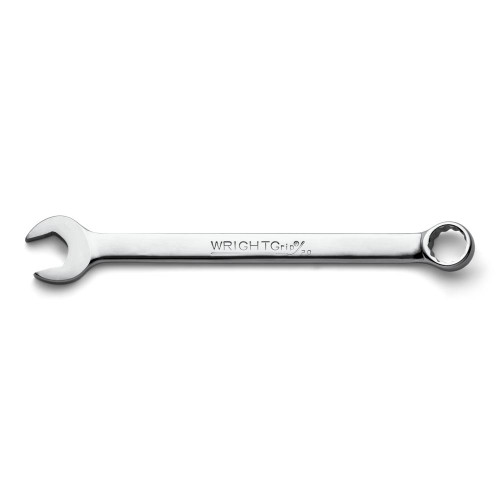
Wright Tool Combination Wrench WRIGHTGRIP 2.0 12 Point Full Polish
Choose options for price
-
Wright Tool
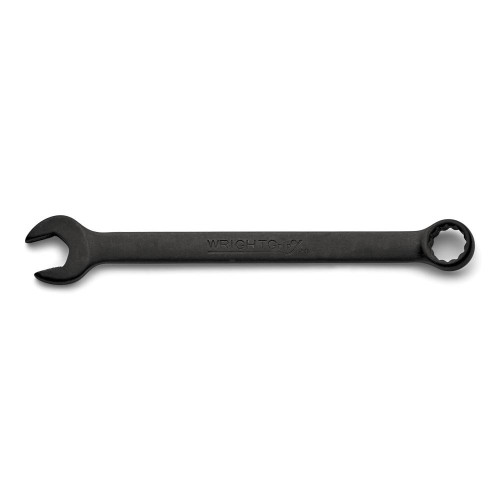
Wright Tool Combination Wrench WRIGHTGRIP 2.0 12 Point Black Industrial
Choose options for price
-
Combination Wrenches
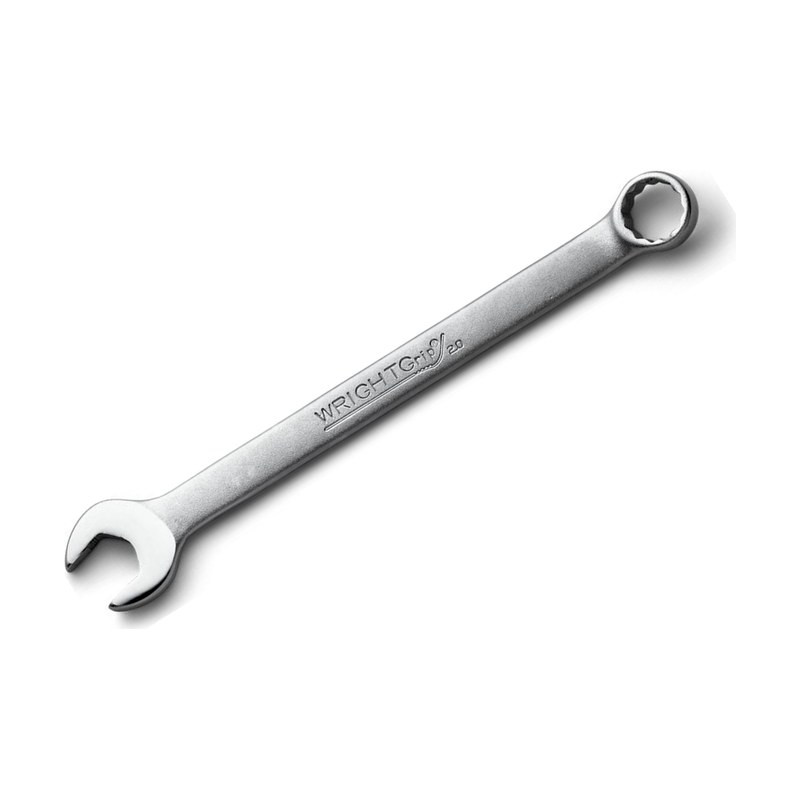
A combination wrench is the first wrench most people buy and the one they reach for most: an open end on one side, a box end on the other, both the same size. At BRAIGG, this category carries Wright Tool WRIGHTGRIP 2.0 combination wrenches with 12 point box ends. SAE sizes run from 1/4 inch to 3-1/4 inch and metric from 6mm to 95mm. You can choose satin, full polish or black industrial finishes. The guide below the products covers sizing, finishes and when each end earns its keep.
Which end to use
Use the box end to break a fastener loose and for the final pull. It wraps all six corners, so it's far less likely to round a nut than the open end. If you only ever use the closed end on a job, a double box end wrench gives you two sizes in one tool. Once the fastener turns freely, flip to the open end and spin it off. The open end slides on from the side, which is the only way onto a nut on a line or a bolt with a hose looped over it. Its jaws are angled about 15 degrees to the handle. Flip the wrench over between swings and you double the number of positions in a cramped spot.
6 point combination wrench or 12 point?
A 6 point combination wrench has a hexagonal box end. A 12 point combination wrench offers twice as many seating positions, useful when nearby parts limit access. The Wright families here have 12 point box ends; check the fastener profile before choosing. Our Wright Tool wrench guide covers the wider range of wrench types.
What WRIGHTGRIP 2.0 changes
A standard open end wrench touches the nut near the corners, and under load it tends to spread and slip. That's how knuckles get skinned and nuts get rounded. On WRIGHTGRIP 2.0, Wright adds small protrusions inside the open end, sized for each wrench, that bite on the flats. Wright says this keeps the wrench seated, lets you put more torque through the open end and cuts down on slipping. It's standard on every combination wrench in this category.
Sizes from 1/4 inch to 95mm
- SAE satin: 1/4 inch through 2-3/4 inch, the widest finish-matched SAE run here.
- SAE black industrial: 1/4 inch through 3-1/4 inch. Above about 2 inches these are long, heavy wrenches made for flange bolts, mill equipment and heavy machinery.
- SAE full polish: 1/4 inch through 1-1/4 inch, the everyday automotive and shop range.
- Metric satin: 6mm through 70mm, plus single 85mm and 95mm wrenches.
- Metric black industrial and full polish: 6mm through 24mm, with 75mm and 80mm also listed in black industrial.
Satin, full polish or black industrial
Finish is mostly about where the wrench lives. Full polish wipes clean fast and is comfortable in an oily hand, which is why many auto techs like it. Satin is a brushed chrome that gives a little more grip and shows less glare under shop lights. Black industrial is a dark finish suited to plant and field work, where the tool gets thrown in a bucket and nobody is polishing it at the end of the shift. Mixing finishes is fine. Check the country of origin listed for each item: some black industrial combination wrench sizes are made in Canada, so the brand name alone does not establish US origin.
Single wrenches or a combination wrench set
If you're filling gaps, buy singles. Most people lose the 10mm, 1/2 inch and 9/16 first. Larger sizes, from 1-1/8 inch up, are usually bought one at a time for a specific machine anyway. To start from nothing, a combination wrench set or a metric wrench set gets you a matched run in a single box, and our wrench sets page lists what's available. Need to convert a size? See the SAE to metric size chart.
When a different wrench fits better
On brake and fuel line nuts, use a flare nut wrench. An open end will round a soft tube nut. For long runs of thread in a tight spot, a ratcheting wrench saves a lot of swings. And never hammer on a combination wrench or slip a pipe over it. If the fastener needs that, a striking wrench is built for the abuse.
Frequently asked questions
What is a combination wrench?
It's a wrench with an open end on one side and a box end on the other, both for the same fastener size. You use the box end to break the fastener loose or for the final tightening, and the open end to run it in or out quickly or to slide onto a nut from the side.
Why are Wright combination wrenches 12 point instead of 6 point?
A 12 point box end can be set on a nut in twice as many positions, so you only need a 30 degree swing to reposition it. That matters in tight engine bays and machinery. A 6 point box pushes on the flats, away from the corners, which helps on damaged fasteners, but for everyday work 12 point is the common choice.
What is WRIGHTGRIP 2.0?
It's Wright Tool's open end jaw design. Small protrusions inside the open end, sized for each wrench, grip the flats of the fastener. According to Wright, that keeps the wrench seated, lets you apply more torque and reduces slipping, which means fewer rounded nuts and skinned knuckles.
What is the difference between satin and full polish finish?
Both are chrome plated. Full polish is mirror bright and wipes clean easily. Satin has a brushed look that gives a bit more grip and less glare under lights. Black industrial is a dark finish favored for plant, field and heavy equipment work. The wrench design is the same across finishes.
How big do Wright combination wrenches go?
In SAE, the black industrial line runs up to 3-1/4 inch and the satin line up to 2-3/4 inch. In metric, the satin line goes to 70mm, with separate 85mm and 95mm wrenches. Those large sizes are long and heavy, meant for flange bolts and heavy equipment rather than a toolbox drawer.