
Hex Keys & Screwdrivers
Hex keys are the tool you reach for when a socket head cap screw sits down in a counterbore where nothing else fits. At BRAIGG, this section holds the KUKKO lineup: L-shaped keys in short, ball-end, bent and extra-long styles, metric from 1.5 to 10 mm and inch from 1/16 to 3/8 in. You'll also find Torx and tamper-resistant Torx keys, T-handle keys for spinning screws fast, and a small group of screwdrivers, from non-sparking Phillips and slotted drivers to watchmaker sets. The keys are chrome-vanadium with a nickel-plated finish. Here's how to pick the right subcategory.
Where to start
The range splits by how you turn the fastener.
- Hex and Torx keys: 23 items, the bulk of the range. Single hex keys sold by size, plus clip and holder sets.
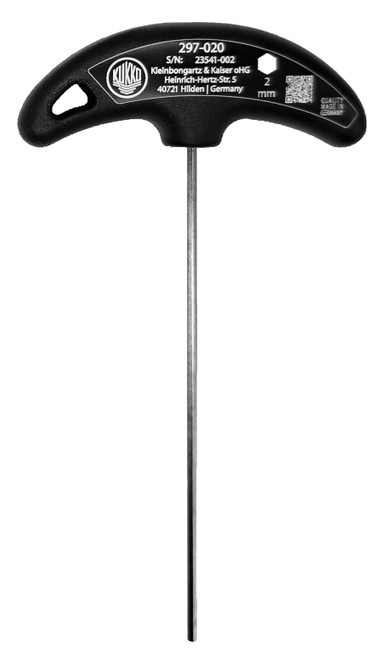
- T-handle hex keys: three items for repeat work where you'd rather spin a handle than flip an L-key a quarter turn at a time.
- Screwdrivers: four items, all specialty tools rather than a general drawer set.
Picking the right style of hex keys
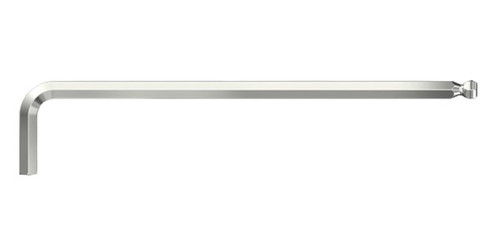
Every KUKKO L-key among these hex keys is the same steel and finish, and KUKKO states hardness and torque meet ISO. What changes is the shape of the tip and the length of the arms.
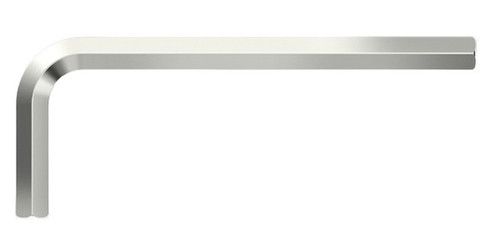
- Short, series 291: 1.5 to 8 mm. Short arms clear a screw tucked close to a wall or housing.
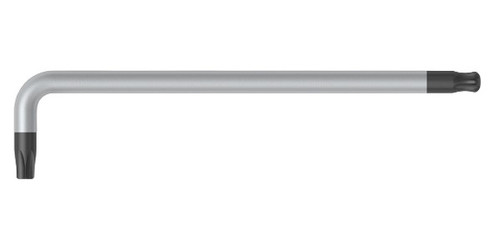
- Ball-end, series 292: 1.5 to 8 mm. The rounded tip enters the screw at an angle, handy on a screw you can't line up with.
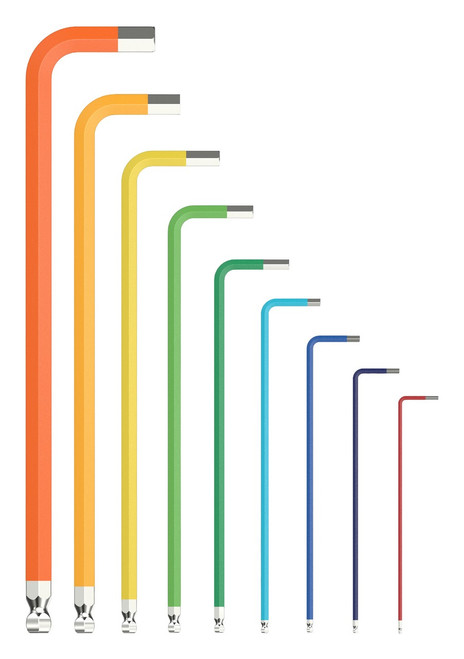
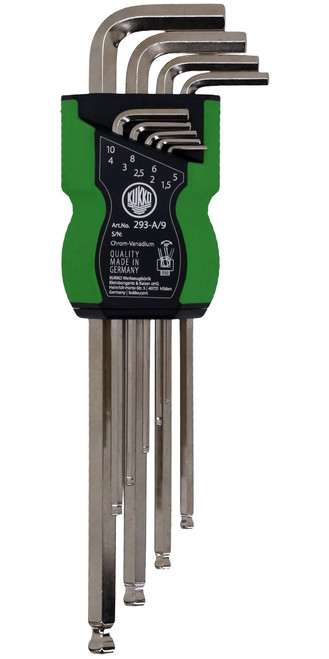
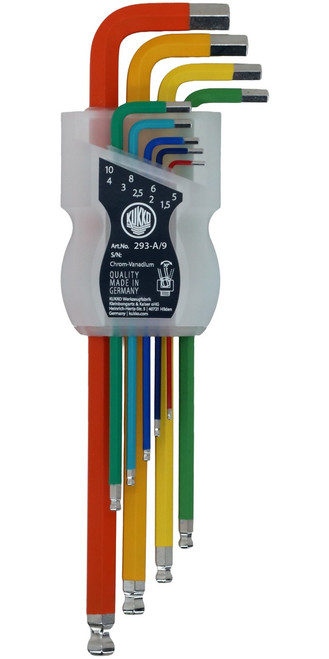
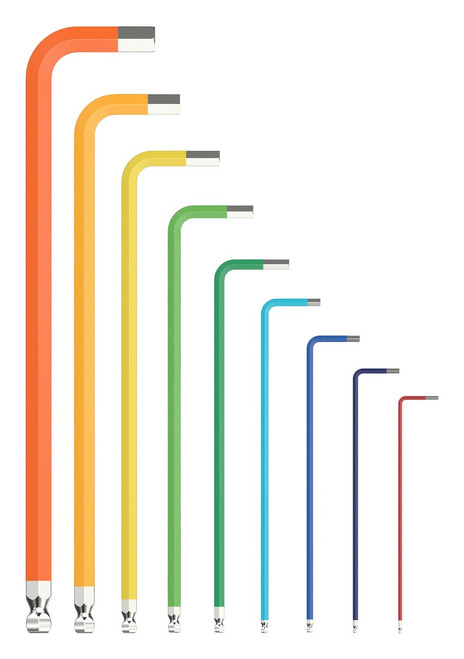
- Color-coded ball-end, series 293: each size has its own color, red for 1.5 mm through dark yellow for 8 mm, so you grab the 5 mm (green) without reading tiny stamped numbers.
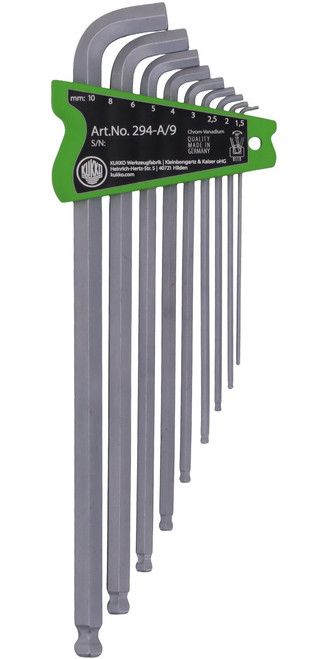
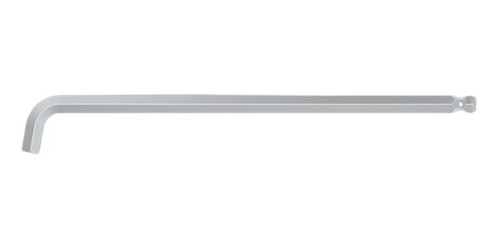
- Bent, series 294: an angled shape for getting around obstructions while still putting real torque on the screw.
- Holding ball, series 295: a spring ball grips the screw so it doesn't drop into the machine while you start it.
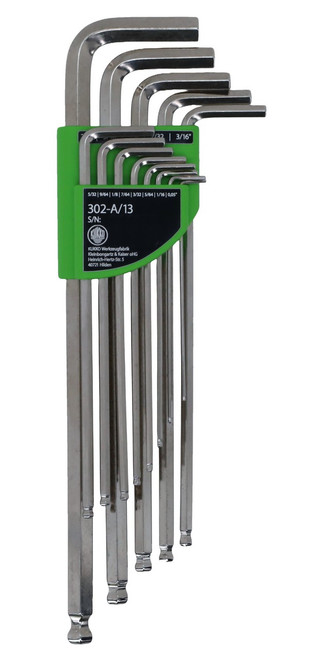
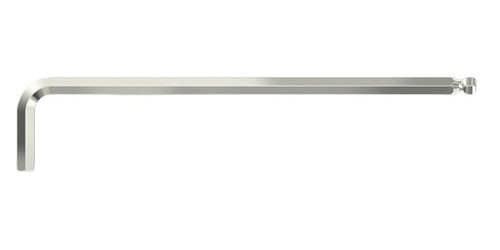
- Extra-long, series 302 and color-coded series 303: long reach for deeply recessed screws. The 302 sizes from 1.27 to 3.97 mm match inch sockets of 0.050 in up to 5/32 in.
A counter tip: use the ball end to run a screw in or out quickly, then flip the key and use the straight end for final tightening or breaking it loose. The ball contacts less of the socket, and that's how small screws get stripped.
Metric or inch: buying a hex key set
Mixing up 5 mm and 3/16 in is the classic way to round out a screw. They're close (3/16 in is about 4.76 mm), close enough to feel right and loose enough to chew the corners. Keep metric and inch hex keys in separate sets. A hex key set saves you hunting for the one size that walked off.
- 9-piece metric set, 1.5 to 10 mm in a plastic clip.
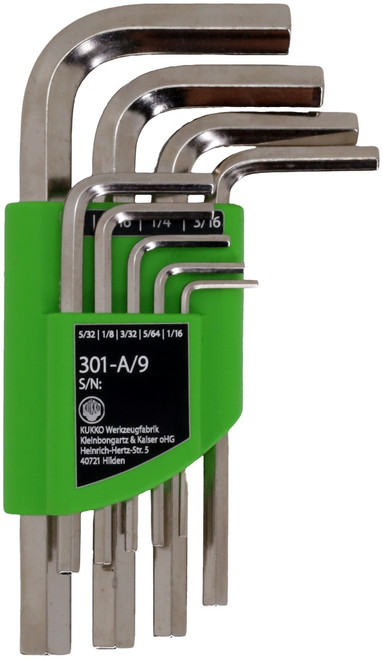
- 9-piece inch set, 1/16 to 3/8 in, built on the series 301 hex L-key.
- 9-piece ball-end, color-coded and holding-ball sets in plastic holders, plus 13-piece extra-long and color-coded sets.
If you've been searching for an allen key set, these are the same thing. Allen is an old brand name that stuck to the tool.
Torx keys and tamper-resistant keys
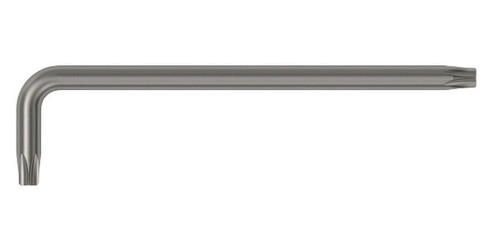
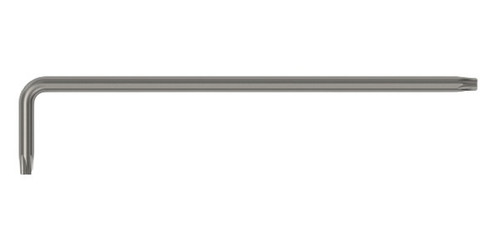
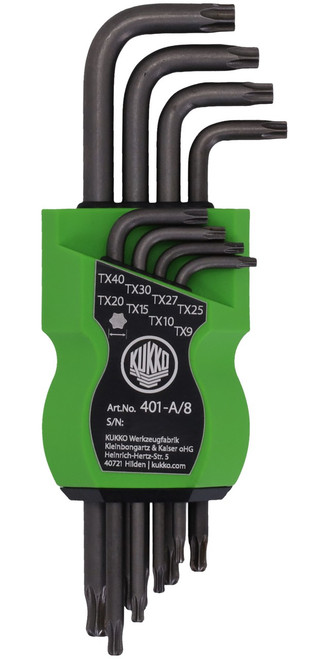
Torx keys drive the six-lobe star recess common on cars, appliances and electronics. The short 401-TX runs TX9 to TX40 with a ball end. The extra-long 402-TX covers TX10 to TX45. For security Torx screws with a pin in the center, a standard key won't seat. Use the extra-long 403-TR tamper-resistant keys, which have a hole in the tip for that pin. There are 8-piece and 9-piece TX sets plus a 9-piece tamper-resistant set.
When T-handle hex keys are worth it
Running a dozen cap screws out of a fixture plate with L-shaped hex keys is slow work. A T-handle hex key lets you spin the screw with one hand and lean on the bar for the last bit of torque. The series 297 covers 2 to 8 mm with a 1K handle. The series 236 is the compact, budget choice with an impact-resistant polypropylene handle. There's also a 7-piece set in a workshop stand that keeps every size upright on the bench.
Specialty screwdrivers
The non-sparking series 1006FSD comes in PH1, PH2 and slotted 4.5 x 100 mm and 8 x 150 mm. They're made from copper-beryllium or aluminum-bronze for ATEX explosive zones, where a spark from a steel tool is a real hazard. The same alloys go into the 8-piece non-sparking hex key set, 2 to 10 mm. For small work, the series 250 watchmaker screwdriver sets have a rotating head you press with a fingertip while you turn the knurled grip. The 250-550 version comes nickel-free in a wooden case.
Keeping hex sockets from rounding
- Push the key all the way into the socket before you turn. A half-seated key is the main reason screws strip.
- Blow out paint, grease or chips first. Debris stops the key from seating.
- Toss hex keys once their corners are rounded. A worn key will ruin every screw it touches from then on.
- Don't slip a pipe over the long arm for leverage. If a screw won't budge, go to a hex bit socket on a ratchet.
For bigger hex screws, look at the hex bit sockets under sockets and ratchets. Pair this section with wrenches and pliers, browse the whole hand tools department, or see everything from KUKKO. Our guide to types of wrenches covers when an L-key beats a box end.
Frequently asked questions
What's the difference between hex keys and allen wrenches?
Nothing functional. Allen was a brand name that became the common name for an L-shaped hex key, so allen wrench, allen key and hex key all mean the same tool. KUKKO calls them allen keys in its own descriptions. Shop by the socket size and choose metric or inch to match the screw.
Should I buy ball-end or straight hex keys?
Get both if you can. A ball end, like KUKKO series 292, lets you turn a screw at an angle when you can't line up with it, which speeds up running screws in and out. The straight end contacts the full socket, so use it for final tightening and breaking a stuck screw loose.
Do I need metric or inch hex keys?
Match the screw. Most European and Asian equipment uses metric sizes, while older US machinery often uses inch sizes. The KUKKO 9-piece sets cover 1.5 to 10 mm or 1/16 to 3/8 in. Never force a near-fit like 5 mm into a 3/16 in socket, because the slight slop rounds off the corners quickly.
What are tamper-resistant Torx keys for?
Security Torx screws have a small pin in the center of the star recess, so a normal Torx key won't seat. Tamper-resistant keys have a hole in the tip that clears that pin. KUKKO's extra-long 403-TR keys run TX10 to TX45, and there's also a 9-piece tamper-resistant set for appliance and equipment panels.
Why would I need non-sparking screwdrivers or hex keys?
In areas with flammable gas, vapor or dust, a steel tool striking steel can throw a spark. KUKKO makes its non-sparking screwdrivers and 8-piece hex key set from copper-beryllium or aluminum-bronze for use in ATEX explosive zones. These alloys are softer than steel, so treat them gently and don't use them for general shop work.
How do color-coded hex keys help?
Each size has its own color, so you pick the right key at a glance instead of squinting at stamped numbers. On KUKKO series 293, 1.5 mm is red, 4 mm dark green, 5 mm green and 6 mm yellow. That saves time on a busy bench and cuts down on grabbing the wrong size.