
Letter & Number Stamps
Steel letter stamps and number stamps put a permanent mark on metal with one hammer blow: part numbers, heat numbers, dates, initials on your own tools. At BRAIGG, this page holds KUKKO sets in the DIN 1451 typeface, from 1 mm (about 0.04 in) to 20 mm (about 3/4 in) character height. Standard sets mark steel up to 27 HRC. The extra-heavy sets have a thicker shank and mark steel up to 42 HRC, with nickel-plated, mirror-image, dotted, lowercase and hardened-head versions. All are made in Germany.
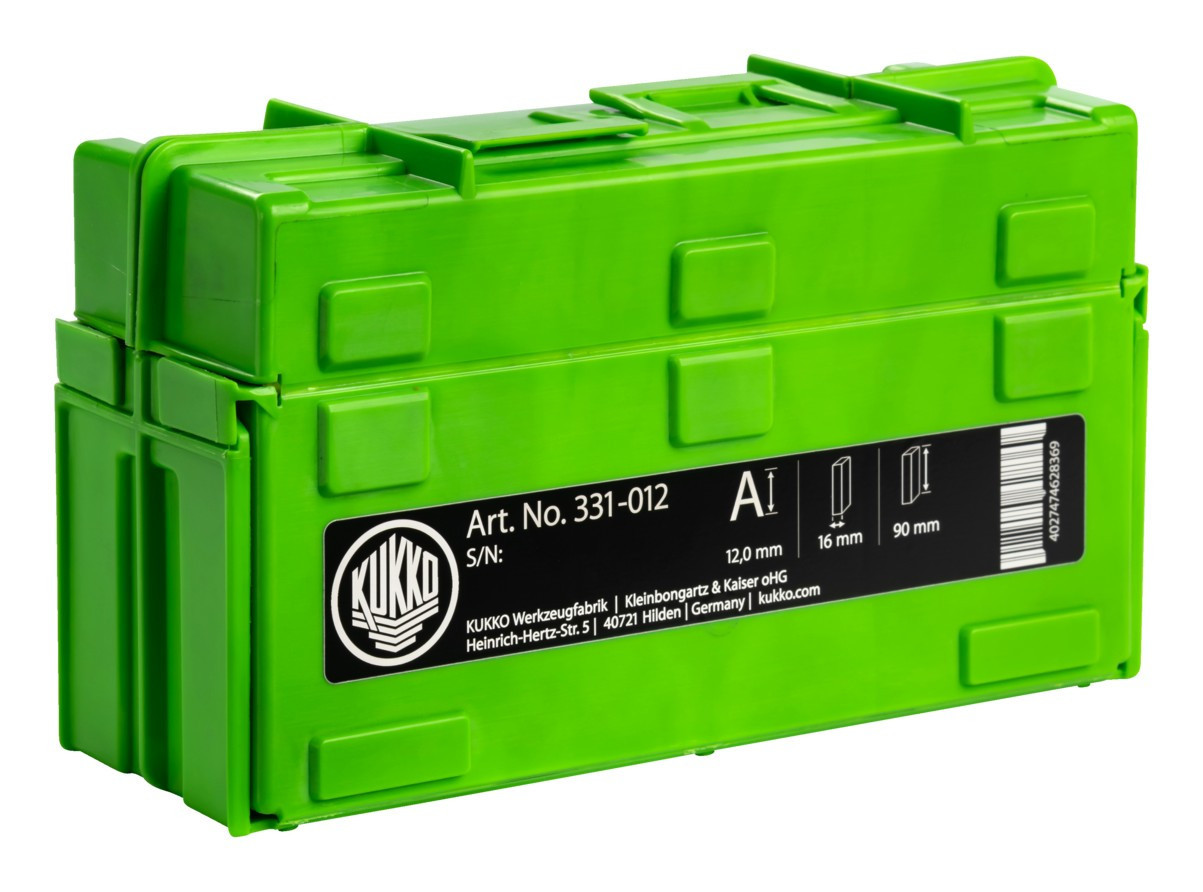
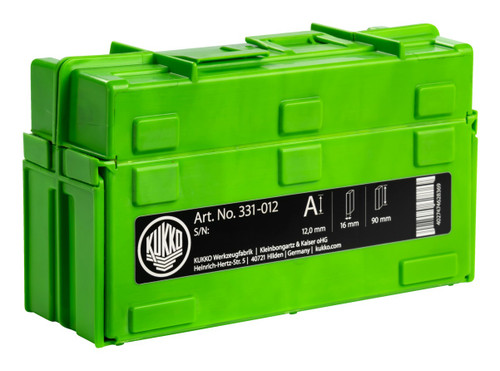
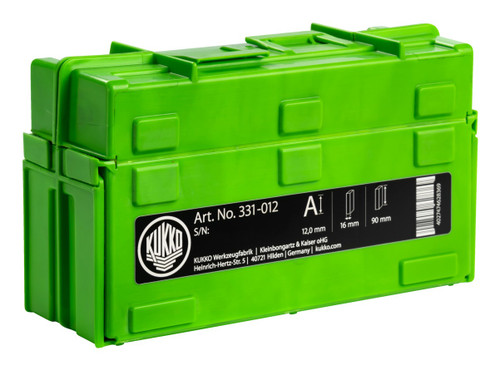
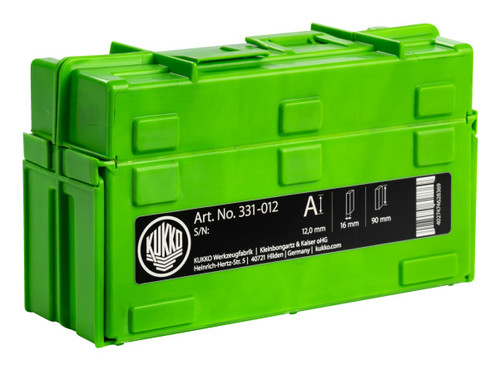
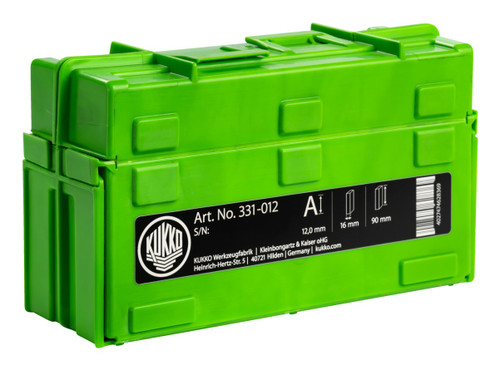
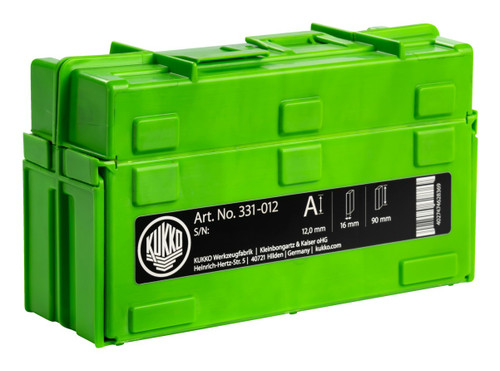
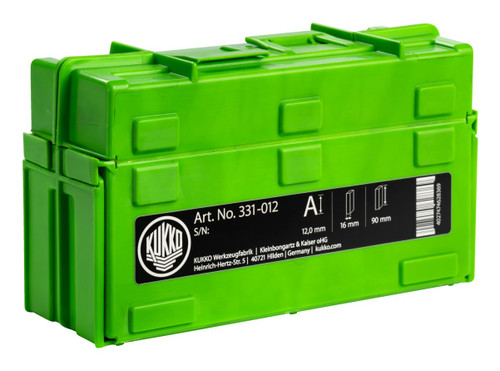
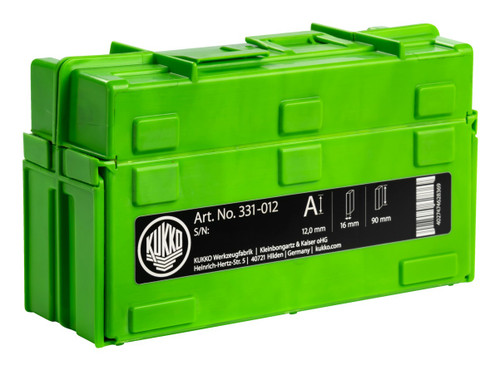
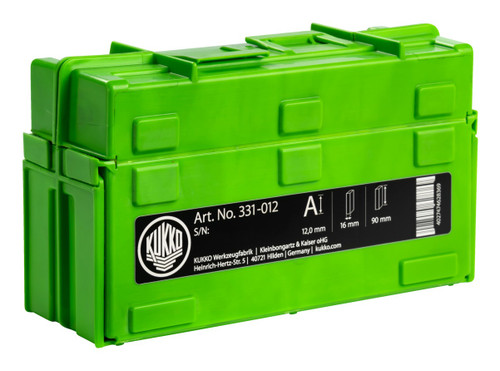
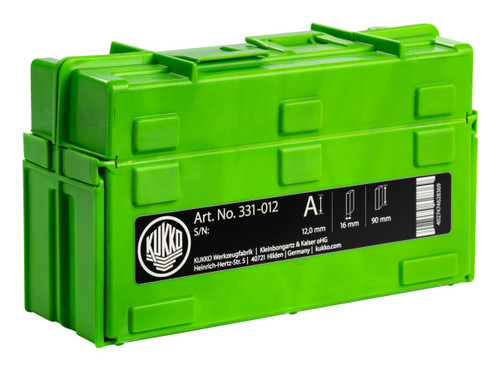
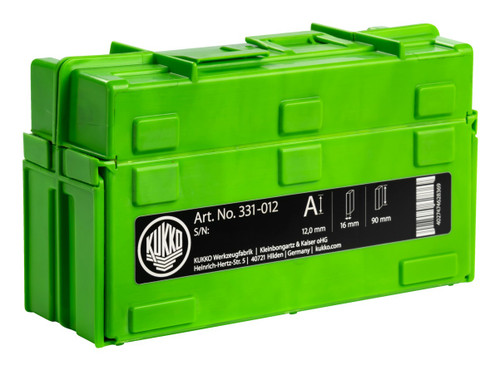
Standard or extra-heavy letter stamps
KUKKO makes letter stamps in two grades, and the workpiece decides which one you need. The standard 329 letter set and the standard 328 number set handle material up to 900 N/mm² tensile strength, about 27 HRC. That covers mild steel, aluminum, brass and copper. The extra-heavy series 330 (numbers) and 331 (letters) have a larger shank. The extra mass carries more of the hammer's energy into the mark, and KUKKO rates them for material up to 1,300 N/mm², about 42 HRC. Pick those for alloy shafts, tool steel in the soft state and anything you'd call tough to mark.
Both grades are hardened to 58 to 61 HRC at the character face and cold-formed, so the grain of the steel runs unbroken into the character. That's why the characters hold their edges after repeated blows. Letter stamps come in 27-piece sets (A to Z plus &). Number sets have 9 pieces covering 0 to 9, since the 6 turns over to make a 9.
Which version of the 330 and 331 metal stamps
- Bright nickel-plated: the 331-000 letters and 330-000 numbers. KUKKO says the nickel surface leaves no foreign rust in the mark, so these are the ones for stainless steel.
- Impact-hardened head: the 331-V and 330-V. The struck end is hardened to cut mushrooming, which helps on stamps that get used daily.
- Right-engraved (mirror image): 331-R and 330-R. They leave a reversed print, so you can read it with an inspection mirror when the mark sits on the back of a part.
- Dotted typeface: 331-P and 330-P. The characters are made of dots, which KUKKO says reduces the notch effect. Use them on parts under load, where a sharp-edged mark could start a crack.
- Lowercase: the 331-K, for markings that must match lowercase codes.
The 331-500 letter sets and the 330-500 number sets round out the extra-heavy line without plating. If you want letter and number stamps together, buy the letter and the number set in the same height so codes line up.
Choosing character height for letter stamps
Size depends on the space you have and how far away the mark gets read. On small fittings, gauges and tool shanks, 2 to 3 mm (about 1/8 in) is plenty. Serial and heat numbers on brackets, flanges and die blocks usually go 4 to 6 mm (about 1/4 in). Larger 10 to 20 mm stamps suit castings, steel plate and shipping marks. Bigger characters take a harder blow to sink, so match the hammer to the size: a light ball peen for 1 to 3 mm, a heavier hammer for 10 mm and up.
How to get a clean, straight mark
- Clamp the part on something solid, an anvil or a heavy vise. A bouncy bench eats the blow.
- Scribe or tape a straight guide line, and check each stamp's orientation before you strike. An upside-down letter is the most common mistake.
- Hold the stamp square to the surface and hit it once, firmly. A second blow almost always double-prints.
- On hard material, use the extra-heavy grade rather than hitting a standard stamp harder.
Wear eye protection whenever you strike letter stamps. Hardened steel can chip when struck off-square, and so can a mushroomed head. Grind a mushroomed head back or retire the stamp. Don't use these to mark material harder than the rated 27 or 42 HRC; the face will chip. Keep each metal stamping set in its plastic case so the faces don't knock together.
Need something to drive the stamp? Browse our hammers. Related tools are in our punch and chisel range and the parent hammers and striking tools category.
Frequently asked questions
What hardness of steel can these stamps mark?
KUKKO rates its standard 328 and 329 sets for workpieces up to 900 N/mm² tensile strength, about 27 HRC. The extra-heavy 330 and 331 sets go up to 1,300 N/mm², about 42 HRC. Going past those limits risks chipping the character face, so check the hardness of the part before you start.
Which stamps should I use on stainless steel?
Use the bright nickel-plated sets, 331-000 for letters and 330-000 for numbers. KUKKO says the nickel surface leaves no foreign rust in the mark, which matters on stainless, where traces of plain steel can cause rust spots later. Strike firmly once, because stainless work-hardens quickly.
Why is there no 9 in the number set?
The 9-piece number sets cover 0 to 9 with no separate 9. The 6 is shaped so it reads as a 9 when you turn it upside down. That saves a piece in the case. Mark the shank of the 6 with paint or tape so you don't mix up its orientation in the middle of a job.
What are dotted letter stamps for?
Dotted stamps form each character from a row of dots instead of a continuous line. KUKKO says this reduces the notch effect, meaning a sharp groove that can concentrate stress. Use them on shafts, springs and other parts under cyclic load where a solid character mark could start a crack.
What does right-engraved mean?
A right-engraved stamp leaves a mirror-image print. It looks reversed when you face it, and it reads correctly in a mirror. KUKKO offers this in the 330-R and 331-R sets for marks on the back of a part or in a spot you can only inspect with a mirror.
What typeface do KUKKO stamps use?
All sets on this page use DIN 1451, the plain German standard sans-serif used for technical lettering and road signs. Its simple shapes stay readable when small, so a 2 mm character is still legible on a fitting. Letters come as A to Z plus an ampersand, and the 331-K set is lowercase.