
-
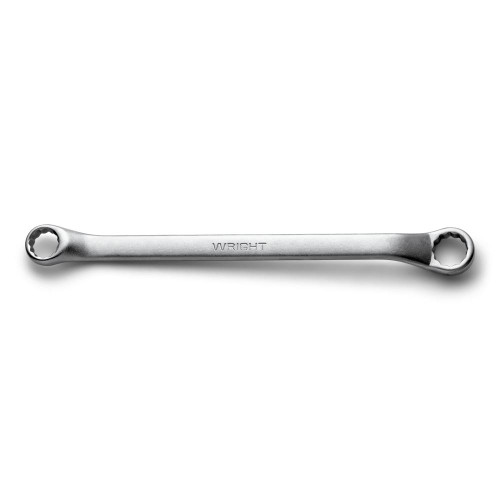
Wright Tool
Wright Tool Box Wrench 12 Point Standard Double Modified Offset Metric Satin
Choose options for price
-
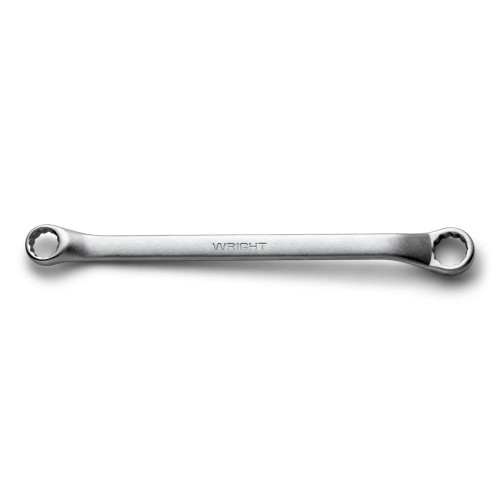
Wright Tool
Wright Tool Box Wrench 12 Point Standard Double Modified Offset Satin
Choose options for price
Box End Wrenches
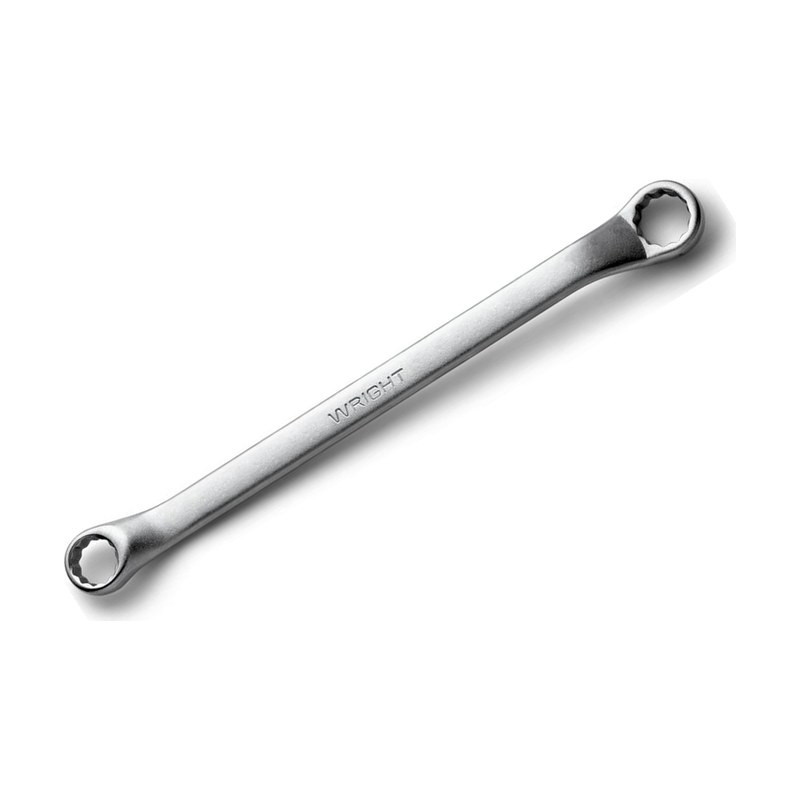
A box end wrench wraps all the way around the nut, so it grips the nut on all sides instead of on two flats. At BRAIGG, this category carries two Wright Tool families. One is a 12 point double modified offset box wrench in SAE sizes from 5/16" x 3/8" to 1-7/16" x 1-5/8". The other is the same design in metric, from 8mm x 10mm to 22mm x 24mm. Both have a satin finish and a different size on each end. Reach for one when a fastener is too tight or too tucked away for an open end.
Why use a box end wrench
An open end touches a hex nut on two flats. Lean on it hard and the jaws spread, the corners round, and your knuckles hit the frame rail. A closed ring spreads the load around the whole fastener, so you can put real force on a rusted exhaust nut or a dry brake bracket bolt without chewing it up. That's the main reason box end wrenches still earn a place in shops full of ratcheting tools: the head is thin, there's no mechanism to strip, and it takes a hard pull.
The tradeoff is that you have to lift the wrench off and set it back on every swing. On a long-threaded bolt that gets slow. Many techs break the fastener loose with the box, spin it out with a ratcheting wrench or a socket, then use the box again for the final snug.
What double modified offset means
Look at one of these wrenches from the side and the heads sit lower than the handle on both ends. That offset lifts your hand clear of whatever the fastener is mounted on, so you aren't scraping a manifold or a flange face while you pull. An offset box end wrench also reaches over a nearby obstruction to get onto a recessed nut. "Double" means both ends are offset. "Modified offset" is the name Wright uses for this head style. If clearance under the head matters on your job, compare the side profile on the product page before you order.
12 point heads and swing room
Both families here are 12 point. A 12 point box lets you reset the wrench every 30 degrees, so you can make progress with a short swing between a hose and a bracket. A 6 point grips farther from the corners and suits badly rusted or already rounded hex heads, but it needs 60 degrees of swing to reposition. If you mainly fight seized fasteners, a 6 point socket on a breaker bar is the better first move. If you mainly fight tight spaces, grab the 12 point box.
Sizes we carry
The SAE double box comes in 22 size pairs. You get the common pairs, such as 3/8" x 7/16", 1/2" x 9/16" and 9/16" x 5/8". You also get the big ones seen on trucks and plant equipment, up to 1-7/16" x 1-5/8". Some sizes show up twice on purpose. For example, 5/8" pairs with 11/16" on one wrench and with 3/4" on another, so a single wrench can cover the nut and bolt head on a common fastener pair.
The metric double box covers 11 pairs, from 8mm x 10mm through 22mm x 24mm. You'll find 10mm x 11mm, 12mm x 13mm and 17mm x 19mm in the mix, which takes care of most import car and equipment fasteners. If you're matching SAE to metric on a mixed fleet, our SAE to metric size chart shows which sizes are close and which only look close.
Choosing between box, combination and other wrench styles
A double box end wrench gives you two box sizes and no open end. A combination wrench trades one of those box sizes for an open end of the same size, which is handy when you want both grips on one fastener. On brake lines and fuel fittings, use a flare nut wrench instead. Its slotted box slips over the tubing, which a closed box can't do. For the full breakdown, see our guide to the types of wrenches.
If you'd rather buy a matched group than single sizes, Wright also packs the SAE box end wrench in 5 and 7 piece kits, listed with our other wrench sets.
Using a box end wrench without slipping
Seat the head all the way down on the fastener before you pull. A ring sitting halfway up a nut is the most common way to round it. Pull toward you rather than pushing when you can, so a sudden break doesn't send your hand into something sharp. Don't put a pipe over the handle for extra leverage. If a nut needs more than an arm's pull, switch to a 6 point socket and a breaker bar.
Frequently asked questions
What is a box end wrench used for?
It turns hex nuts and bolts with a closed ring that surrounds the fastener and grips it on all sides, not just two flats. That grip lets you apply more force than an open end without rounding the head. Mechanics use one to break loose tight fasteners, to work on nuts in recessed spots, and to make the final snug on bolts that an open end would slip off.
What is the difference between 6 point and 12 point box end wrenches?
A 12 point box can be repositioned every 30 degrees, which helps when there is very little room to swing the handle. A 6 point box grips the flats farther from the corners, so it is better on rusted or partly rounded fasteners, but it needs twice the swing. Both Wright box wrench families in this category are 12 point.
Why are box end wrenches offset?
The offset drops the head below the handle so your knuckles clear the surface around the fastener. It also helps the wrench reach over a lip or nearby part to get onto a recessed nut. The Wright wrenches here use what Wright calls a double modified offset, which means both ends are offset. That way you get the same knuckle clearance whichever size you are using.
Do you carry metric box end wrenches?
Yes. The Wright 12 point double modified offset box wrench comes in 11 metric size pairs, from 8mm x 10mm to 22mm x 24mm. Pairs like 10mm x 11mm, 12mm x 13mm and 17mm x 19mm cover most of the metric fasteners found on cars, light trucks and imported equipment.
Is a box end wrench better than a ratcheting wrench?
Each one does a different job. A plain box end wrench has a thinner head and no mechanism, so it takes a harder pull and fits tighter spots. A ratcheting wrench is faster for spinning a fastener on or off once it is loose. Plenty of techs break the nut free with the box, then switch to the ratcheting wrench to run it out.