
Bearing Separators
A bearing separator earns its place when a bearing is tight against a shaft shoulder and ordinary puller jaws have nowhere to sit. Its beveled edges close behind the ring to establish a grip, then a connected puller frame draws the part off. At BRAIGG, the KUKKO selection includes conventional splitters, quick-clamping models, three-segment tools and matched sets. Check the separating diameter and the frame connection before choosing a size. A splitter that fits around the shaft still needs enough access beneath the ring and a pulling arrangement with the reach to clear the shaft end.



How a bearing separator gets behind the ring
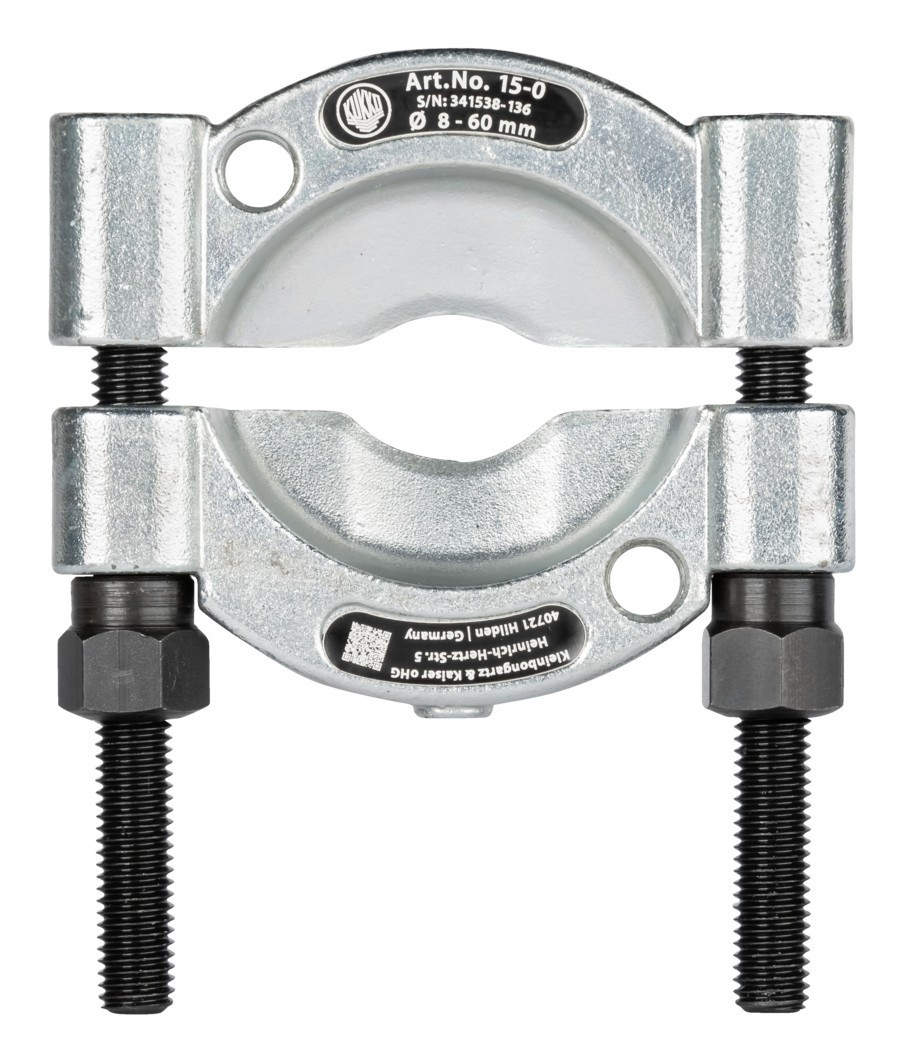
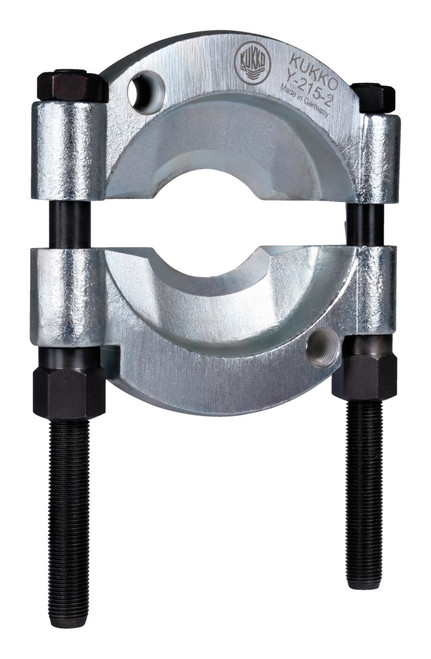
The two halves of a conventional bearing splitter tool close around the shaft, bringing their tapered edges beneath the bearing. That wedge action starts the separation. Once seated, the tool provides a surface from which a compatible puller can lift. It is not simply a clamp to squeeze harder until the bearing comes loose.
Look closely at the contact point. For a bearing pressed onto a shaft, support the inner ring rather than loading the rolling elements through the outer ring. Remove any retaining ring, nut or other restraint specified by the equipment maker first. A good grip cannot overcome a mechanical retainer without risking damage.
Series 15 or quick-clamping series 17?
The KUKKO series 15 bearing separator is the conventional two-piece option. The listed range includes a 6 to 40 mm model, about 0.24 to 1.57 in. Read the separating range for the individual model, not just the family name. Also check its matching series 18 frame in the compatibility table.
The series 17 with quick-clamping spindle closes the separating jaws concentrically using a pressure spindle. That changes how the tool is positioned and tightened, which matters if you repeatedly set it up around similar bearings. It does not remove the need to check the edge seating before applying the extraction load.
Check three dimensions, not one
A bearing separator has a separating diameter range, while its puller has its own spread and reach limits. Those figures are not interchangeable. Measure the ring where the edges will support it, the spacing needed for the frame connections, and the distance the assembly must reach beyond the shaft end.
For example, the KUKKO 15-A set lists an 8 to 75 mm separating diameter (about 0.31 to 2.95 in) and 300 mm reach (about 11.81 in). Its listed puller spread is 58 to 150 mm. The separating range tells you what the splitter can engage; the spread belongs to the pulling frame. Check both before assuming the set fits.
What a matched separator set supplies
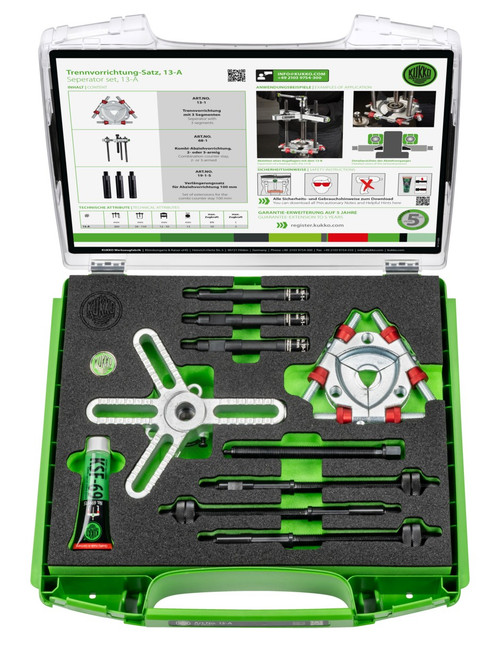
A bearing separator kit is useful when you do not already own a compatible frame. The K-15 family packages a separator, puller and pair of extensions. The K-17 bearing separator set uses the quick-clamping version of the separating device with its pulling components.
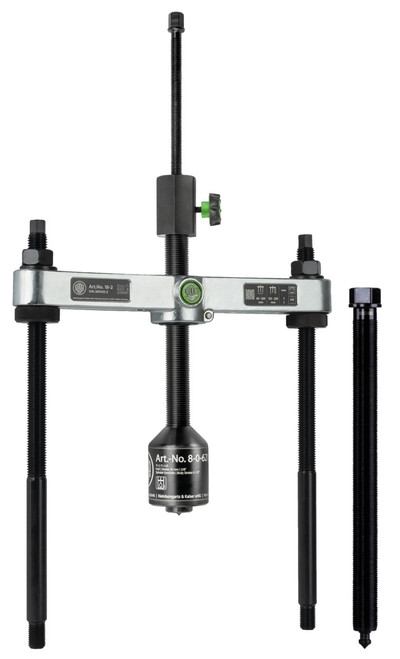
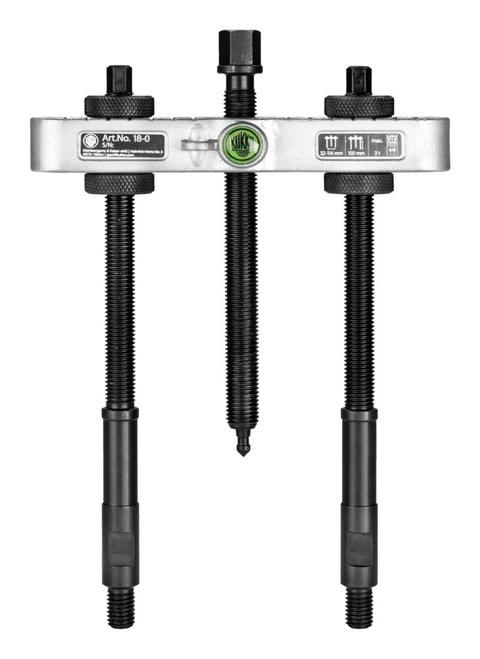
If you are adding to an existing setup, compare exact part numbers and connection threads. The series 18 separator puller is used with compatible series 15 and 17 devices, but that family-level description is not permission to mix every size. Use the manufacturer's cross-reference for the chosen components. Extra reach is useful only when the assembled system remains within its specified limits.
Three-segment and hydraulic arrangements
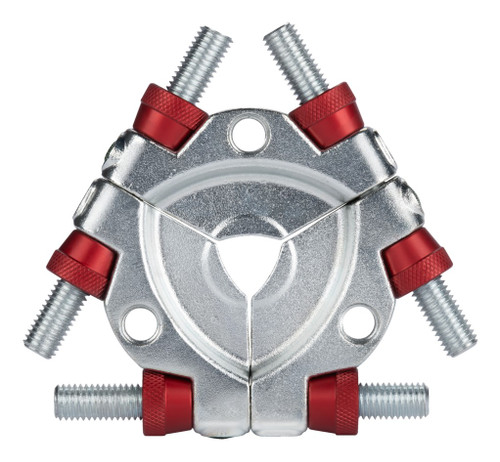
The TRI-PULL series 13 supports spherical and tapered roller bearing inner rings with three segments. It is a different gripping geometry from the familiar two-half bearing splitter. Choose it around the bearing type and accessible ring rather than treating every separator as the same tool in a different size.
KUKKO also lists series 18-B hydraulic pullers for compatible separators. A hydraulic spindle changes the source of pulling force, not the need for secure contact or correct component matching. Follow the model's operating limits and never apply heat near hydraulic seals.
Seat the edges before applying the pull
Clean loose dirt from the shoulder so you can see where the edges touch. Inspect the separator, connection threads and pulling spindle. Tighten evenly as directed, center the spindle on a suitable shaft-end contact and fit a puller guard or containment cover. Wear eye protection and keep your hands out of the loaded assembly.
If there is already ample room for jaws, browse the parent Bearing Pullers & Separators category instead. The separator vs puller guide explains that choice, while how to use a bearing puller covers controlled extraction once the tool is seated.
Frequently asked questions
What is a bearing separator used for?
It establishes a grip behind a bearing ring or other closely seated part when ordinary jaws lack clearance. The beveled edges begin the separation as the halves close. A compatible pulling frame then draws the part along the shaft, with the load supported at the selected ring.
Is a bearing splitter the same as a bearing separator?
For a conventional two-half tool, the names commonly describe the same separating device. Neither name means the bearing itself should be cut or broken. Check the actual design, diameter range and frame connection, because three-segment tools and hydraulic separating systems use different arrangements.
Can I use a bearing separator without a puller frame?
Closing the separating edges can produce initial movement, but a conventional separator is not a complete axial extraction setup on its own. Use the compatible frame and spindle specified for that model to finish the pull. Do not improvise a connection or assume the edge movement will clear a long shaft.
What is included in a KUKKO bearing separator set?
The listed K-15 sets include a separator, a puller and a pair of extensions. K-17 sets use a separator with a quick-clamping pressure spindle alongside the pulling components. Compare the separating diameter and assembled reach of the individual set rather than choosing solely by the family name.
Will any series 18 frame fit any KUKKO separator?
No. Series 18 frames work with specified series 15 and 17 separators, and the product tables list matching part numbers. Check those references along with connection threads, spread and reach. A frame that appears large enough is not necessarily compatible with the separator or its intended load.