
-
-
Wright Tool
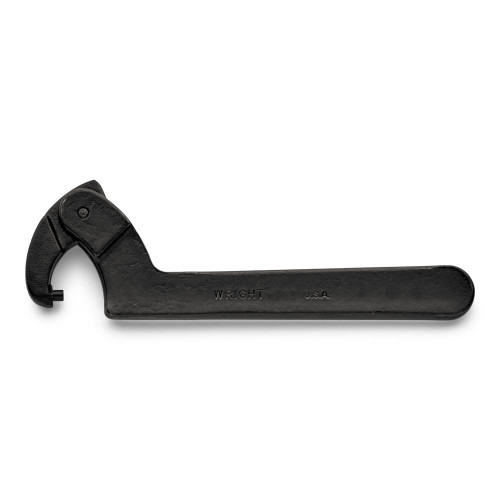
Wright Tool Spanner Wrench Adjustable Pin Black Industrial Capacity Range
Choose options for price
-
Wright Tool
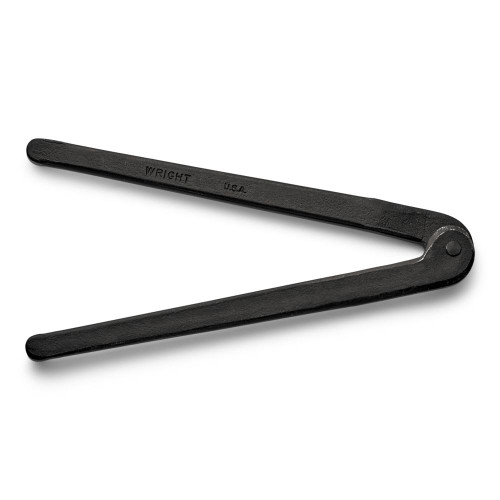
Wright Tool Spanner Wrench Adjustable Face Black Industrial Extreme Capicity
Choose options for price
-
Spanner Wrenches
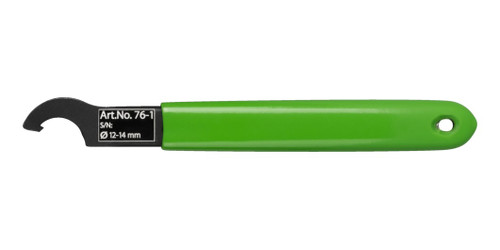
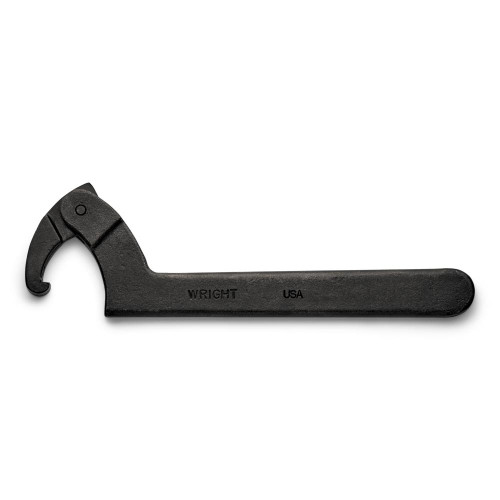
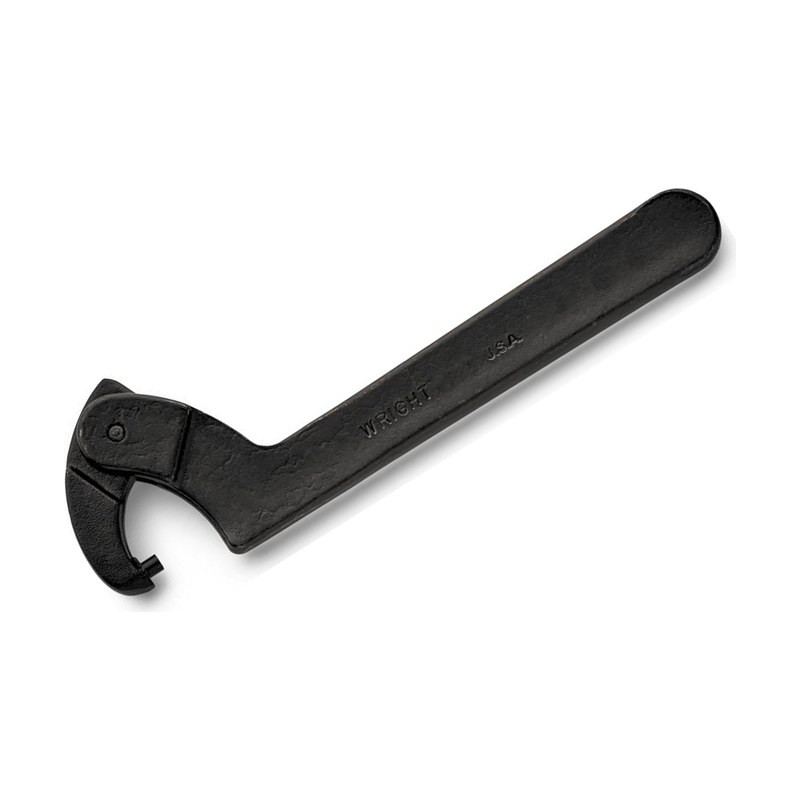
A spanner wrench turns round nuts, collars and caps that have no flats for a regular wrench, only slots or holes. At BRAIGG, this category carries three Wright Tool adjustable styles in a black industrial finish. There are hook spanners for slotted nuts from 3/4 inch to 8-3/4 inch and pin spanners for nuts with a hole in the edge from 3/4 inch to 6-1/4 inch. Face spanners, with two pins for holes in the face, come in 2, 3 and 4 inch capacities. The guide below shows how to tell which one your part needs.
Which spanner wrench fits your part
Look at the part before you look at the tool. The way the nut is made to be gripped tells you the style:
- Notches or slots around the outside edge: use a hook spanner wrench. The hook drops into one slot and the curved jaw wraps the nut.
- One or more round holes drilled into the outside edge: use a pin spanner wrench. It has a pin in place of the hook.
- Two or more holes in the flat face of the part: use a face spanner. Its two pins spread to match the hole spacing.
You'll find slotted locknuts on bearing shafts, gland nuts on hydraulic cylinders, adjusting rings on machine spindles, and preload collars on coilover shocks. Face holes turn up on bearing retainers, pump end caps and some grinder flanges.
Why adjustable spanners make sense
A fixed spanner fits one diameter. Round nuts come in so many sizes that a box of fixed spanners gets big fast, and the one you need is the one you don't have. Each Wright adjustable spanner covers a range, so a few tools handle most maintenance work:
- Adjustable hook spanner: five sizes covering 3/4 to 2, 1-1/4 to 3, 2 to 4-3/4, 4-1/2 to 6-1/4 and 6-1/8 to 8-3/4 inch diameter.
- Adjustable pin spanner: 3/4 to 2, 1-1/4 to 3, 2 to 4-3/4 and 4-1/2 to 6-1/4 inch diameter. The two smaller ranges each come in two versions, 9640 and 9641, and 9642 and 9643.
- Adjustable face spanner: 2, 3 and 4 inch capacity.
Measure the outside diameter of the nut with a tape or calipers and pick the range that puts it in the middle, not at the very end. A wrench working at the end of its range has the least jaw engagement.
Using a spanner wrench without chewing up the nut
Seat the hook or pin all the way into the slot or hole before you pull. A pin sitting halfway in will cam out and burr the hole, and then nothing grips it well. Pull in the direction that drives the hook into the slot, not the direction that lifts it out. On a face spanner, set the pin spread so both pins drop in square, then keep the tool flat against the face as you turn.
If the nut is stuck, don't put a cheater bar on the handle. Soak the threads, tap around the nut with a brass drift, and try again. Many slotted locknuts also have a tab washer behind them. Bend the tab out of the slot first or the nut won't move at all.
Related tools
Bearing and pump work usually calls for regular wrenches too. Keep a few combination wrenches nearby for the bolts on the housing, and an adjustable wrench for odd sizes. For plant maintenance kits, see our page on industrial maintenance tools.
Frequently asked questions
What is a spanner wrench?
In the US it means a wrench for round nuts and collars that have slots or holes instead of flats. A hook, pin or pair of pins engages the part so you can turn it. In the UK, spanner is the everyday word for any wrench, which is why the term confuses people online.
What is the difference between a hook and a pin spanner wrench?
A hook spanner has a hooked tip that drops into a notch or slot cut in the edge of the nut. A pin spanner has a round pin that fits a drilled hole in the edge. Check whether your nut has slots or holes, then choose the matching tool.
What is a face spanner used for?
A face spanner turns parts that have holes in their flat face rather than on the edge, such as bearing retainers, pump caps and some grinder flanges. Its two pins adjust apart to match the hole spacing. Wright's adjustable face spanners come in 2, 3 and 4 inch capacities.
How do I pick the right size adjustable spanner?
Measure the outside diameter of the nut or collar. Choose the Wright range that includes that diameter, ideally near the middle. For example, a 2-1/2 inch locknut falls in the 1-1/4 to 3 inch hook spanner range. If it sits right at the end of one range, the next range may grip better.
Can I use a spanner wrench on coilover shocks?
Yes. The adjusting collars on most coilovers have slots around the edge, so a hook spanner of the right diameter range sets spring preload or ride height. Clean the threads first, and if the collar has a lock ring, loosen that ring before you turn the main collar.