
-

-
-
KUKKO
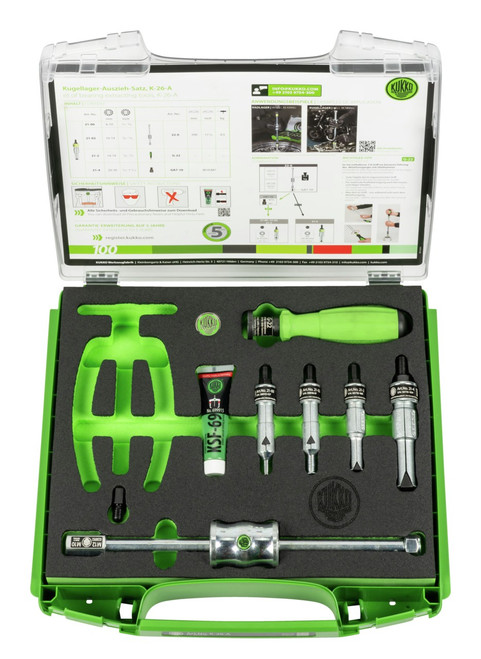
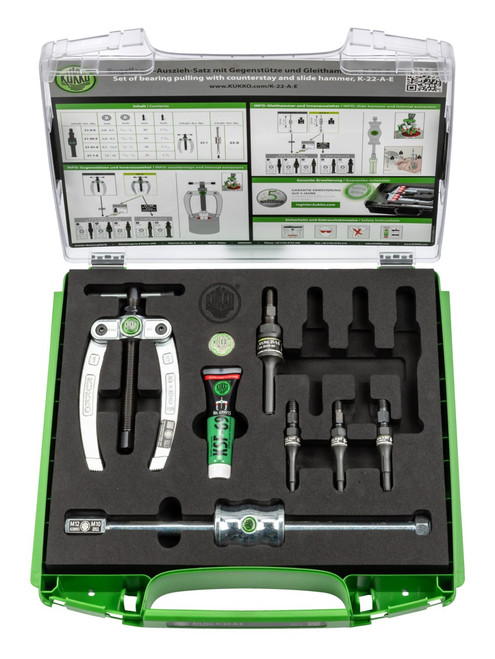
KUKKO Flush-Mounted Bearing Puller Set with Counterstay and Sliding Hammer
Choose options for price
-
KUKKO
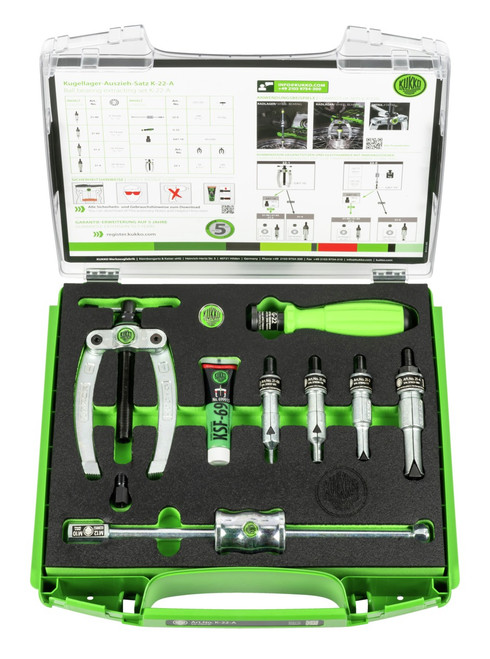
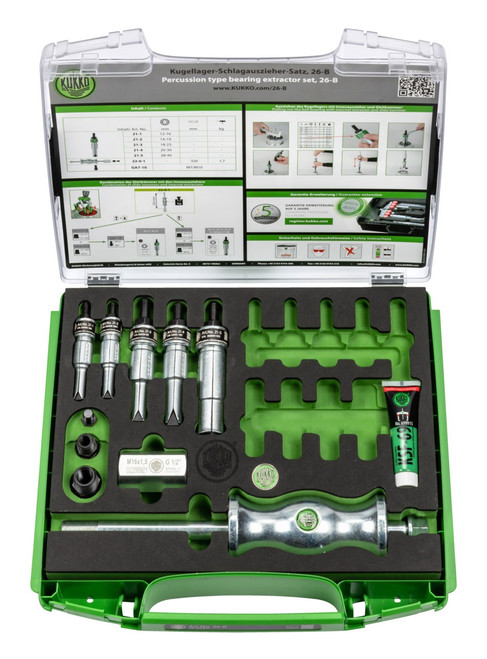
KUKKO Ball Bearing Puller Set with Counterstay and Sliding Hammer - Series K-22
Choose options for price
-

-
-
-
-

-
-

-

-

-

Bearing Race Pullers
A bearing race puller is useful when the rolling elements are gone but an outer ring remains seated in the housing. The KUKKO tools at BRAIGG include internal extractors described by the manufacturer for bearing outer rings, along with sets that supply a counterstay, sliding hammer or both. Start by identifying the ring you need to remove. An outer race or cup in a housing calls for a different grip from an inner race stuck on a shaft. Then check the opening, the available edge and the depth before choosing an extractor head.
Where an internal bearing race puller works
An internal bearing race puller enters the remaining ring and engages it from inside. This category focuses on outer rings in housings, not on cutting a stuck inner ring off a shaft. KUKKO uses the term “bearing outer rings” in its descriptions; these are the outer races, including the parts commonly called cups on tapered roller bearings.
Look at the actual part before selecting a tool. The rolling-contact surface may be curved or tapered, and the opening may not offer a usable gripping edge all the way around. A bore measurement is necessary, but it does not prove the extractor can hold. Need an inner race puller for a ring stuck on a shaft? Start with bearing pullers and separators instead of choosing an internal tool by name alone.
Choose the edge before adding force
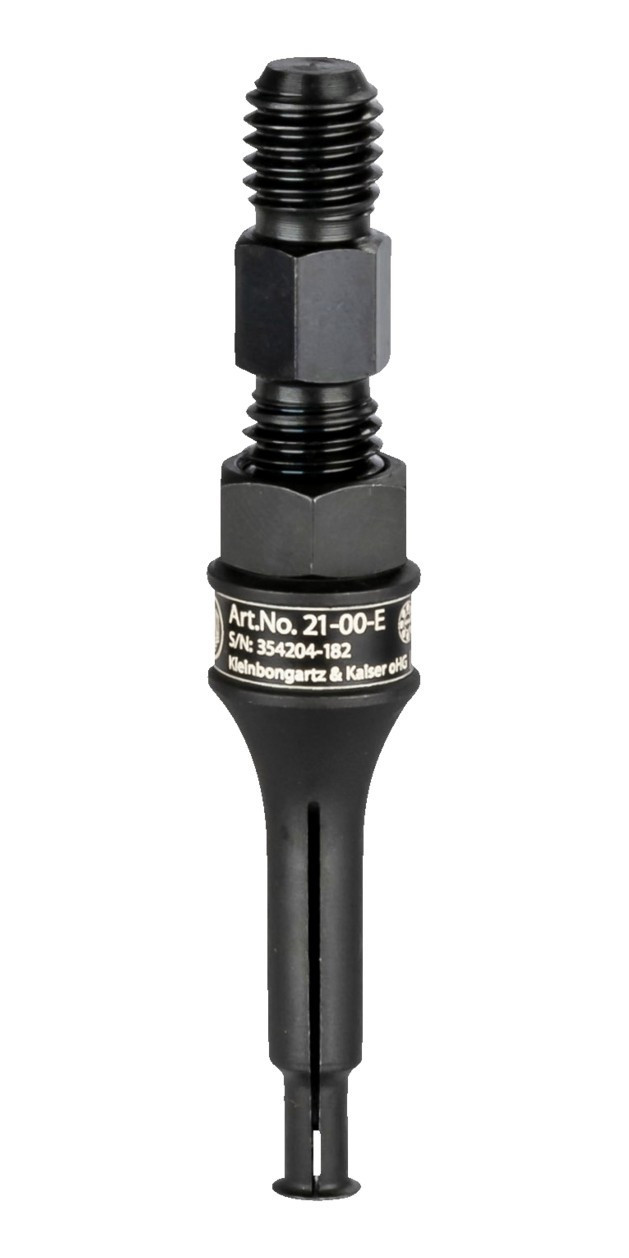
KUKKO's series 21 internal extractors use shell or jaw designs with gripping edges for internal parts. They work with compatible counterstays or sliding hammers. The 21-4, for example, has a 20 to 30 mm internal extraction range, about 0.79 to 1.18 in, and 40 mm, about 1.57 in, of reach.
For flush-mounted parts, the 21-E segment extractors use finer gripping edges. KUKKO specifically includes flush-mounted bearing outer rings among their applications. The 21-4-E covers 24 to 34 mm, about 0.94 to 1.34 in, with 55 mm, about 2.17 in, of reach. Do not treat those two model numbers as interchangeable: their size ranges and reach differ.
An outer bearing race puller must catch the ring, not dig into the housing behind it. Wipe away grease and loose debris so the seating point is visible. If the lip rides on a taper or slips off the edge, stop. More force cannot correct a grip on the wrong surface.
How will you draw the ring out?
A counterstay provides a supported screw pull. Its feet must sit on a sound surface that can carry the reaction load, with the spindle centered over the ring. A sliding hammer supplies an outward impact instead, avoiding the need to push against the housing face. That can help when the face offers no suitable support, but it requires room for the weight to travel along the pulling axis.
Choose the bearing race puller head and pulling device as a compatible assembly. Our slide hammers page explains the separate weights and adapters. For the full range of internal removal tools, return to pilot bearing and blind hole pullers, the parent category.
Individual extractor or a boxed set?
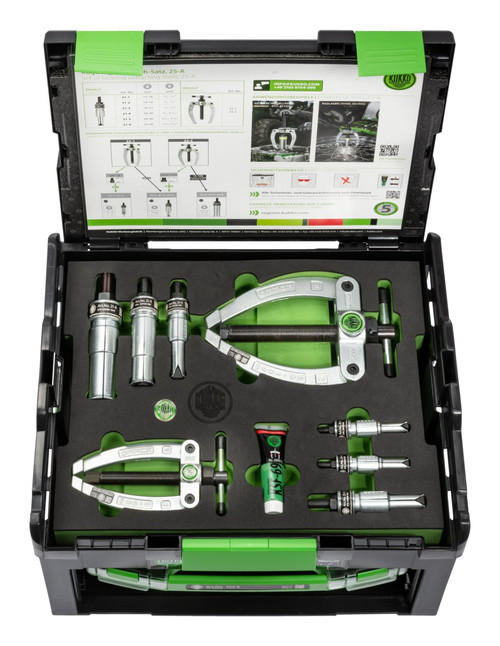
For a known repair, a single correctly sized bearing race removal tool may be enough if you already have the matching pulling device. Repeated housing work can justify a set with several extractor sizes. Check the contents, not just the largest bore printed in the set name.
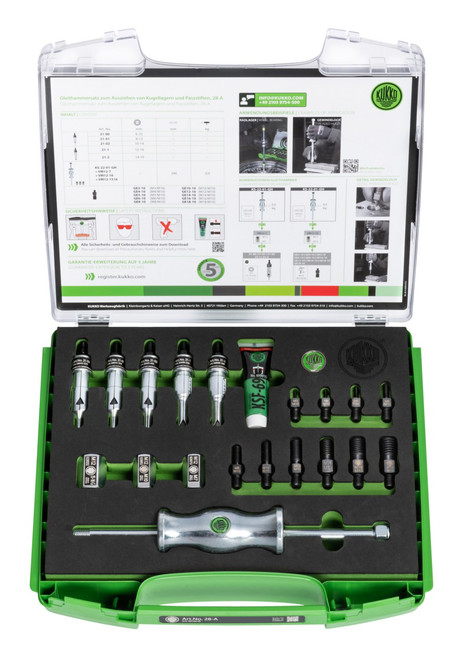
The K-22-E sets combine segment extractors with a counterstay and sliding hammer for flush-mounted parts. KUKKO lists three sets:
- K-22-A-E: 5 to 15 mm, about 0.20 to 0.59 in.
- K-22-B-E: 12 to 34 mm, about 0.47 to 1.34 in.
- K-22-C-E: 5 to 34 mm, about 0.20 to 1.34 in.
Inspect the included head sizes against the ring you actually have.
Before loading a bearing race puller
Remove any retaining ring specified by the assembly's service instructions. Examine the housing for damage and confirm the extraction path is clear. Wear eye protection, cover or guard the loaded assembly appropriately, and stay out of the line of pull. Keep the extractor centered as the race starts moving; a tilted ring can bind in its seat. The guide to removing a bearing from a blind hole covers access and setup checks before you commit to a pull.
Frequently asked questions
Is a bearing outer ring the same thing as a race?
Yes. The outer ring provides the outer raceway for the rolling elements and is commonly called the outer race. On a tapered roller bearing, that outer part is often called the cup. KUKKO explicitly describes these internal extractors for bearing outer rings, which is the application this category addresses.
Can I use an inner race puller for a race in a housing?
Do not choose by that name alone. An inner ring stuck on a shaft needs a grip around or behind the ring, often using a separator arrangement. An outer ring left inside a housing needs internal engagement. Identify which ring remains, then check the tool's intended gripping method and dimensions.
What measurements do I need for a bearing race puller?
Measure the opening where the tool will engage and the depth from the accessible face to that engagement point. Inspect the edge and the extraction path too. Raceways may be curved or tapered, so an opening inside the listed range does not guarantee the tool will seat securely.
Which KUKKO tools suit a flush-mounted outer race?
KUKKO describes series 21-E segment extractors for flush-mounted bearings and bearing outer rings. Their fine gripping edges are intended for that access problem. Match a specific head's range and reach to the ring, then choose a compatible counterstay or hammer. The K-22-E sets combine segment heads with both pulling methods.
Should I use a slide hammer on a bearing cup?
A compatible slide hammer is one option when the internal extractor has a secure grip and the housing face cannot support a counterstay. Check that there is room for straight travel. A supported screw pull is another option where a sound reaction surface exists. Neither method compensates for an incorrectly seated extractor.