
Pliers
The pliers in this section are built for shop and plant work, not the junk drawer. At BRAIGG the whole range comes from KUKKO, the German maker founded in 1919. It splits into three groups: locking models from 165 to 300 mm (about 6-1/2 to 12 in), internal and external circlip tools in straight and bent styles, and specialty tools for piston rings, keyway wedges and spark-risk areas. Pick a group below, or read on for jaw shapes, tip styles and sizes so you buy the right tool the first time.
Which pliers do you need?
Start with what the tool has to do once it's on the part. If it has to hold something on its own while your hands are busy, you want a locking tool. If you are pulling a ring out of a groove on a shaft or in a bore, you want circlip tips. If the job is an engine rebuild, an electric motor or a refinery floor, look at the specialty group.
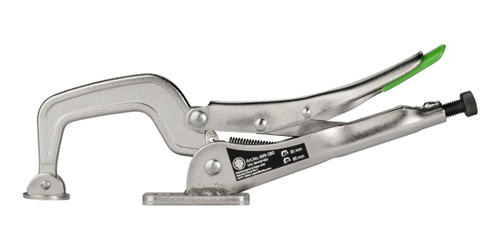
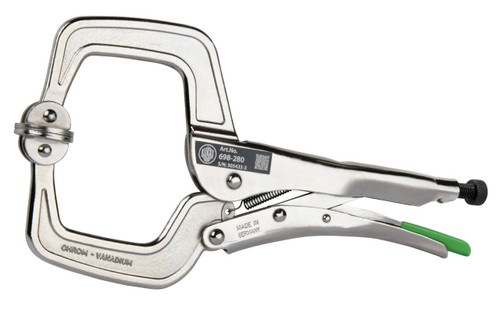
- Locking pliers: 13 KUKKO models for holding, clamping and welding setups.
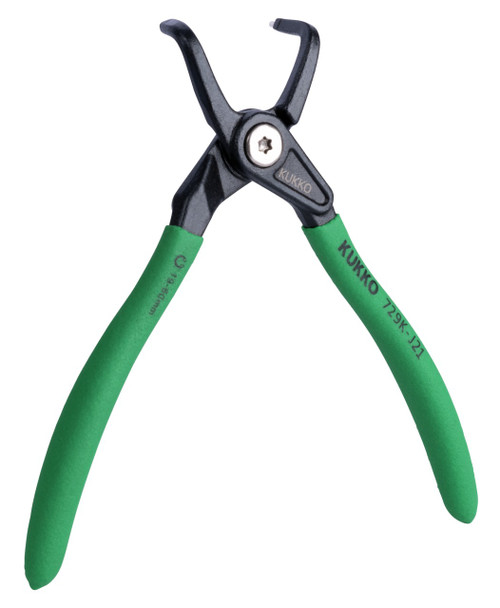
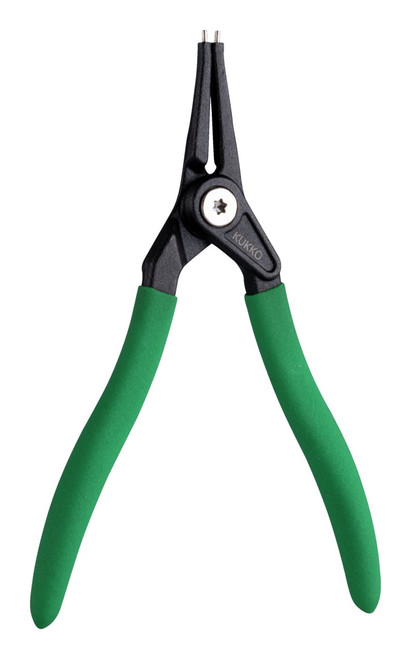
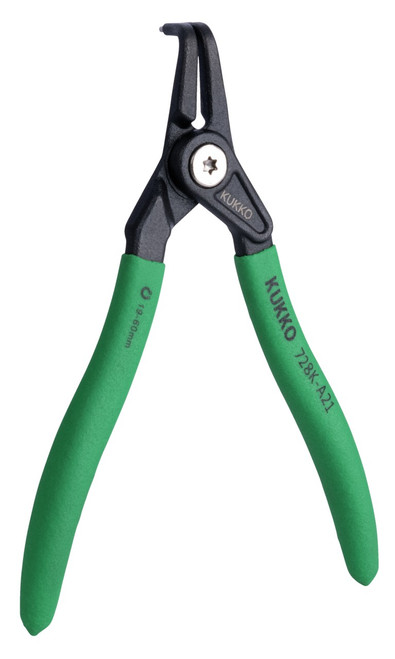
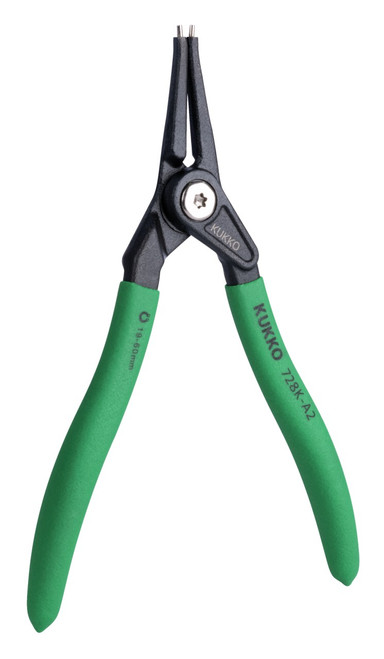
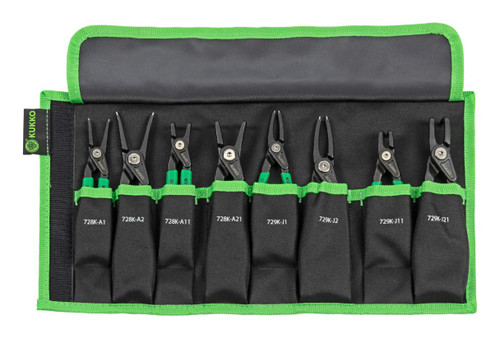
- Circlip pliers: series 728 external and 729 internal tools, plus an 8-piece set.
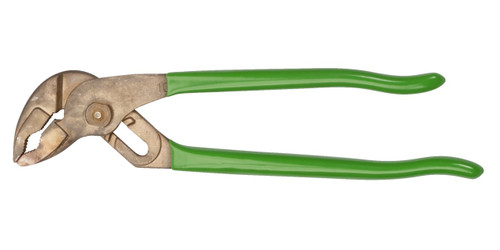
- Specialty pliers: piston ring tools, a wedge extractor and two non-sparking models.
Locking pliers by jaw shape
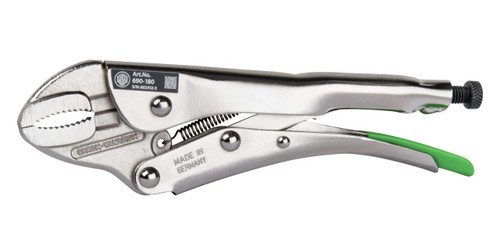
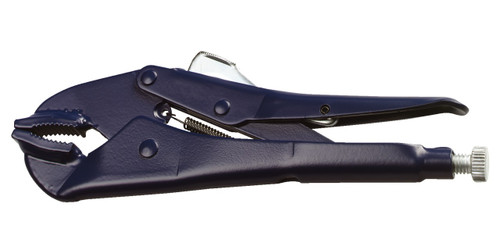
Every KUKKO locking model uses a toggle lever, so a squeeze of one hand puts a lot of clamping force on the work. A knurled fine-thread screw in the handle sets the spread and the pressure. Get it right on scrap first, then lock it on the real part. The jaw is what separates one model from the next:
- Series 690 universal, in 180, 250 and 300 mm (7, 10 and 12 in): semicircular jaws for round, flat and profile stock. This is the one most people reach for first.
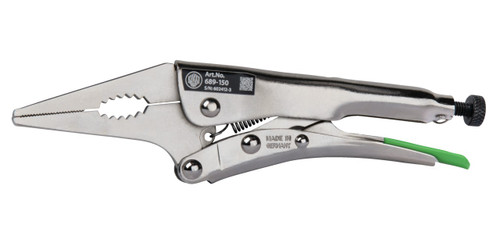
- Series 689 Langbeck, 165 mm: long, narrow jaws for tapering spots where a fat jaw won't fit.
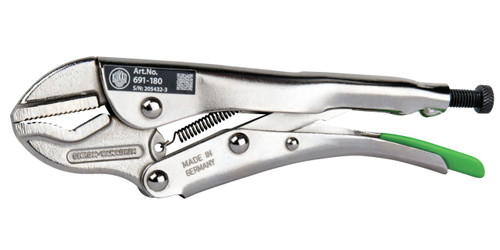
- Series 691 prism jaw, 180 and 250 mm: a wire groove in the upper jaw lets you hold a nail or wire from the front of the jaw.
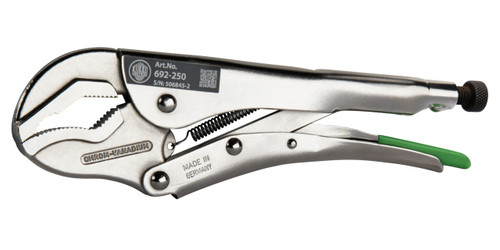
- Series 692 Ideal, 250 mm: a combined jaw with four-point contact.
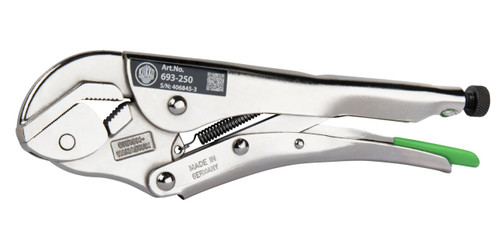
- Series 693 Parallel-Plus, 250 mm: a swiveling jaw for parallel or prismatic clamping.
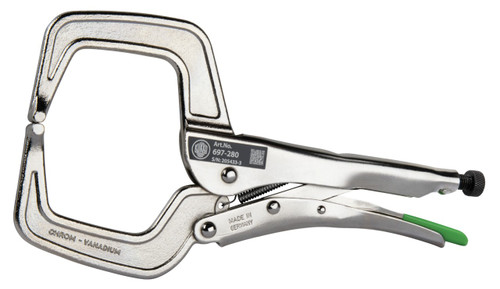
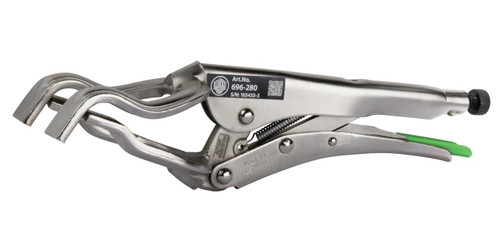
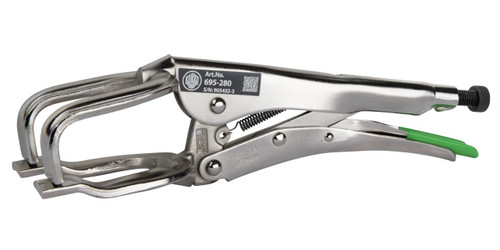
- 280 mm welding group: series 695 with U-shaped jaws, 696 for pipe, 697 for bulky profiles with high webs, 698 with movable jaws and large support discs, and a table model with 85 mm (about 3-3/8 in) of spread and 80 mm of reach.
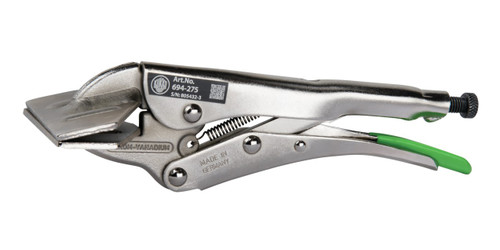
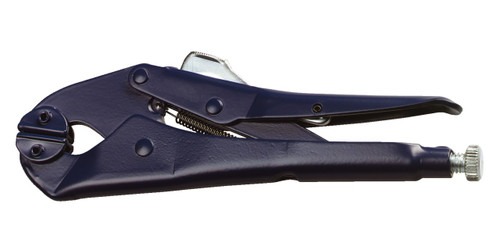
- Wide-jaw, 275 mm: for clamping, bending and flanging thin, soft sheet.
Tip: when you tack two pieces together, set the clamp so it closes with firm hand pressure, not a two-hand fight. Overloading the toggle marks the work and wears the pivot.
Circlip and snap ring pliers
A circlip, which most US shops call a snap ring, sits in a groove either on a shaft (external) or inside a bore (internal). The two need opposite tools. External tips spread the ring open to clear the shaft. Internal tips squeeze it closed to come out of the bore. KUKKO marks them clearly: series 728 models are A-numbered for external rings and series 729 models are J-numbered for internal rings. Each comes in four sizes, 0 to 3, straight or with bent tips (A01 to A31, J01 to J31). Bent tips help when the ring faces you at the bottom of a housing or a bearing bore. Tips and pivots are forged from oil-hardened chrome-vanadium steel. KUKKO has its circlip tools made in Taiwan. If you service a mix of gearboxes and pumps, the 8-piece set with inserted tips covers internal and external rings in one case.
Wear safety glasses. A snap ring that slips off a tip can fly across the bay, and you may never find it.
Specialty pliers for engine and plant work
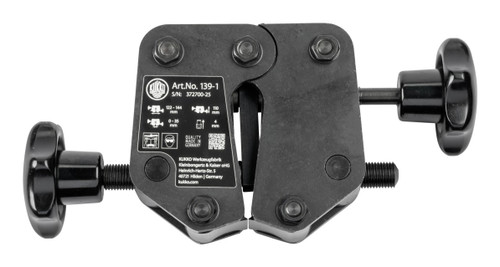
The series 101 piston ring tools open a ring evenly so it doesn't twist or take a set. They come in 50 to 100 mm and 90 to 150 mm piston diameter ranges. The universal installation tool covers 60 to 140 mm and has an adjustable stop, so you can't open a ring past what it can take. The series 139 wedge extractor grips keyway wedges up to 35 mm (about 1-3/8 in). It is set with handwheels and is aimed at electric motors. It weighs about 5.5 lb, so treat it as a bench tool.
The non-sparking 165 mm diagonal cutters and 250 mm water pump tool are copper-beryllium. They are meant for ATEX explosive zones such as fuel handling, gas plants and paint booths, where a steel tool striking steel could ignite vapor. Keep them clean and don't use them as a hammer or pry bar. A copper-beryllium cutter is softer than steel, and its edges can chip on hardened wire.
Related tools
For heavier holding, see our lever and toggle clamps and bench vises. A snap ring often guards a bearing, so once the ring is out, our bearing pullers and separators do the next step. The guide on how to choose a bearing puller helps you size one. For tight fittings, there are adjustable and pipe wrenches. The rest of the range is under hand tools and on the KUKKO brand page.
Frequently asked questions
What is the difference between circlip pliers and snap ring pliers?
They're the same tool under two names. Circlip is the common term in Europe, and snap ring is what most US shops say. What matters is internal or external. External tips spread a ring that sits on a shaft. Internal tips close a ring that sits in a bore. KUKKO series 728 is external and series 729 is internal.
What size locking pliers should I buy first?
For general holding, a 250 mm (about 10 in) universal model with semicircular jaws, like the KUKKO series 690, covers most round and flat stock. Add a 180 mm for tight spaces, or the 165 mm Langbeck long-nose for narrow, tapered spots. Welding work usually calls for one of the 280 mm U-jaw or parallel-clamp models.
Should I pick straight or bent circlip tips?
Straight tips work when you can face the ring head-on with room for your hand, like a ring on the end of an exposed shaft. Bent tips let you reach a ring at the bottom of a housing or behind a flange while your hand stays clear. Many mechanics keep both in the size they use most.
Where would I need non-sparking pliers?
Non-sparking tools are for areas where flammable gas, vapor or dust may be present, such as fuel depots, gas plants, chemical plants and paint booths. KUKKO makes its non-sparking diagonal cutters and water pump pliers from copper-beryllium for use in ATEX explosive zones. Follow your site's hot-work and hazardous-area rules as well.
Why use piston ring pliers instead of spreading rings by hand?
Spreading a ring with your thumbs twists it and can leave it bent, which costs compression and can scratch the cylinder wall. KUKKO piston ring pliers open the ring evenly across its gap. The universal installation model has an adjustable spread for pistons from 60 to 140 mm, so the ring can't be stretched too far.