
-
-
-
-
-
-
-
-
-

-
-
-
KUKKO
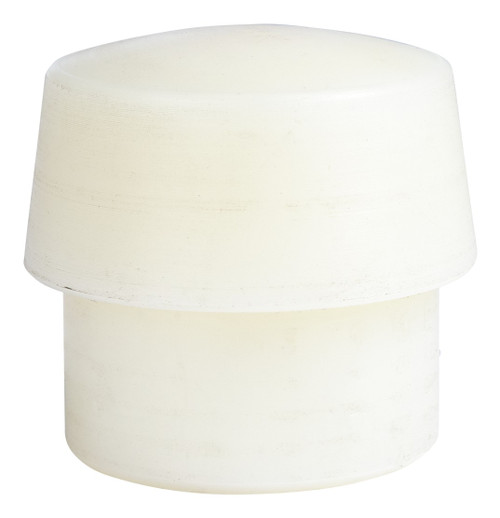
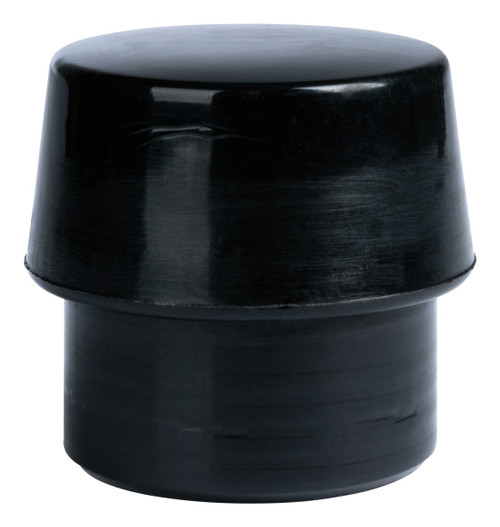
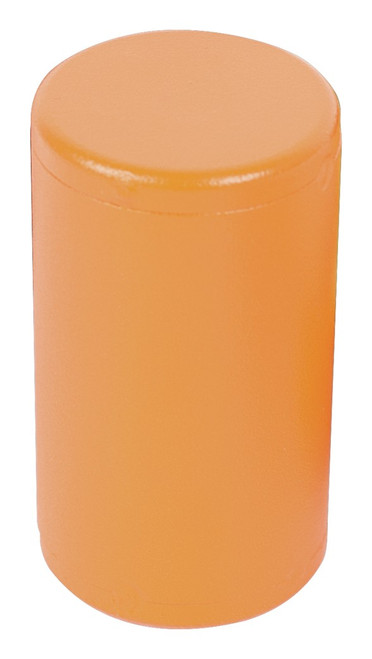
KUKKO SELECTHOR Soft-Face Hammer Replacement Inserts - Series 3003028
Choose options for price
-
Hammers
A soft face hammer moves, seats and straightens parts without leaving a mark, which is what most hammer work on machinery comes down to. At BRAIGG, this page carries KUKKO hammers made in Germany: the Selecthor line with swap-in rubber, plastic and nylon faces from 30 to 125 mm (about 1-1/8 to 4-7/8 in), a recoil-free nitrile hammer filled with steel balls, and non-sparking metalworker's hammers for hazardous areas. You'll also find replacement faces and head halves. Below the products, we cover how to pick a face material and size.
Pick the face before you pick the soft face hammer
The insert material decides what the blow does to the part. KUKKO rates its inserts on the Shore D hardness scale, where a higher number means a harder face.
- Rubber, Shore 50D: the softest. It damps the blow and won't scar paint, stone or finished wood. KUKKO points it at paving, setting curbs, fences and masonry. It also works as a longer-lasting rubber mallet.
- Plastic, Shore 75D: the middle ground for assembly and maintenance. It's firm enough to seat a bushing or tap a cover home, but it won't dent aluminum.
- Nylon, Shore 85D: the hardest and toughest face. KUKKO lists foundries, mold making, auto repair and bending sheet metal. It's the one to grab when you knock a stuck wheel loose from a hub.
All three are oil and grease resistant and don't chip, so a nylon face that has been sitting in a puddle of gear oil still hits clean.
Selecthor: one handle, three faces
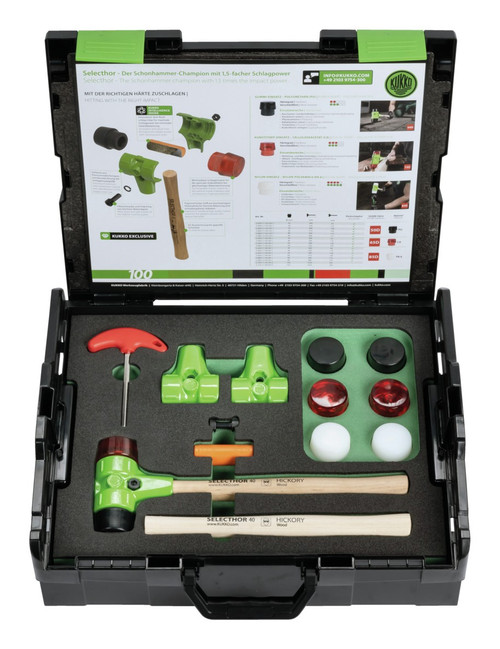
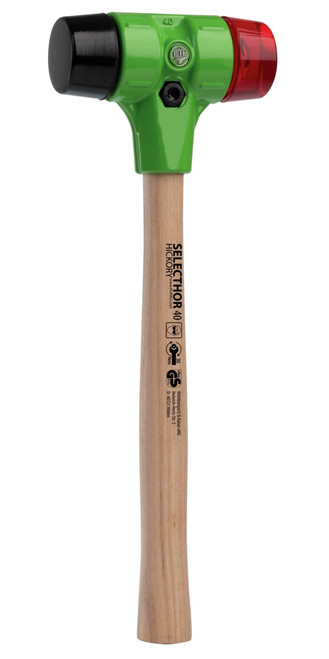
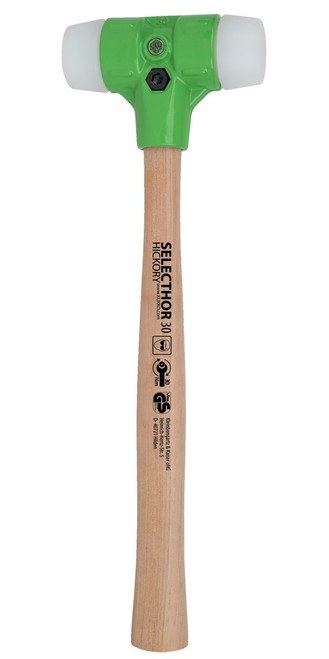
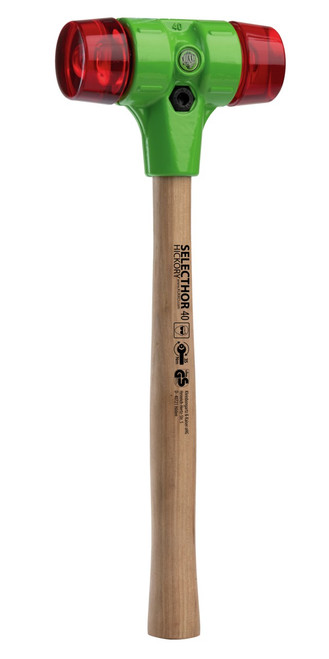
Selecthor heads take two inserts that you can mix. The Selecthor GU ships with rubber faces, the Selecthor KU with plastic, and the Selecthor NY with nylon. Fit a rubber face on one end and nylon on the other, and one soft face hammer covers both gentle and firm blows. Each head has what KUKKO calls an anti-recoil inlay, which kills the bounce so more of the swing goes into the part and less into your wrist and elbow.
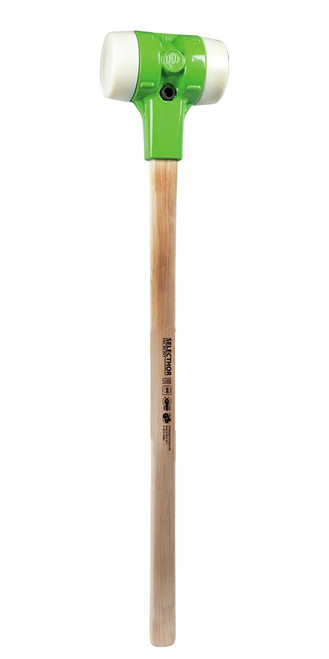
Sizes are given as the face diameter. GU and NY run from 30 to 80 mm, and both offer the 80 mm head on a long handle for two-handed reach. The KU stops at 60 mm. For heavy straightening, the large Selecthor comes with 100 or 125 mm (about 4 or 4-7/8 in) heads. If you'd rather not pick, the Selecthor set includes rubber, plastic and nylon inserts in a case.
Sizing a soft face hammer
As a rough guide, 30 and 40 mm heads suit bench assembly, fitting pins and tapping small housings. A 50 or 60 mm head is the general shop size for bearings, covers and sheet metal. Go to 80 mm and up for wheels, paving stones and large castings, where you want mass more than speed. Choose the biggest head that still fits the space you have to swing in.
Dead blow hammer: the recoil-free 343
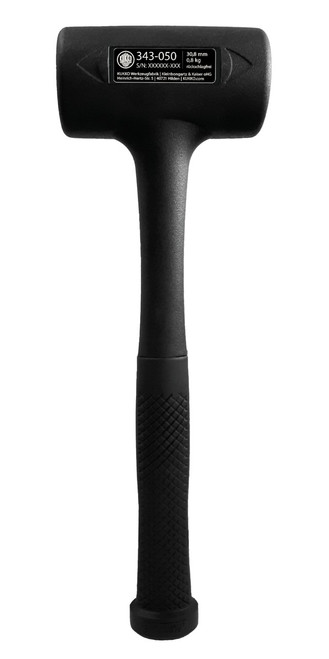
The series 343 recoil-free hammer is what most US shops call a dead blow hammer. Its nitrile rubber head is filled with steel balls that shift forward on impact, so the hammer lands and stays put instead of bouncing back. Faces are 50 and 60 mm, the handle is knurled for grip, and KUKKO rates it from -20 to 90 °C (about -4 to 194 °F). Use it for driving a shaft into a hub, setting a press-fit part or knocking a fixture into position on a machine table.
Non-sparking hammer for hazardous areas
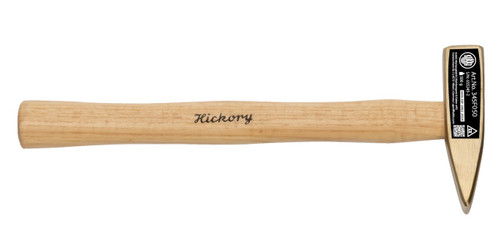
The series 345F metalworker's hammer is made from special alloys such as copper-beryllium or aluminum-bronze. KUKKO lists it for explosive atmospheres (ATEX zones), such as fuel tanks, gas lines and paint booths. It comes in 500 g and 1,000 g (about 1.1 and 2.2 lb). It's a working hammer for driving, straightening sheet and aligning punches, not a mallet. Non-sparking alloys are softer than steel, so dress mushroomed faces early.
Keep a soft face hammer in service
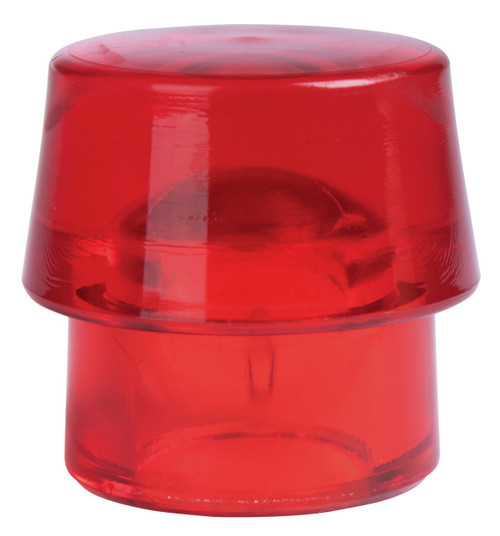
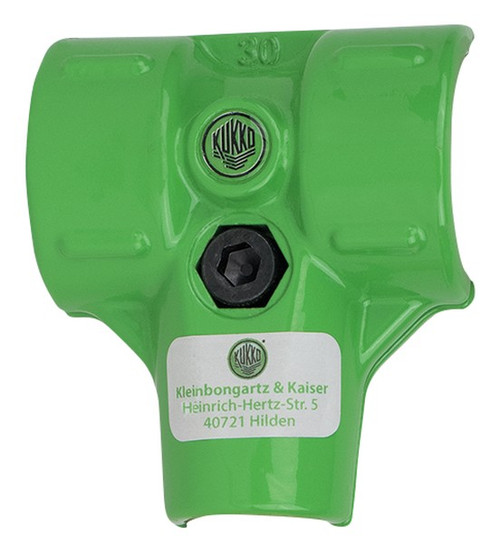
Faces wear, and the handle usually outlasts them. Replace worn nylon impact inserts, rubber inserts or plastic faces by diameter, and match the insert to your head size. If a head itself is cracked, KUKKO sells replacement head halves for the Selecthor.
- Wear eye protection. Even a soft face can launch a chip off the part or rust scale.
- Swap a face once it's split or badly cupped. A torn face can glance off the work.
- Strike square with the full face, not the edge.
- Don't use a soft face to drive a chisel or punch. Use a steel hammer for that.
For striking tools, see our punches and chisels and letter and number stamps. The whole range is under hammers and striking tools.
Frequently asked questions
Which soft face hammer insert should I choose?
Pick by how hard the blow needs to be. Rubber (Shore 50D) is the softest and suits paving, stone and painted parts. Plastic (Shore 75D) handles general assembly and maintenance. Nylon (Shore 85D) is the hardest, for foundry work, auto repair and sheet metal. On a Selecthor you can fit two different faces on one head.
Is a recoil-free hammer the same as a dead blow hammer?
Yes, in practice. The KUKKO series 343 head is filled with steel balls that move forward when it hits, so it doesn't bounce off the work. US shops usually call that a dead blow hammer. It has a nitrile rubber body, 50 or 60 mm faces and a knurled handle.
Can I replace the faces on a Selecthor hammer?
Yes. Replacement inserts are sold as spares by diameter: rubber from 30 to 80 mm, plastic from 30 to 60 mm and nylon from 30 to 125 mm. Match the insert diameter to your head size. If the head itself is damaged, KUKKO offers replacement head halves from 30 to 125 mm.
What is a non-sparking hammer used for?
It's for work where a steel spark could ignite gas, vapor or dust, such as tank farms, fuel systems and paint areas. The KUKKO 345F is made from special alloys such as copper-beryllium or aluminum-bronze and is listed for ATEX zones. It comes in 500 g and 1,000 g, or about 1.1 and 2.2 lb.
Will a nylon hammer mark aluminum or painted parts?
Nylon is the hardest Selecthor face, so it can mark soft aluminum or fresh paint if you hit hard. For finished surfaces, use the plastic face, and for paint, stone or wood, use rubber. Keep the face clean, since grit embedded in any face will scratch the part.