
-
-
-
-

KUKKO
KUKKO VIRIDIS Ductile Iron Screw Clamp with Comfort Grip - Series 493P
Choose options for price
-

KUKKO
KUKKO VIRIDIS Ductile Iron Screw Clamp with Comfort Grip - Series 490P
Choose options for price
-

-

-
-
-

-
-

-

-
Screw Clamps
Screw clamps hold work with a threaded spindle, so you set the pressure and it stays put until you back it off. At BRAIGG, this page carries 14 KUKKO families, from a 28 mm (about 1-1/8 in) fine-thread C-clamp for small fitting jobs to all-steel bar clamps 1,250 mm (about 49 in) long. You'll also find deep-throat cast iron models, parallel clamps, a quick-action clamp that doubles as a small vise, plus glue and one-hand clamps for woodwork. All but the glue clamp are made in Germany. Below the products, we explain how to read the sizes and pick a frame.
How to read screw clamp sizes
KUKKO lists most screw clamps as two numbers, for example 300 x 140 mm. The first is the clamping width, the largest opening between the jaws. The second is the throat depth, how far from the edge of the work the pressure pad can reach. A 300 x 140 mm clamp opens to about 11-3/4 in and reaches about 5-1/2 in in from the edge. Buy width for the thickest stack you glue or weld up, and throat for how far in from the edge you need to press. Most screw clamps that end up too small were short on throat, not width.
All-steel screw clamps for welding and fabrication
The VIRIDIS all-steel line is the workhorse bar clamp group here. All three versions have a built-in spring that soaks up vibration, and a pressure plate with spindle locking so the clamp doesn't walk loose while you grind or hammer nearby.
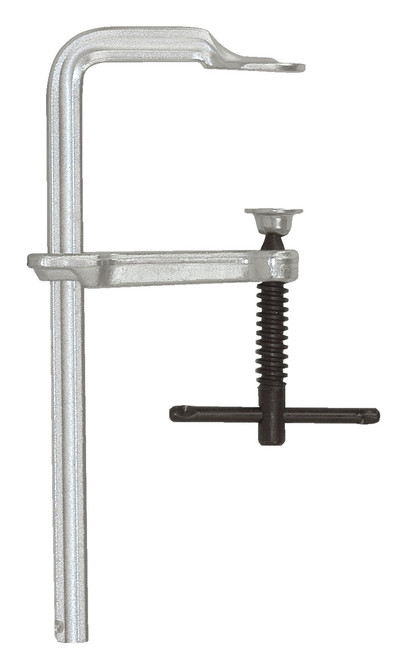
- VIRIDIS 469K with toggle handle: 160 x 80 mm up to 1,250 x 120 mm, rated up to 10,000 N (about 2,250 lbf). The steel toggle lets you lean on it for a hard final turn.
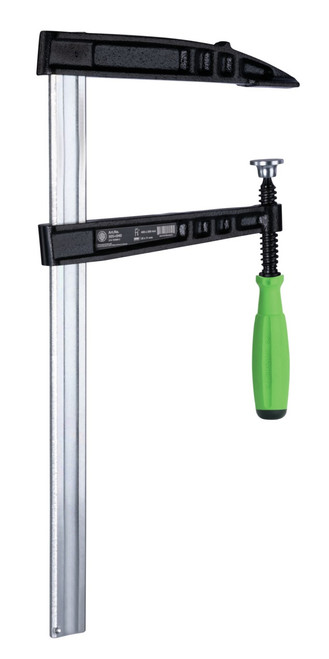
- VIRIDIS 469P with comfort grip: 20 sizes from 100 x 50 to 500 x 120 mm, also up to 10,000 N. Pick this one for bench work where you set and release clamps all day.
- VIRIDIS 469PU with folding handle: 200 x 100 to 600 x 120 mm, up to 7,500 N. The handle folds flat, so it doesn't catch hoses or cords.
Ductile iron and deep-throat clamps
The 490P ductile iron screw clamp pairs cast arms with a steel sliding rail. It runs from 100 x 50 to 400 x 140 mm, with ratings up to 7,000 N. The 493P covers long spans, from 400 to 1,250 mm, with a 120 mm throat. When you need to reach well into a panel, the deep-throat cast iron clamp (505P to 507P) gives a 250 mm (about 9-7/8 in) throat at 400 to 800 mm width, and a 200 mm throat at 1,000 mm.
C-clamps: high force or fine control
The two C-frame families sit at opposite ends. The all-steel C-clamp, series 365, uses a trapezoidal spindle and a hand crank. KUKKO rates it up to 40,000 N (about 9,000 lbf), the highest figure on this page, in sizes from 50 x 50 to 250 x 100 mm. The series 420 fine-thread C-clamp trades force for feel. Its metric fine thread meters pressure in small steps, up to 4,000 N, in sizes from 28 x 25 to 206 x 86 mm. That makes it a good match for thin stock or a part you're aligning by eye.
Parallel, quick-action and special jaws
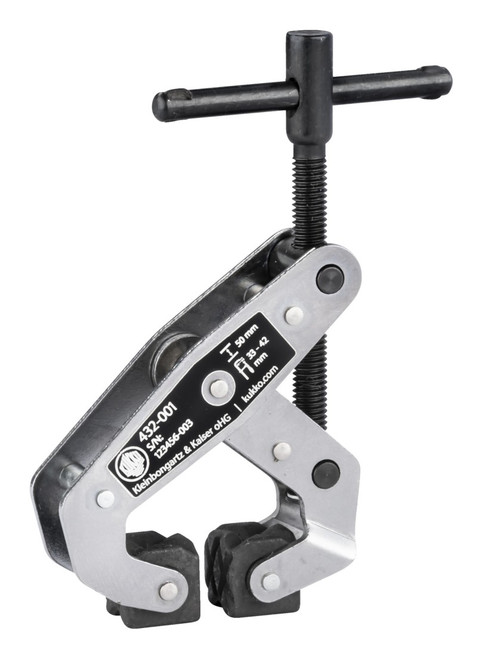
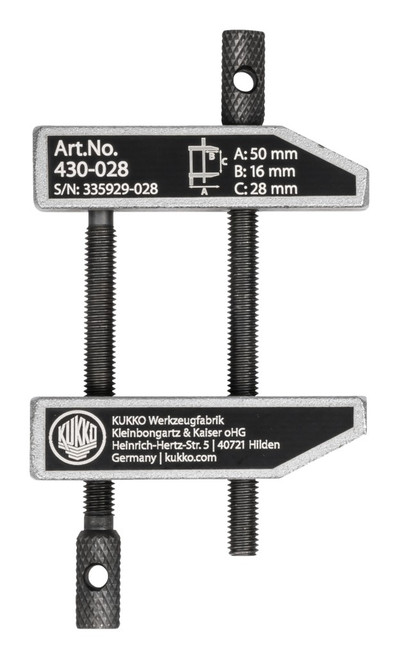
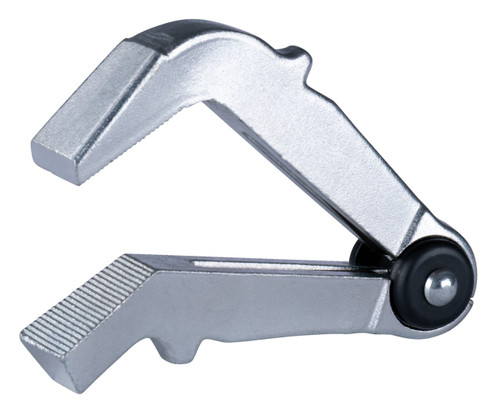
Parallel clamps keep both jaws square to each other, which matters on short, flat parts such as small plates, gauge blocks or a pair of brackets drilled as one. KUKKO's 430 uses double spindle guidance and opens from 0 to 28 mm up to 0 to 105 mm. The series 432 parallel clamp has four different clamping surfaces for round and flat work, opens up to 150 mm and holds up to 8,500 N. The KANT-TWIST quick-action clamp has prism-cut movable jaws that grip angle, tube and odd profiles inside or out, up to 9,700 N. KUKKO calls it a clamp, pliers and vise in one tool.
Among specialty screw clamps, the narrow-jaw series 112-100 (125 and 150 mm) has angled jaws that hold a saw blade upright while you file the teeth.
Light clamps for wood and glue-ups
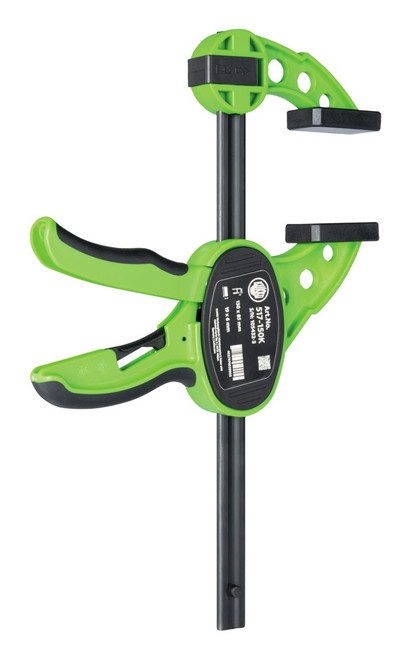
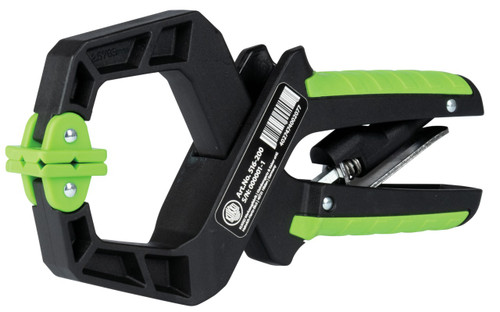
Not every job calls for heavy screw clamps. The series 517 one-hand clamp (150 to 600 mm) tightens and releases with two separate controls, so your other hand holds the part. Protective caps keep the jaws from marking wood. The series 516 glue clamp is a spring-loaded plastic clamp in 180 x 50 and 240 x 102 mm sizes, made in Taiwan.
Care and safety for screw clamps
- Keep weld spatter off the spindle. A drop of light oil on the threads now and then keeps the action smooth.
- Don't put a cheater bar on the handle. Hand-tight on the rated clamp is the design load.
- Check that the pressure pad swivels freely, so it sits flat instead of skidding off the work.
- Wear eye protection when you tap a clamped part into line, and keep fingers out of the jaws as they close.
For holding work at the bench, see our vises, and for fast repetitive setups, try lever and toggle clamps. Worn spindles and pads are covered under vise jaws and clamp parts. The full workholding range is under clamps and vises.
Frequently asked questions
What is the difference between clamping width and throat depth?
Clamping width is the largest gap the jaws open to, so it limits how thick a stack you can hold. Throat depth is how far the pressure pad sits in from the edge of the frame, so it limits how far in from the edge you can press. A 300 x 140 mm clamp opens about 11-3/4 in and reaches about 5-1/2 in.
Which KUKKO screw clamp has the most clamping force?
The all-steel C-clamp, series 365, is rated by KUKKO at up to 40,000 N, which is about 9,000 lbf. It uses a trapezoidal spindle and a hand crank. Among the bar clamps, the VIRIDIS 469K and 469P reach up to 10,000 N, and the KANT-TWIST quick-action clamp reaches 9,700 N.
Are all-steel or ductile iron bar clamps better for welding?
Both work. The VIRIDIS all-steel 469 series has a built-in spring that absorbs vibration and a locking pressure plate, which helps when you grind next to the clamp. The ductile iron 490P and 493P use cast arms on a steel rail. Keep spatter off the spindle on either type.
When should I use a parallel clamp instead of a C-clamp?
Use a parallel clamp when two flat faces must stay square, such as when you hold two plates for drilling or a small part for layout. A C-clamp presses at one point and can tilt thin work. KUKKO's 430 uses double spindle guidance, and the 432 offers four clamping surfaces for flat and round stock.
Can I tighten a screw clamp with a wrench or pipe extension?
No. The handle length is matched to the clamp's rated force. A cheater bar can bend the bar, strip the spindle or crush the work. If you need more force, step up to a larger clamp or to the series 365 C-clamp with its hand crank and trapezoidal spindle.