
Specialty Pliers
Some jobs need a tool shaped for one task. This page collects the KUKKO specialty pliers we carry at BRAIGG: two sizes of piston ring pliers for pistons from 50 to 150 mm (about 2 to 5-7/8 in), a universal installer for 60 to 140 mm, a handwheel-driven wedge extractor for shaft keyways, and two non-sparking tools in copper-beryllium for areas where a spark could ignite gas or dust. All five are made in Germany. Here's what each one does and how to pick the right size.

Why use piston ring pliers
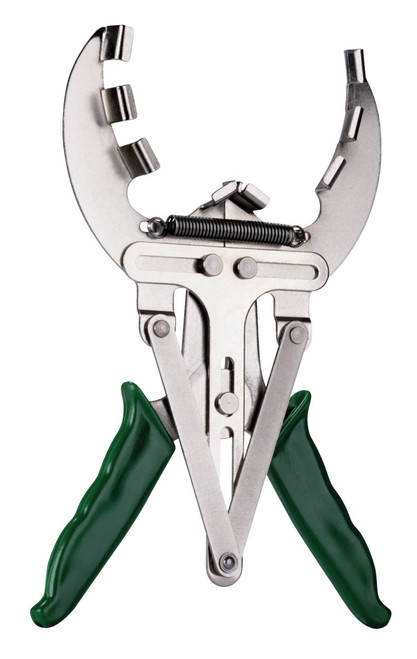
A compression ring is brittle cast iron or steel with a tiny gap. Spread it with your thumbs and you tend to twist it into a spiral, scratch the piston land, or snap it. Once a ring has been twisted, it no longer sits flat against the cylinder wall, and that shows up later as blow-by and oil burning. Piston ring pliers hook both ends of the gap and open the ring evenly in one plane, just wide enough to clear the piston. KUKKO describes its series 101 as spreading the ring without changing its original shape.
Choosing piston ring pliers by piston diameter
Size them to the piston, not the engine displacement. Measure the piston across the skirt or read the bore size from the rebuild spec.
- KUKKO 101-1: 50 to 100 mm (about 2 to 3-15/16 in). This covers motorcycle, small engine, compressor and most passenger car pistons.
- KUKKO 101-2: 90 to 150 mm (about 3-9/16 to 5-7/8 in). Use it for large gas and diesel engines, truck pistons and big industrial compressors.
The two ranges overlap from 90 to 100 mm. If your pistons fall in that overlap, either tool works. Pick the one that also covers the other engines you see most.
The universal installer with a spread stop
The KUKKO 101-3 universal piston ring installation pliers cover 60 to 140 mm (about 2-3/8 to 5-1/2 in) in one tool. The difference is the adjustable spread. You set how far the jaws can open before you start, so the ring can't be overstretched or broken. That's handy for a builder doing many pistons of one size, or for a tech who installs rings now and then and doesn't yet have a feel for how far is too far. Its tips wear with use, so KUKKO sells a pair of replacement tips with fasteners.
A tip on technique: install the oil ring first, then the second ring, then the top ring. Check the marks on the rings, because most compression rings have a "top" side, and an upside-down second ring pumps oil.
Wedge extractor for keyways
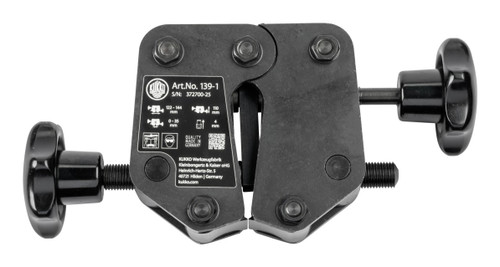
Gib-head and drive wedges in shaft keyways can rust in place until a drift just mushrooms the wedge head. The KUKKO series 139 wedge extractor clamps the wedge in jaws that open from 0 to 35 mm (about 1-3/8 in) and pulls it straight out along the keyway. Both the clamp and the pull are set with handwheels, so you don't need a wrench. KUKKO aims it at electric motors, where you can't swing a hammer against the motor shaft without risking the bearings. At about 5.5 lb, it's a maintenance department tool rather than one for a pocket. Spindles, clamping blocks and the guide are available as series 139 spare parts.
Non-sparking cutters and water pump pliers
In paint booths, fuel farms, gas plants, grain handling and other ATEX-rated areas, a steel tool striking steel can throw a spark. KUKKO makes these two from copper-beryllium:
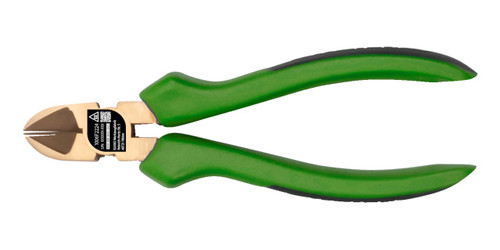
- Non-sparking diagonal cutters, 165 mm (about 6-1/2 in) for cutting wire and cable cleanly.
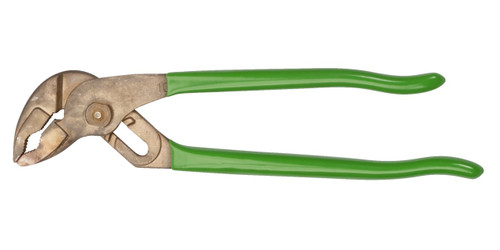
- Non-sparking water pump pliers, 250 mm (about 10 in) with a progressively adjustable jaw for pipe fittings and gripping parts.
Copper-beryllium is softer than tool steel. Don't use the cutters on hardened wire or the pliers as a hammer, and keep them clean, since steel chips embedded in the jaws defeat the purpose. Non-sparking tools lower one ignition risk, but they don't replace gas testing or your site's hot work permit.
Care and safety
- Wear safety glasses when spreading rings. A ring that slips off the tips can fly.
- Wipe the tips of the piston ring pliers before each piston so grit doesn't scratch the ring lands.
- Back the handwheels off fully before storing the wedge extractor.
- Store non-sparking tools apart from steel tools.
For retaining rings, see our circlip pliers, and for clamping, the locking pliers. Other types of pliers are on the main pliers page. Engine rebuild tools such as valve spring compressors are under engine and transmission tools.
Frequently asked questions
What size piston ring pliers do I need?
Go by piston diameter. The KUKKO 101-1 covers 50 to 100 mm, about 2 to 3-15/16 in, which fits most car, motorcycle and small engine pistons. The 101-2 covers 90 to 150 mm for truck, diesel and large compressor pistons. The 101-3 universal installer spans 60 to 140 mm with an adjustable spread stop.
Can I install piston rings without pliers?
People do it by hand, but it's easy to twist a ring into a spiral or snap it, especially a thin top ring. A twisted ring may not seat flat and can cause blow-by and oil consumption. Piston ring pliers open the ring evenly in one plane, which is cheap insurance on an engine rebuild.
What is the difference between the 101-1 and the 101-3?
The 101-1 is a fixed piston ring expander for 50 to 100 mm pistons. The 101-3 is a universal installer covering 60 to 140 mm with an adjustable spread, so you set the maximum opening and can't overstretch the ring. Its tips are a wear part, and KUKKO sells a replacement pair.
Are non-sparking pliers safe in any hazardous area?
They reduce the risk of a mechanical spark, which is why KUKKO rates its copper-beryllium tools for ATEX explosive zones. They are not a substitute for your site's gas testing, permits and procedures. Copper-beryllium is also softer than steel, so don't use the cutters on hardened wire or abuse the jaws.
What does a wedge extractor do?
It pulls a stuck wedge out of a shaft keyway. The KUKKO series 139 clamps wedges up to 35 mm (about 1-3/8 in) and draws them out with handwheels, no wrench needed. KUKKO recommends it for electric motors, where hammering on the shaft could damage the motor bearings. Spare spindles and clamping blocks are available.