
-
-
Wright Tool
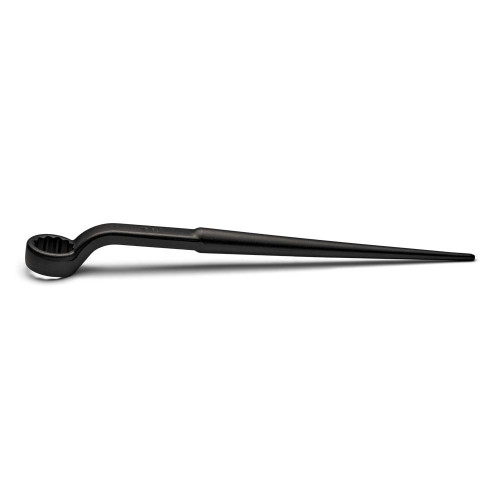
Wright Tool Structural Spud Wrench 12 Point Box End w/Offset Head Black Industrial
Choose options for price
-
-
-
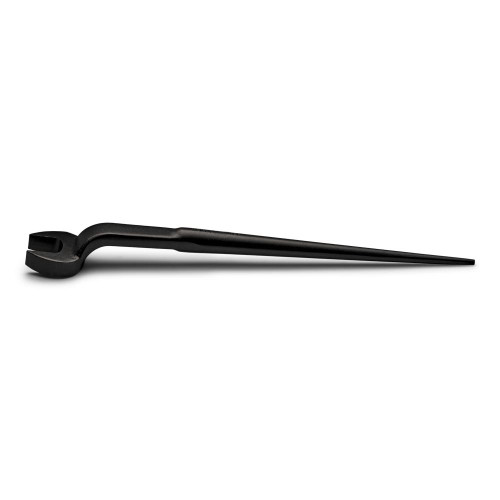
Wright Tool
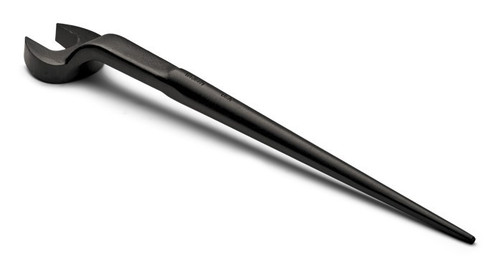
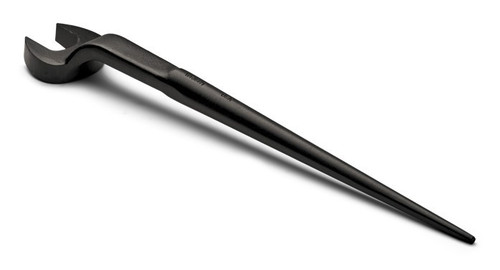
Wright Tool Structural Spud Wrench Open End w/Offset Head Black Industrial
Choose options for price
Structural Wrenches
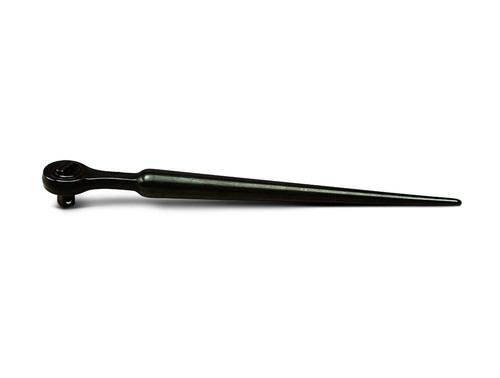
A spud wrench is the ironworker's wrench: a wrench head on one end and a long tapered pin on the other for lining up bolt holes in steel. At BRAIGG, you'll find Wright Tool spud wrenches with offset heads. They come in open end from 13/16 to 1-5/8 inch and 12 point box end from 13/16 to 2-3/4 inch. The category also has heavy open end structural wrenches in 1-13/16, 1-7/8 and 2 inch, and a 1/2 drive construction ratchet with a spud handle. The guide below matches wrench sizes to bolt sizes.
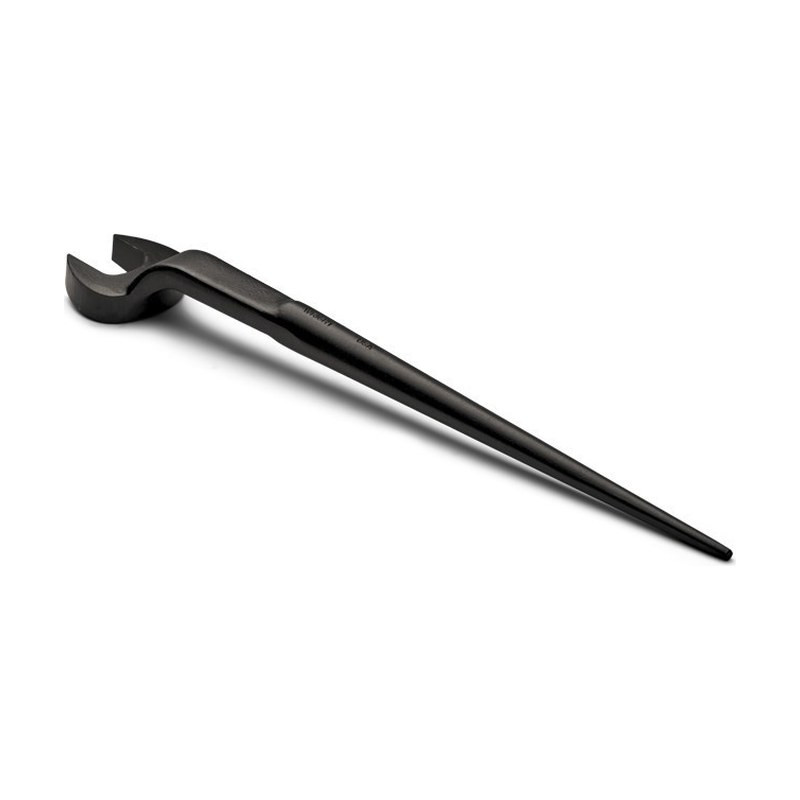
What the spud end does
When a beam lands on a column, the holes in the connection plates almost never line up on the first try. You push the tapered spud into the holes and lever the steel until they match, then drop a bolt into an open hole while the spud holds alignment. Once the connection is pinned with bolts, the wrench end runs the nuts up snug. One tool does both jobs, so it rides in the ironworker's belt all day. That's why people also call it an ironworker wrench or a structural wrench.
Open end or 12 point box end spud wrench
The open end slides onto a nut from the side, which is quicker when you're working along a row of bolts with limited room behind the flange. The 12 point box end grips all the corners and won't spread under a hard pull, so it's the better choice for snugging up. Both Wright lines have an offset head that lifts your hand off the steel, and both come in a black industrial finish. Many crews carry one of each in their two most common sizes.
Matching wrench size to bolt size
Structural bolts use heavy hex nuts, which are bigger across the flats than standard nuts of the same diameter. The width is 1-1/2 times the bolt diameter plus 1/8 inch. So the wrench you need is not the number stamped on the bolt:
- 5/8 inch bolt: 1-1/16 inch wrench.
- 3/4 inch bolt: 1-1/4 inch wrench.
- 7/8 inch bolt: 1-7/16 inch wrench.
- 1 inch bolt: 1-5/8 inch wrench.
- 1-1/8 inch bolt: 1-13/16 inch wrench.
- 1-1/4 inch bolt: 2 inch wrench.
On most building steel the 3/4 and 7/8 inch bolts are the workhorses, which puts the 1-1/4 and 1-7/16 inch spud wrench on the most belts. Check the drawings or the bolt head before you buy for a job.
Heavy structural wrenches and the ratchet spud handle
For 1-1/8 and 1-1/4 inch bolts, Wright makes plain open end structural wrenches in 1-13/16, 1-7/8 and 2 inch. These weigh about 7 lb apiece. They're meant for heavy connections, flanges and equipment bases where a belt-size wrench can't reach the needed size. The Wright 4428 is a 15 inch, 1/2 drive construction ratchet with a spud on the end of the handle. It takes standard 1/2 drive sockets. A single ratchet plus a few impact sockets or deep sockets covers several bolt sizes, and you still have a pin to line up holes.
Final tightening is a different job
A spud wrench gets bolts snug tight. Pretensioned high-strength connections are finished by turn-of-nut, calibrated wrench or tension control methods spelled out in the project specs, often with an impact wrench or a torque multiplier. For big nuts that have to be hammered loose, use a slugging wrench. Don't hit the head of a spud wrench with a sledge. For more on other wrench styles, read our guide to the types of wrenches.
Frequently asked questions
What is a spud wrench used for?
Ironworkers and steel erectors use it to line up bolt holes and tighten structural bolts. The tapered spud on the handle end goes into misaligned holes and levers the steel into position. The wrench end then runs the nuts up snug. Pipefitters also use one to align flange bolt holes.
What size spud wrench do I need for a 3/4 inch bolt?
A 1-1/4 inch wrench. Structural bolts use heavy hex nuts, which measure 1-1/2 times the bolt diameter plus 1/8 inch across the flats. A 7/8 inch bolt takes 1-7/16, and a 1 inch bolt takes 1-5/8. Always check the actual nut if you're unsure.
Is an ironworker wrench the same as a spud wrench?
Yes. Ironworker wrench, spud wrench and structural wrench mostly refer to the same tool: a wrench head on one end and a tapered alignment pin on the other. Some people also use structural wrench for plain heavy open end wrenches without a spud, like the Wright 1753, 1754 and 1755.
Can I hammer on a spud wrench?
No. A spud wrench isn't designed for strikes, and hammering it can crack the head or mushroom the end. If a nut needs to be shocked loose, use a striking or slugging wrench made for hammer blows. Wear eye protection when you do.
What does the Wright 4428 ratchet spud handle do?
It's a 15 inch, 1/2 drive ratchet whose handle ends in a spud. You put a standard 1/2 drive socket on the head to run nuts, then use the tapered end to align holes. It lets one ratchet cover several bolt sizes instead of carrying a separate spud wrench for each one.