
Locking Pliers
Locking pliers hold a part after your hand leaves the handles, but the jaw shape decides how well they hold it. At BRAIGG, the KUKKO range includes universal and prism jaws for general gripping, narrow Langbeck jaws for restricted access, wide jaws for sheet metal, and welding patterns for flat stock, pipe and bench work. Start with the contact surface and the jaw opening you actually need. A longer handle does not automatically mean more useful clearance. Below, you'll find model examples and practical checks for choosing a pair that sits properly on your work.
How locking pliers hold and release
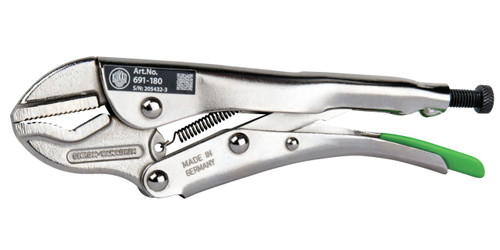
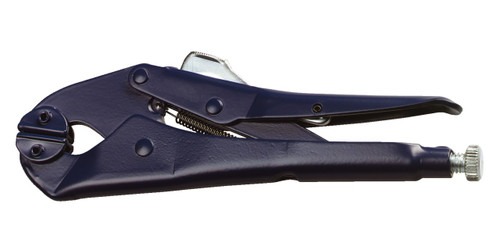
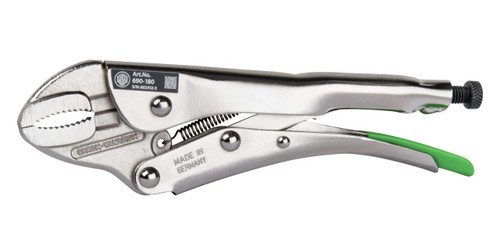
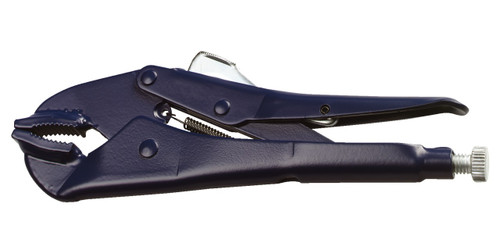
The handles drive a toggle linkage past center, which holds the jaws closed without continuous hand pressure. A knurled fine-thread screw sets the closure. Adjust it on the work, squeeze the handles, then use the release mechanism to let go. Start gently on thin material. Teeth that hold a rusty stud can leave permanent marks on softer or finished stock.
Set the pressure on a scrap piece of the same thickness when the surface matters. If closing the handles takes two hands and a struggle, back the screw off and check the fit. More pressure is not a cure for jaws that touch only at their edges.
Universal, prism and narrow jaws
The KUKKO 690 universal family has semicircular jaws for round and flat stock. Overall lengths are 180, 250 and 300 mm, about 7, 10 and 12 in. Maximum jaw openings are 35, 50 and 65 mm, roughly 1-3/8, 2 and 2-9/16 in. Check those openings against the work rather than choosing solely by handle length.
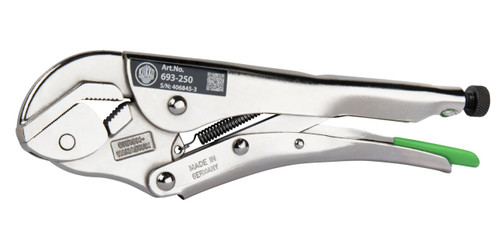
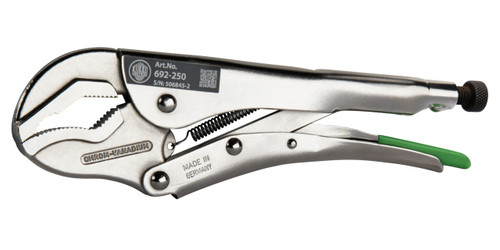
The 691 prism-jaw models have a wire groove in the upper jaw and come in 180 and 250 mm lengths. KUKKO's 692 Ideal uses a combined jaw with four-point contact, while the 693 Parallel-Plus has a swiveling jaw for parallel and prismatic clamping. These shapes give you different contact patterns; choose one that seats firmly on the part.
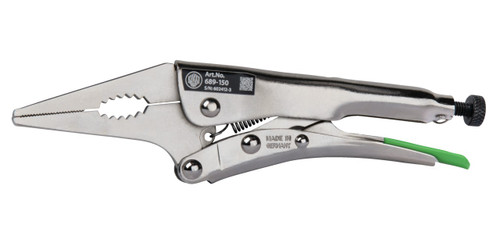
For a narrow approach, consider the Langbeck family. The model table lists 689-150 at 150 mm long (about 6 in) with a 40 mm opening (about 1-9/16 in). The 689-230 is 230 mm long (about 9 in) with a 55 mm opening (about 2-3/16 in). Check the space around the handles before committing to a longer pair.
Welding locking pliers for fit-up
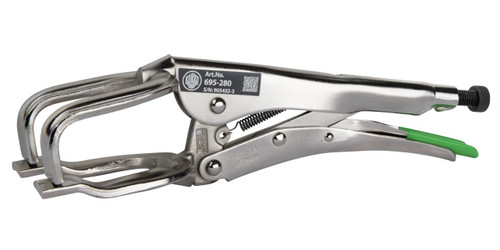
Weld fit-up calls for jaws that leave the joint accessible while holding the pieces in position. KUKKO's 695 welding pattern has U-shaped jaws for centric clamping of flat stock and profiles. The 280 mm body is about 11 in long, with a maximum opening of 60 mm, about 2-3/8 in.
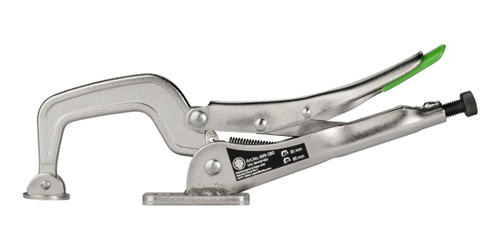
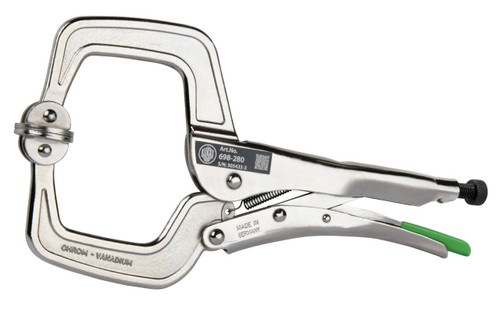
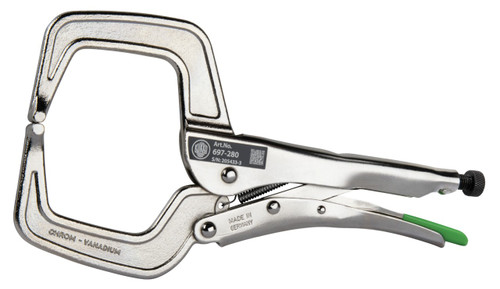
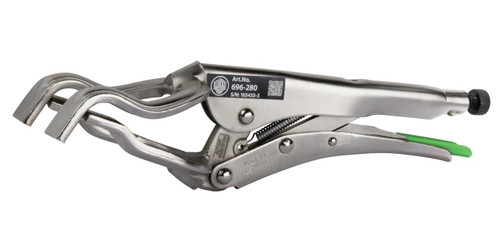
For round work, the 696 pipe welding model uses jaws shaped for pipe and round stock. Its maximum opening is 90 mm, about 3-9/16 in. The 697 clamping model suits bulky or asymmetrical work, while the 698 uses movable jaws with large support discs. The 699 table model is intended for grooved workbenches.
With a locking C-clamp, check the required throat clearance as well as the opening. An obstruction can prevent the jaws from reaching the joint even when the opening looks large enough. See lever and toggle clamps when a dedicated hold-down suits the fixture better.
Sheet metal and building your own selection
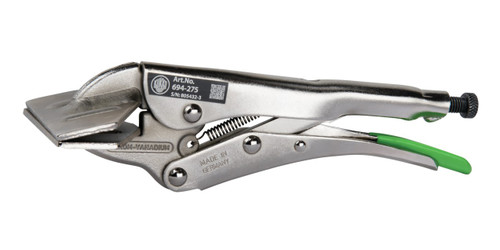
The 694 wide-jaw pattern clamps edges and surfaces and is intended for bending and flanging thinner, softer sheet. Its broad contact is a different job from gripping a bolt head. Test on an offcut before folding a visible panel edge.
Before buying a locking pliers set, list the jaw types you use. Several universal sizes will not handle every task: a narrow pair can reach places a broad welding pattern cannot. The models described here are individual tools, not a packaged set.
Keep the release path clear
Support the work before releasing the jaws, and keep fingers out of the handle path. Wear eye protection. Don't add a pipe to the handles or use a clamped pair as a lifting point. Remove weld spatter from moving parts and maintain the pivot and screw according to the tool instructions.
Locking pliers grip parts; they are not the right tool for spreading a retaining ring. Use Snap Ring & Circlip Pliers for that task. The parent pliers category covers the other gripping patterns.
Frequently asked questions
What size locking pliers should I start with?
Start with the part size and jaw shape rather than a handle-length rule. In the KUKKO 690 universal family, the 250 mm model, about 10 in long, opens to 50 mm, about 2 in. Smaller work or restricted access may call for another size or a narrow-jaw pattern.
How do I adjust the pressure on locking pliers?
Use the adjusting screw to set the closure, then test the grip on the work or a matching piece of scrap. Aim for a firm hold that you can close with controlled hand pressure. If the jaws mark or crush the work, reduce pressure and reconsider whether the contact shape suits the part.
What makes welding locking pliers different?
Their jaw shapes suit holding parts during fit-up rather than just gripping a fastener. KUKKO's 695 uses U-shaped jaws for flat stock and profiles, while the 696 is shaped for pipe and round stock. Leave access to the joint and check that the jaws seat before tightening the grip.
Should I buy a locking pliers set or individual tools?
Base your choice on the jobs you repeat most often. Several universal sizes can cover different openings, but they do not replace a narrow jaw for access or a broad jaw for sheet edges. The tools described on this page are individual models. Select the contact shapes and openings you need rather than assuming a packaged set is included.
Can locking pliers bend sheet metal?
A suitable wide-jaw pattern can bend or flange thinner, softer sheet. KUKKO describes its 694 for that work and for clamping edges and surfaces. Test the pressure and bend on an offcut first. A narrow toothed jaw concentrates contact and can leave marks where you wanted a straight fold.