
Wheel Hub & Axle Pullers
A wheel bearing removal tool has to match what is actually coming off: a hub assembly, a hub on axle splines or a bearing pressed into a knuckle. Those are different pulling jobs. BRAIGG carries KUKKO wheel hub and axle tools, with a substantial selection for trucks and commercial vehicles alongside passenger-car hub pullers. Start with the mounting pattern and the component you must separate. Then check the reaction point, available reach and required adapters. A wheel hub removal tool is not automatically a bearing press kit, and a truck axle puller is not a universal passenger-car tool.





Choose a wheel bearing removal tool for the right operation
First identify the bearing arrangement. A bolt-on hub unit comes away as an assembly after its retainers are removed, although corrosion may resist removal. A press-fit bearing may require the hub to come out first, followed by a retaining ring and the bearing itself. Serviceable tapered bearings use a different disassembly sequence again. Follow the vehicle procedure before deciding which part the puller should grip.
The parent Automotive Service Tools category covers related work. For the distinction between a bench press and an approved screw-driven kit, read how to remove a wheel bearing. If the remaining job is a bearing rather than the hub, see Bearing Pullers & Separators for tools that may suit the exposed ring.
Passenger-car hubs: check the flange and bolt circle
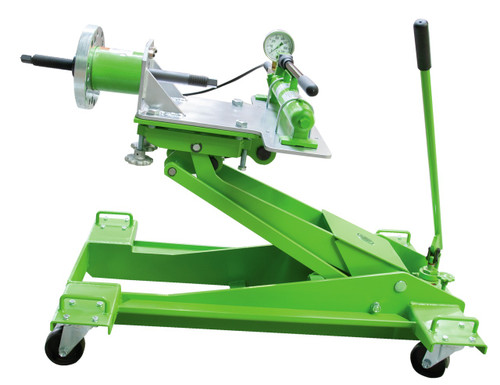
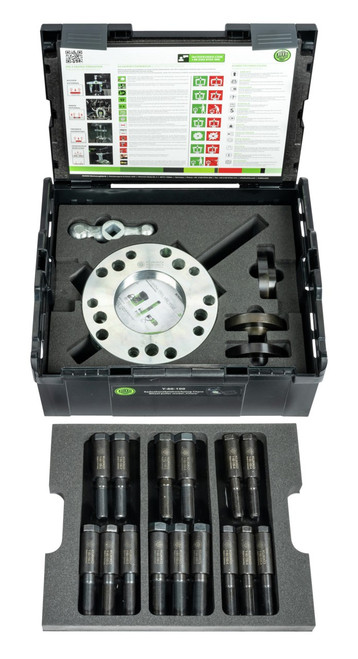
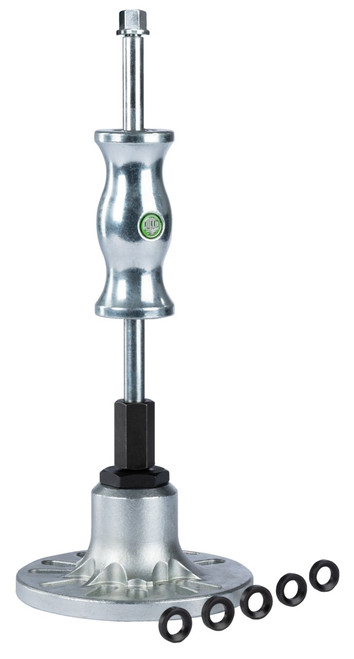
The KUKKO series 229 hydraulic hub puller is described for 4-hole and 5-hole hubs, with a listed bolt-circle range of 97 to 145 mm (approximately 3.82 to 5.71 inches). The flange has slots to accommodate different spacing. Those figures are a starting point, not proof that the tool will clear your particular hub and surrounding parts.
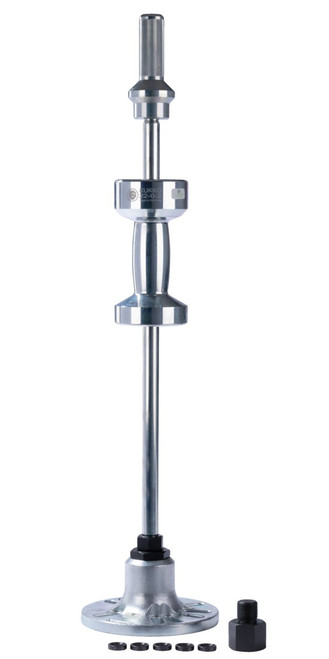
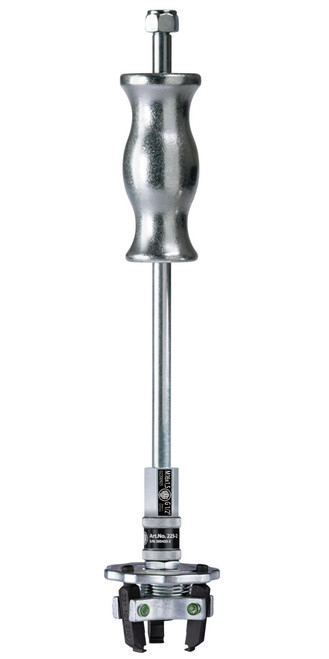
The 229-1-1 sliding-hammer hub puller uses a flange attachment as well. Check mounting hardware, thread engagement and space for the hammer stroke. Do not attach a tool through unsuitable or damaged threads. Before selecting a wheel bearing removal tool for a splined hub, confirm where the forcing screw is supposed to react and whether the shaft end needs a specified protective adapter.
Truck hubs and axles need different attachments
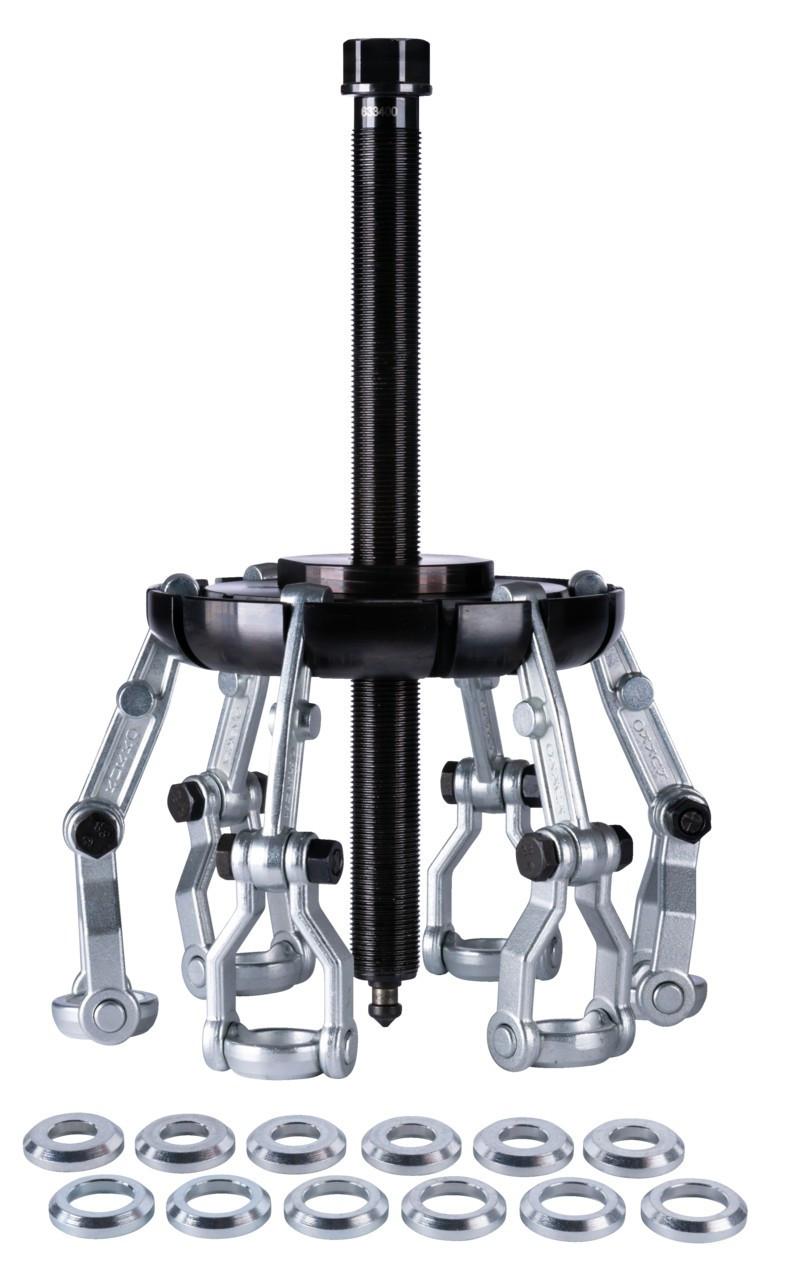
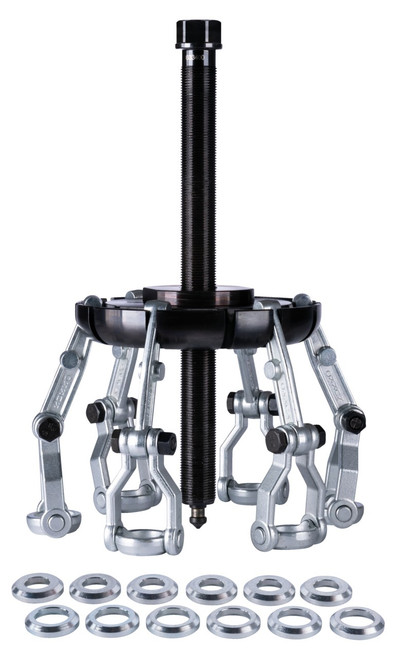
The KUKKO model 38 truck hub puller uses a disc crossbar with up to five movable pulling jaws. Its listed bolt-circle diameter is 250 mm (about 9.84 inches), and its external pulling reach is 105 mm (about 4.13 inches). These dimensions describe the model, not the whole category.
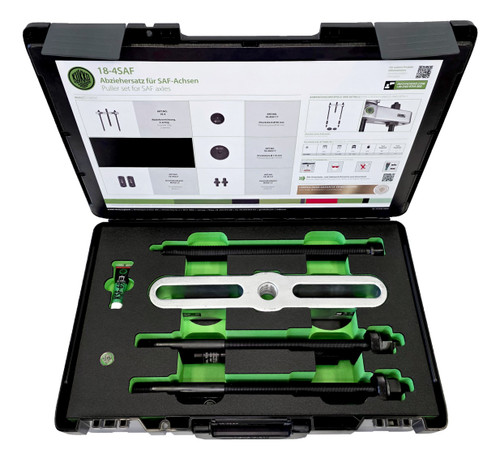
For commercial axles, the 226-4/11 truck axle hub puller includes adapters and is described for SAF and BPW applications. The separate 18-4SAF set is listed for specific SAF axle types. Check the axle identification and adapter requirements before choosing an axle puller. Similar force ratings do not make a wheel-stud attachment interchangeable with an axle-specific adapter.
Check the full setup, not just the force rating
A wheel bearing removal tool needs enough usable reach and a sound reaction surface. Check both before applying pressure. The spindle must stay aligned with the intended pulling axis, and the attachment must load the component evenly. If the setup leans or the mounting hardware bends, release the load and find the cause.
A hub puller can remove one component while leaving a bearing ring behind. That remaining ring may need a separate bearing separator and compatible pulling attachment. For a wheel bearing puller, access to the correct ring matters; pulling through the rolling elements can damage a bearing you intend to reuse. Check what remains attached after each stage of disassembly.
Support the vehicle and control the released hub
Support the vehicle on rated stands at the specified lifting points. Secure heavy hubs with suitable lifting equipment before the final release. Wear eye protection, keep fingers away from the moving joint and use a protective cover or guard as directed by the tool maker. Keep people out of the line of pull.
If a wheel bearing removal tool stops moving the part, do not immediately add more leverage. Check for an overlooked circlip, nut or bolt and confirm the pull direction. Use hydraulic equipment only within its instructions, and never apply heat near hydraulic seals or hoses. Inspect mounting threads and adapters again after any setup shift.
Frequently asked questions
Is a hub puller the same as a wheel bearing puller?
No. A hub puller attaches to or grips a hub to separate it from another component. A bearing puller acts on a bearing or bearing ring. Some service kits handle several stages with different adapters, but a flange puller alone does not establish that you can press a bearing out of a knuckle.
Will a 4-hole or 5-hole flange fit any passenger car?
The hole count is only one check. Confirm bolt-circle diameter, mounting thread size, engagement length and clearance around the flange. Series 229 lists a 97 to 145 mm bolt-circle range, approximately 3.82 to 5.71 inches. The vehicle procedure and the individual tool instructions still determine whether the complete setup is suitable.
Which pullers here are intended for truck work?
Several are specifically described for trucks or commercial axles. Model 38 is a truck hub puller with a disc crossbar. The 226-4/11 is described for SAF and BPW axle hub work, while the 18-4SAF set lists specific SAF axle applications. Check your axle identification before selecting adapters.
Can I use a hub cap puller to remove a wheel hub?
No. A tool intended for a pressed-on hub cap, dust cap or grease cap is not a structural hub puller. The similar names describe different components. Read the individual product application and identify exactly what you are removing before applying force to the tool or the vehicle.
What should I check when a hub will not move?
Unload the tool and check the service procedure for remaining nuts, bolts, retaining rings or other locks. Verify the pull direction and the attachment's seating. If everything is released, reassess corrosion and tool suitability. Do not add an extension pipe or exceed the tool's limits to compensate for an uncertain setup.