
Oil Filter Wrenches
A spin-on filter that went on too tight, or baked on for 10,000 miles, won't come off by hand. An oil filter wrench gives you the grip and leverage to break it loose without crushing the can or tearing it open. At BRAIGG, you'll find four KUKKO styles: a fabric strap wrench, a 32-link chain wrench, a steel band wrench in two handle versions, and a claw wrench in three sizes. Together they cover 60 to 140 mm (about 2-3/8 to 5-1/2 in) filters. Here's how to pick one for your vehicles.
Measure the filter first
Every oil filter wrench has a range, so measure the can before you buy. Wrap a flexible tape measure around it, or put calipers across the widest part near the base where you'll grip it. Small car and motorcycle filters run on the narrow end. Pickup, tractor and diesel filters can be much larger. Write the diameter down for each vehicle you service, because guessing usually means the wrench slips on the one filter that matters.
Four types of oil filter removal tool
Strap wrench
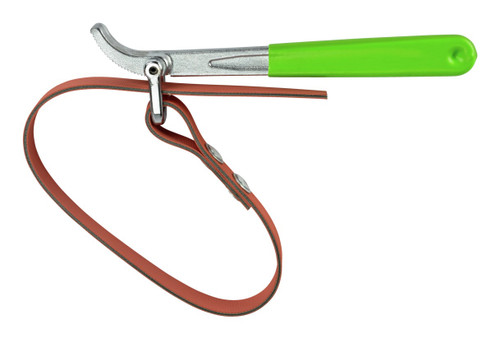
The KUKKO strap oil filter wrench (series 104) uses a fabric strap with a rubberized grip. You loop it around the filter and pull the handle, and the strap tightens as you turn. It grips evenly and is the least likely to dent the can, which makes it a good choice for a filter you only need to snug or loosen gently. It also works on painted or polished round parts where marks matter.
Chain wrench
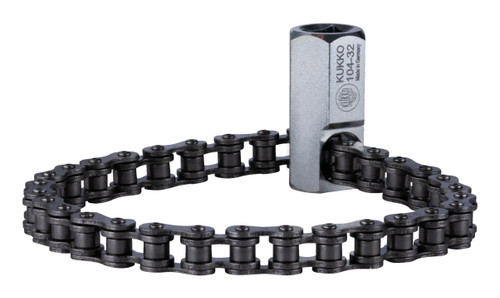
The 32-link chain oil filter wrench bites harder than a strap. The chain tensions around the can and digs in, so it can turn a filter that is slick with oil. The trade-off is that it can mark or crush a thin can, so save it for filters that are coming off for good.
Steel band wrench
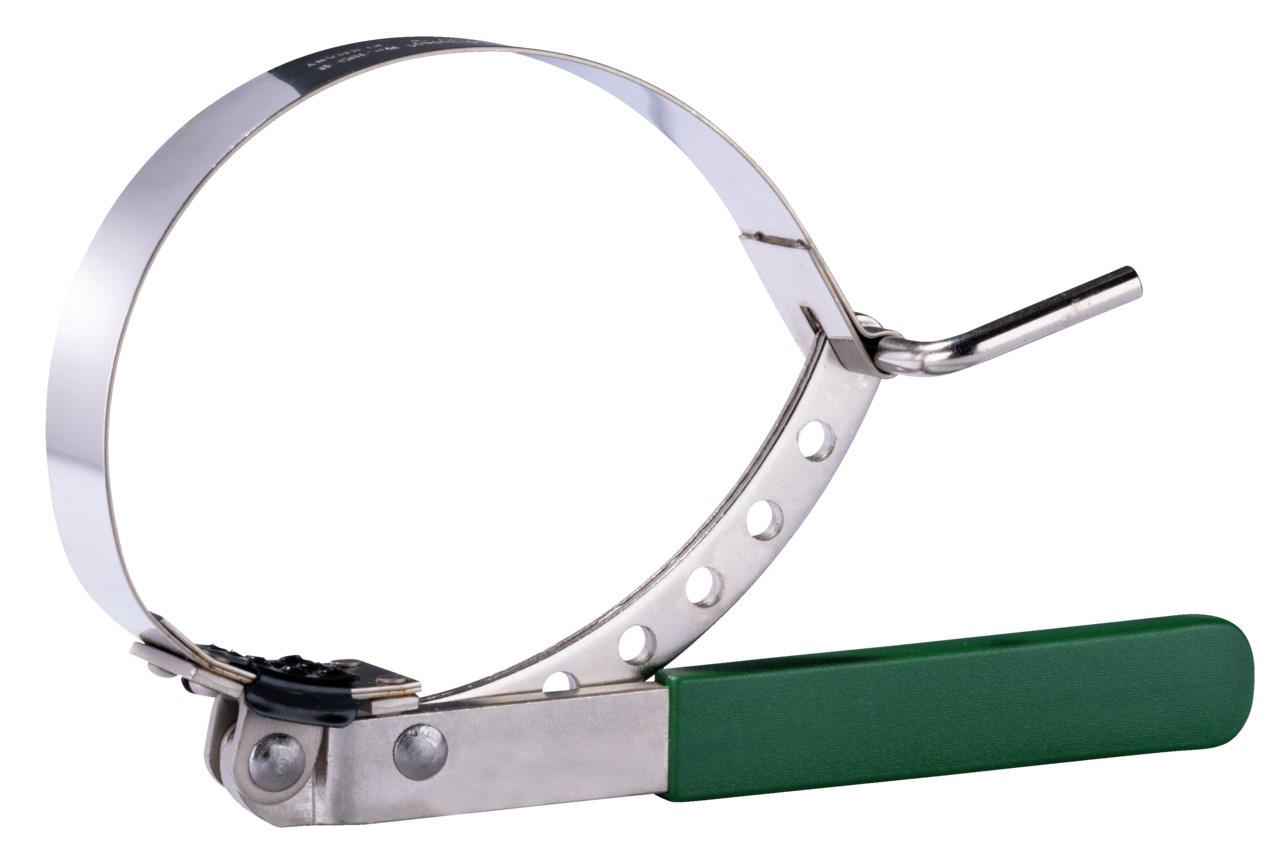
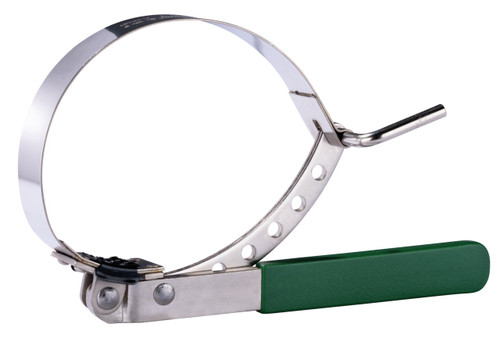
The band oil filter wrench (series 105) has an adjustable steel band for filters from 70 to 110 mm (about 2-3/4 to 4-5/16 in). Choose the 105-0 with its quick-clamp handle for fast work in open engine bays. The 105-1 has a square drive instead, so you can run it with a ratchet and extension where there is no swing room for a handle. Low-mounted filters behind crossmembers are the classic case.
Claw wrench
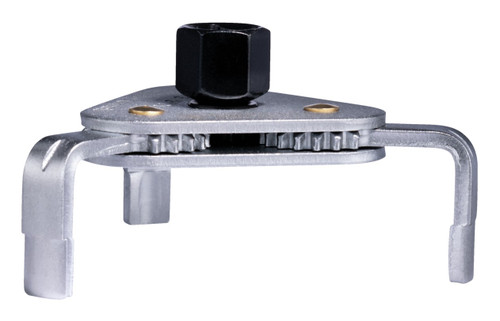
The oil filter claw wrench (series 108) closes its claws around the filter as you turn. KUKKO builds it for filters stuck tight, and it works in hard-to-reach places. It comes in 60 to 100, 65 to 120 and 90 to 140 mm (up to about 5-1/2 in). Overlapping ranges mean you can usually cover a whole fleet with two sizes.
Building an oil filter wrench set
A home mechanic with one or two cars can often get by with a single band or claw wrench sized to those filters. A shop that sees everything should put together an oil filter wrench set: a strap for gentle work, a claw or band in two sizes for most cars and light trucks, and the chain for the stubborn ones. KUKKO notes that these wrenches also work on other round fasteners and screw connections, so they earn drawer space beyond oil changes.
Tips for removal and installation
- Grip the filter as close to the base as you can. The can is strongest there and less likely to fold.
- Turn counterclockwise to loosen, as seen from the filter end.
- Wear gloves and eye protection, and have a drain pan under the filter before it breaks loose. Hot oil will run down your arm.
- Check that the old gasket came off with the filter. A doubled gasket will leak.
- Oil the new gasket lightly and tighten the new filter by hand, usually about 3/4 turn after the gasket touches, or as the filter maker states. Don't use the wrench to install it.
Wipe oil off the strap, band or chain after each job so it keeps its grip. A greasy band slips, and a slipping wrench rounds the can.
For more under-hood tools, see our automotive service tools. The engine and transmission tools section covers pullers and specialty tools, and brake and suspension tools handle the next job on the lift. A ratchet from our sockets and ratchets section drives the square-drive band wrench.
Frequently asked questions
Which type of oil filter wrench is best?
It depends on the job. A strap wrench grips gently and rarely dents the can. A chain wrench bites hardest on oily filters. A steel band wrench is quick and comes with a square-drive option for tight spaces. A claw wrench grabs tightly stuck filters and adjusts across a range. Many mechanics keep two or three types.
How do I know what size oil filter wrench I need?
Measure the filter's diameter where you'll grip it, near the base. Then pick a wrench whose range covers that number. The KUKKO band wrench fits 70 to 110 mm, and the claw wrench comes in 60 to 100, 65 to 120 and 90 to 140 mm versions. If you service several vehicles, record each filter size.
Can I use an oil filter wrench to install a new filter?
It's better not to. Most filter makers call for hand tightening, usually about 3/4 turn after the gasket touches the base. A wrench makes it easy to overtighten, which crushes the gasket and leaves you fighting the filter at the next change. Oil the new gasket lightly and snug it by hand.
What if the oil filter is in a tight spot?
Use a wrench you can drive with a ratchet. The KUKKO 105-1 band wrench has a square drive, so a ratchet and extension can reach a filter tucked behind a crossmember. KUKKO also notes its claw wrench works in hard-to-reach places. Approach from below with a drain pan already in position.
Why does my oil filter wrench keep slipping?
Usually oil on the filter or on the wrench. Wipe the can and the band, strap or chain dry, then grip close to the base where the can is stiffest. If it still slips, move to a style with more bite, such as the chain or claw wrench, and make sure the size range actually fits the filter.