
-
Wright Tool
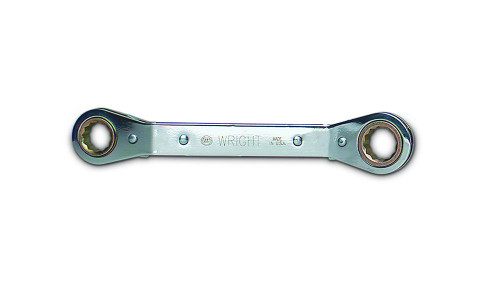
Wright Tool Offset Reverse Ratcheting Box Wrench 12 Point Metric
Choose options for price
-
Wright Tool
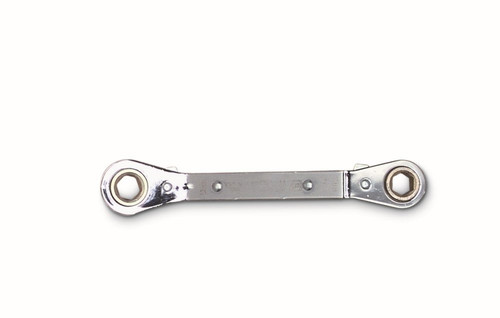
Wright Tool Offset Reverse Ratcheting Box Wrench 6 Point Metric
Choose options for price
-
-
Wright Tool
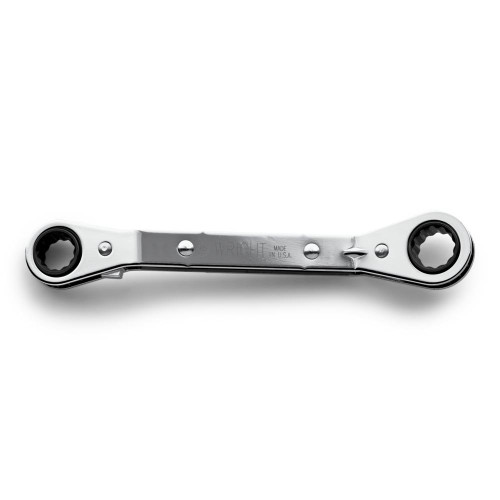
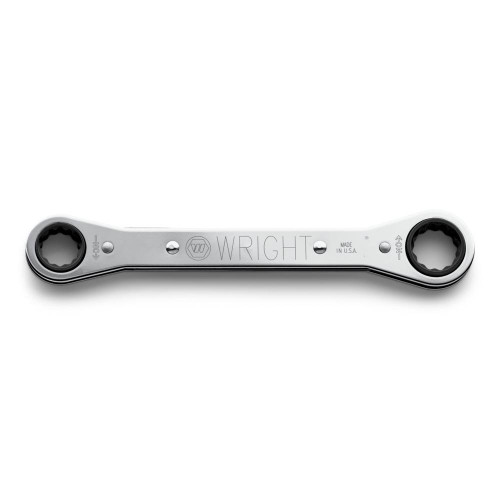
Wright Tool Ratcheting Double Box End Laminated Wrench 12 Point Metric
Choose options for price
-
-
-

-
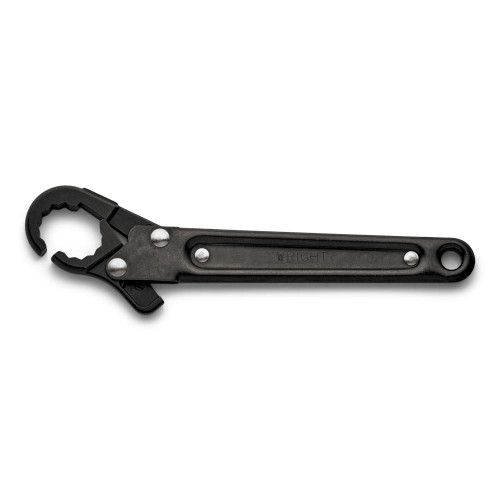
Wright Tool
Wright Tool Ratcheting Flare Nut Wrench 12 Point Black Industrial (Imperial)
Choose options for price
-
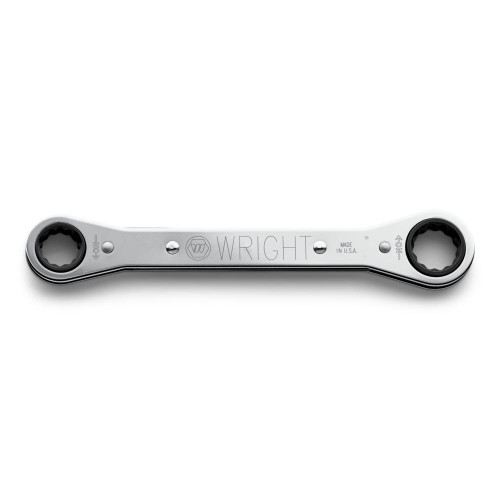
Wright Tool
Wright Tool Ratcheting Double Box End Laminated Wrench 12 Point
Choose options for price
Ratcheting Wrenches
With a ratcheting wrench you can run a nut down without lifting the wrench off and refitting it every few degrees. At BRAIGG, this category holds Wright Tool double box, reverse ratcheting offset, ratcheting flare nut and air conditioning service wrenches, in SAE from 1/4 inch to 1-1/4 inch and metric from 7mm to 21mm. Most are 12 point, with one 6 point metric line for tight, rounded or rusty fasteners. The guide below the products explains which head style suits which job.
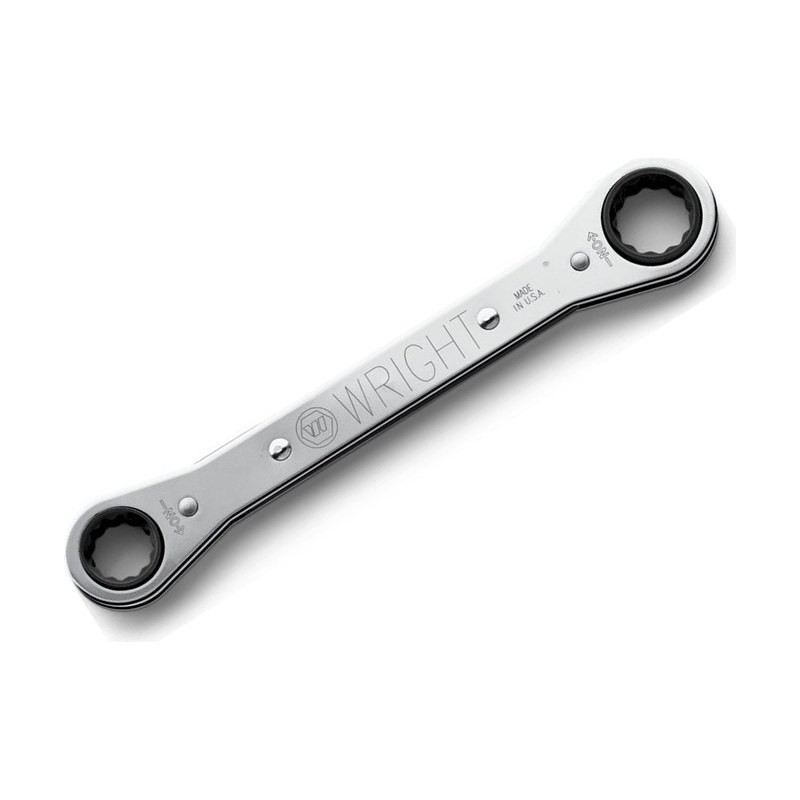
Where a ratcheting wrench beats a socket
Sockets need room above the fastener for the drive, the ratchet head and your hand. A ratcheting wrench is thin, so it fits where the stack-up won't: a bolt behind a bracket, a nut on a long threaded rod, or a fastener with a hose running right over the top. Long all-thread is the classic case. A deep socket can't reach far enough, and a box end wrench does a few degrees per swing. The ratcheting box end goes over the rod and spins the nut all the way down.
It isn't a breaker bar. Crack tight fasteners loose with a standard box end wrench or a socket and handle, then switch to the ratcheting wrench to run them off. That keeps load off the ratchet mechanism, so the wrench lasts far longer.
The styles in this category
- Ratcheting double box end, 12 point: laminated construction, a different size on each end. SAE pairs run from 1/4 x 5/16 up to 1-1/8 x 1-1/4, and metric pairs from 7 x 8mm to 19 x 21mm. Two sizes per wrench means fewer wrenches on the cart.
- Reverse ratcheting offset box: the head is offset, so your knuckles clear the work surface. Turn the wrench over to reverse direction. SAE comes in 12 point from 1/4 x 5/16 to 3/4 x 7/8. Metric comes in 6 point from 7 x 8mm to 13 x 14mm and 12 point from 15 x 17mm to 19 x 21mm. This is the one to grab when you want an offset box end wrench that also ratchets.
- Ratcheting flare nut wrench: a slotted 12 point head that slips over brake, fuel or hydraulic tubing, then grips more of the nut than an open end. Sizes run 3/8 inch to 1 inch in a black industrial finish.
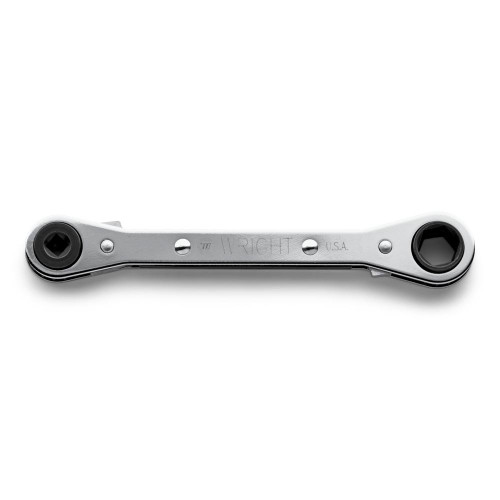
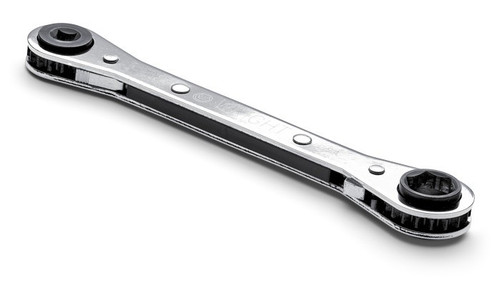
- A/C and refrigeration service wrench: reverse ratcheting box ends with square openings for the stems on refrigeration service valves. The 9396 covers 1/4 and 3/16 square on one end, and 3/8 and 5/16 square on the other. The 9397 keeps the same square end and replaces the other one with a 9/16 and 1/2 hex.
6 point or 12 point
On a 12 point head you need only a 30 degree swing to catch the next set of flats. That's why most of these are 12 point: in a tight spot, swing room is what you're short of. A 6 point head grips the flats farther from the corners, so it is less likely to round a fastener that's already chewed up or rusted. For small metric hardware on equipment and vehicles, the 6 point offset line is the safer bet.
Picking sizes and building a ratcheting wrench set
Start with what you actually turn. On most domestic equipment that means 3/8, 7/16, 1/2 and 9/16. On newer vehicles it's 10, 13, 15 and 17mm. Because every double box wrench carries two sizes, four or five pieces cover a surprising amount of work. If you'd rather buy a ratcheting wrench set in one box, check our wrench sets. For line fittings, compare these ratcheting heads with the fixed flare nut wrench range. Not sure what to call a fitting? Our guide to the types of wrenches sorts it out.
Care tips from the counter
Keep the head clean. Grit and old grease make a ratchet skip, and a skipping ratchet under load can slip off a nut. Blow it out, put one drop of light oil in, and wipe off the extra. Don't hammer on the handle and don't add a cheater pipe. If a fastener needs that much force, put a breaker bar on it.
Frequently asked questions
How do you change direction on a reverse ratcheting wrench?
Take it off the fastener, turn the wrench over so the other face points up, and put it back on. The head drives in the opposite direction. There is no lever or switch to wear out or get knocked into the wrong setting, which is handy when you're working blind behind a bracket.
Can I use a ratcheting wrench to break a bolt loose?
You can on light fasteners, but it's a bad habit. Breaking a seized or high torque fastener puts the full load through the small pawl and gear teeth. Crack it loose with a solid box end wrench or a breaker bar, then switch to the ratcheting wrench to spin it the rest of the way.
What is a ratcheting flare nut wrench used for?
It's for tube nuts on brake lines, fuel lines, transmission cooler lines and hydraulic fittings. The slot in the head lets it pass over the tubing, and the 12 point box grips more of the soft nut than an open end does, so you're less likely to round it. The ratchet saves you from refitting the wrench every swing.
What are the square openings on the A/C ratcheting wrench for?
They fit the square stems on refrigeration and air conditioning service valves. The Wright 9396 has 1/4 and 3/16 square on one end and 3/8 and 5/16 square on the other. The 9397 keeps the 1/4 and 3/16 square end and adds a 9/16 and 1/2 hex for packing nuts and caps.
Do you carry metric ratcheting wrenches?
Yes. Wright makes a metric 12 point ratcheting double box wrench from 7 x 8mm up to 19 x 21mm. There's also a metric offset reverse ratcheting box wrench, in 6 point from 7 x 8mm to 13 x 14mm and in 12 point from 15 x 17mm to 19 x 21mm.