
Bearing Pullers & Separators
A bearing puller takes a pressed-on bearing off a shaft without hammering on it. The right gripping arrangement matters more than the size of the wrench. At BRAIGG, you'll find KUKKO straight-jaw tools, Cobra pullers with clamping jaws, PULLPO raceway tools and separators for bearings tight against a shoulder. Start by checking which ring is tight and where the tool can grip it. This category brings the options together; the guide below explains their differences, the dimensions to measure and when a matched separator setup is a better choice than exposed jaws.







Match the bearing puller to the gripping point
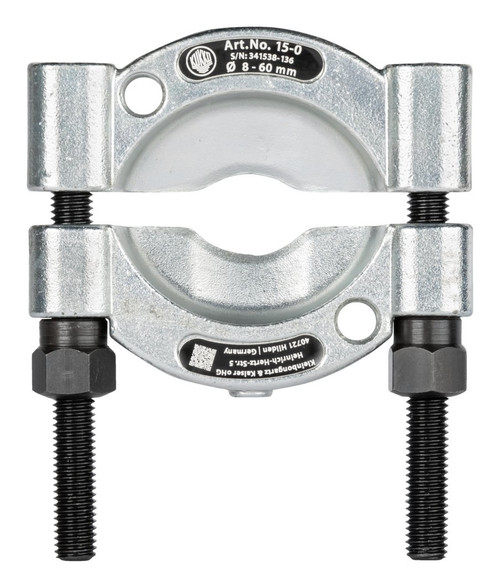
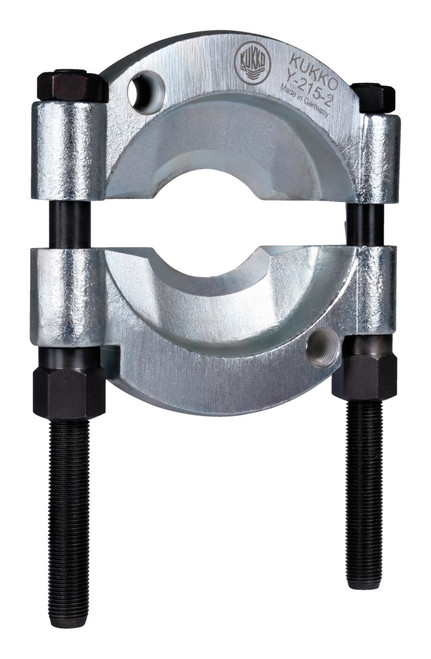
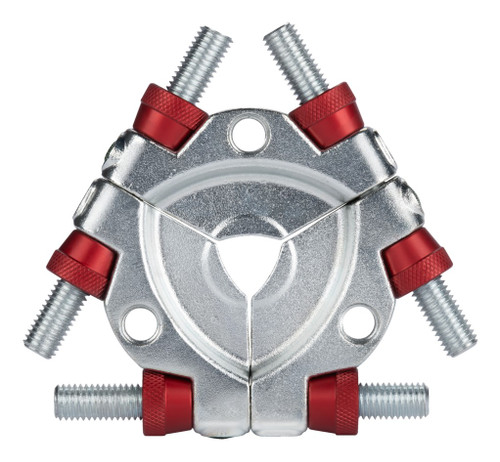
Before choosing a bearing puller tool, look behind the bearing. A clear lip gives jaws somewhere to seat. A bearing against a gear or shaft shoulder may leave too little room for ordinary tips. In that case, look at Bearing Separators: their beveled edges establish a grip behind the ring, and a compatible frame supplies the axial pull.
Pull on the ring with the interference fit. For a bearing pressed onto a shaft, that is the inner ring. Pulling through the outer ring transfers the load through the rolling elements and can damage the raceways. A tool that reaches the bearing's outside diameter is not necessarily reaching the correct load-bearing surface.
Straight jaws for accessible shaft bearings
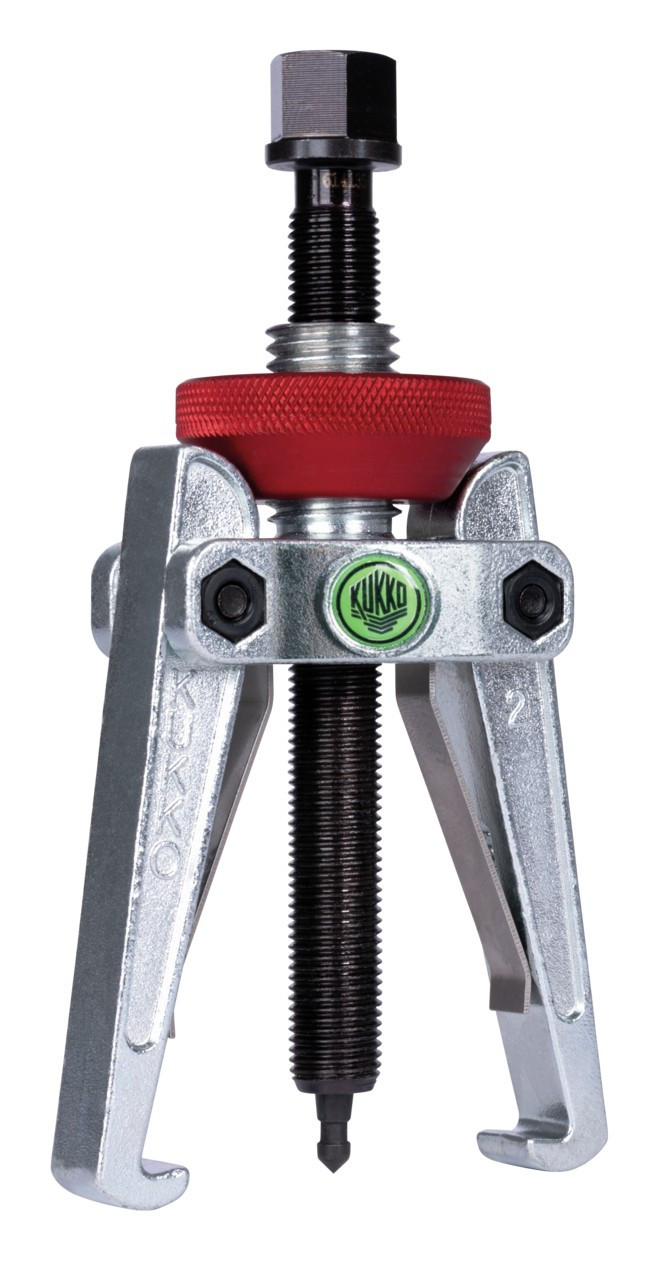
The KUKKO 112 rolling bearing puller uses two straight jaws and a cone knob to lock them in position. Its five listed sizes range from 55 mm spread with 45 mm reach (about 2.17 by 1.77 in) to 185 mm spread with 165 mm reach (about 7.28 by 6.50 in). The spring mechanism assists opening and closing the jaws.
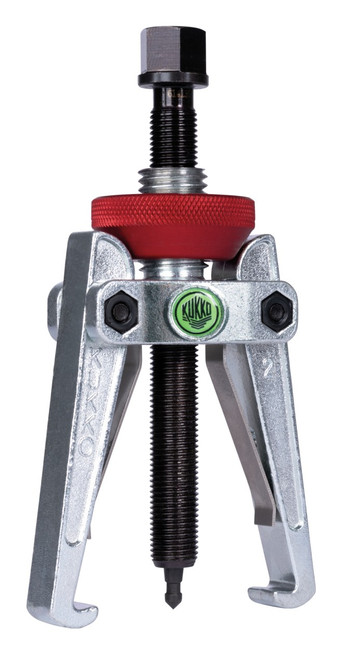
The KUKKO 113 ball bearing puller has three jaws, with listed spread and reach combinations of 125 by 100 mm and 185 by 165 mm. Check the room around the entire bearing before choosing the 113. Two jaws may fit between obstructions where three cannot; three gripping positions require space in three directions. Our 2-jaw vs 3-jaw puller guide covers that access decision.
Cobra and raceway tools solve different access problems
The Cobra 204 with side clamp uses clamping action at the claws to help separate the part before the main spindle draws it off. Listed models include 80 by 90 mm, 100 by 100 mm and 150 by 140 mm spread and reach combinations. Check the actual claw shape against the shoulder rather than treating spread as the only fit requirement.
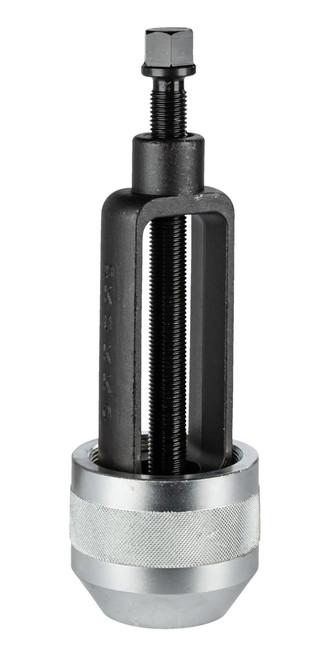
A raceway bearing extractor handles another situation. The KUKKO PULLPO series 70 is intended for deep-groove ball bearings sitting on a shaft and in a housing at the same time. Its hooks engage through the bearing's raceways, allowing removal without first taking out the shaft. This is a specific bearing-access method, not a substitute for every external jaw tool.
Build a separator setup or buy a matched set
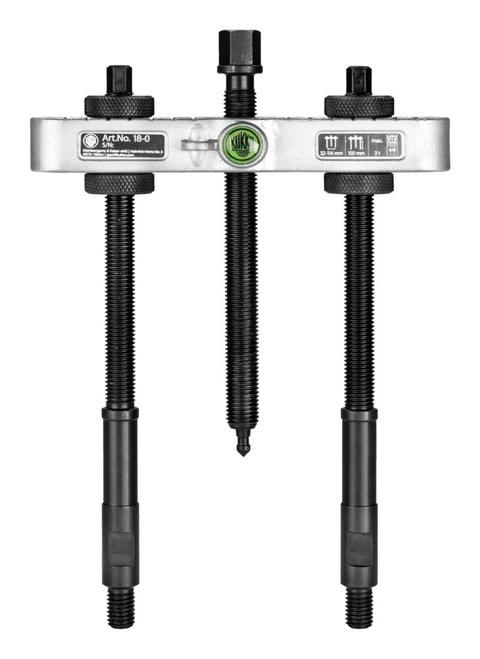
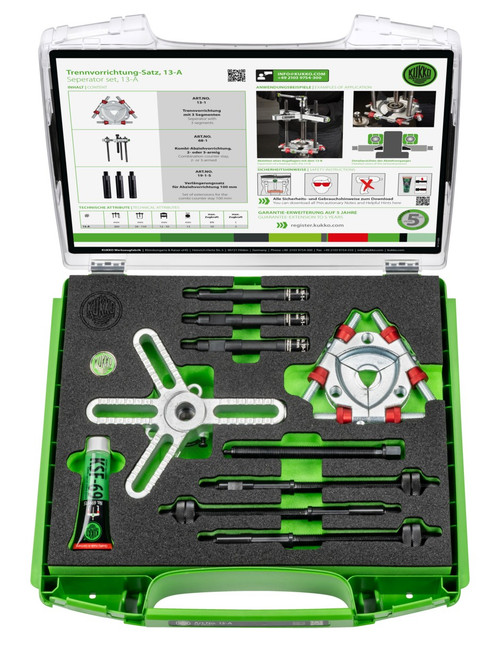
KUKKO series 15 separators pair with compatible series 18 puller frames. Series 17 adds a quick-clamping pressure spindle for closing the separating jaws. If you need both components, a bearing puller set such as the K-17 separator set packages the separator, puller and a pair of extensions.
Choose a bearing puller kit around the work you actually do. Verify the separating diameter, frame reach and connection compatibility together. The TRI-PULL series 13 takes a different approach for spherical and tapered roller bearings, using three segments to support the inner ring. Choose that geometry for the bearing it is designed to engage.
Measure before loading the spindle
Write down the gripping diameter, distance from the shaft end to the gripping point, and clearance behind the ring. Spread and reach describe different dimensions. Leave room for the spindle tip or compatible shaft protector, too. The bearing puller selection guide explains those measurements; how to use a bearing puller covers the actual removal sequence.
Inspect jaws and spindle threads before use. Keep the spindle centered, wear eye protection and fit a suitable puller guard or containment cover while the assembly is loaded. Stop if a jaw lifts or the tool tilts. For a bearing trapped inside a bore, see Pilot Bearing & Blind Hole Pullers. For other removal jobs, return to Pullers & Extractors.
Frequently asked questions
What bearing puller do I need for a shaft bearing?
Start with the ring that is pressed onto the shaft, usually the inner ring. Check whether jaws can seat behind it, then measure the gripping diameter and required reach. If the bearing sits against a shoulder, a separator and compatible puller frame may reach where ordinary jaws cannot.
What is the difference between a bearing puller and a separator?
A jaw puller grips the part directly and pushes against the shaft end with its spindle. A separator establishes a grip with beveled edges behind a closely seated ring. The separator normally needs a compatible puller frame to draw the bearing along the shaft after that initial separation.
What comes in a KUKKO K-17 bearing puller set?
The listed K-17 sets include a separator with quick-clamping pressure spindle, a puller and a pair of extensions. The sizes differ in separating diameter and reach. Check the individual set's dimensions before ordering; the presence of extensions does not make every set suitable for every shaft length.
Can a bearing puller remove a bearing without removing the shaft?
For certain deep-groove ball bearing assemblies, KUKKO's PULLPO series 70 reaches through the raceways while the bearing remains on a shaft and in a housing. That arrangement can avoid removing the shaft first. Verify the bearing and hook compatibility rather than assuming a general-purpose jaw tool can do the same job.
Can I reuse a bearing after pulling it off?
Do not assume removal leaves a bearing serviceable. Loads transmitted through the rolling elements can damage raceways, and previous wear or contamination may already rule out reuse. Apply force to the ring with the interference fit, inspect the removed part and follow the equipment maker's replacement guidance before putting it back into service.