
-
CGW Abrasives
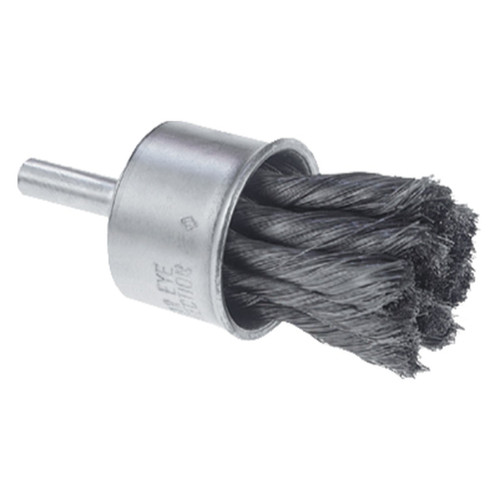
CGW Knotted Wire End Brush, 1" x 1/4" Shank, .014" Carbon Steel
Choose options for price
-

CGW Abrasives
CGW Crimped Wire Wheel Brush, 3" x 1/4" Shank, .014" Carbon Steel
Choose options for price
-
Wire Brushes
Choose a wire wheel brush by the area you need to reach and the connection on your tool. BRAIGG carries CGW carbon steel brushes for removing rust and weld scale, cleaning surfaces and deburring. The range includes a 4 inch knot wheel with a threaded arbor, a 3 inch crimped wheel on a shank and a compact knotted end brush for corners. Do not treat those shapes as interchangeable just because they all use wire. Check diameter, mounting style and maximum RPM separately. The parent abrasives department covers other ways to cut, grind and finish the same job.
Match a wire wheel brush to the tool connection
The 4 inch knot wheel uses a 5/8 inch-11 threaded arbor for compatible angle grinders. The 3 inch crimped wheel instead has a 1/4 inch shank for compatible die grinders and drills. A threaded connection and a plain shank need different mounting arrangements. Read the tool instructions before ordering, and do not improvise a connection because the brush is close to the size you want.
If you need a wire wheel for angle grinder work, start with the threaded option and verify the grinder's spindle and approved brush capacity. For drill work, check the shank option against the chuck and the operating instructions. Tool category alone does not establish fit. The CGW carbon steel brush range lists both wheel styles and their individual specifications.
Knotted or crimped wire?
A knotted wire wheel bundles the wire for more aggressive brushing. The 4 inch CGW knot wheel uses .020 inch carbon steel wire and is specified for surface preparation, cleaning and removing weld scale and rust. Its bundled wire contacts the work differently from the finer crimped wire. Choose a wire wheel brush according to the rust or scale you need to remove and the shape of the part, not just how stiff it looks in a photograph.
On the 3 inch crimped wheel, .014 inch carbon steel wire forms a concave face. CGW describes the oil drawn wire as durable and flexible, with applications including deburring as well as cleaning, weld scale and rust removal. Start on an inconspicuous area if the final appearance matters. Brushing can alter the finish as it cleans.
Reach corners with an end brush
The 1 inch knotted end brush puts .014 inch carbon steel wire on a 1/4 inch shank. It has a 1 inch trim and is intended for cleaning welds, removing scale and deburring corners and other tight spots. Its knotted construction is specified for aggressive, heavy-duty brushing.
Check access with the work held in its actual position. An opening may be large enough for the brush but leave no clearance for the chuck or tool body. Do not compensate by extending the shank beyond the tool maker's mounting guidance. If the work calls for abrasive blending inside a small opening instead of brushing, look at mounted flap and die grinder wheels.
Keep carbon steel wire away from contamination-sensitive stainless
Every brush in this selection uses carbon steel wire. Where stainless cleanliness matters, carbon steel contact can introduce iron contamination. Follow the fabrication or cleaning specification and choose a brush material approved for that work; do not assume a previously unused carbon steel brush is suitable simply because it is clean.
Keep brushes used on different materials identified and separated according to the job requirements. For a non-woven approach to stripping or blending, browse surface prep and strip wheels, then check the selected product's material guidance. Changing tool type does not remove the need to follow a contamination-control procedure.
Check speed and protect against shed wire
The 4 inch knot wheel and 1 inch end brush have 20,000 RPM maximum ratings. The 3 inch crimped wheel is rated 25,000 RPM. These are limits, not instructions to run every brush at that speed. The tool's rated speed must not exceed the brush rating, and the tool must be suitable for the attachment.
A wire wheel brush can shed wires during use. Wear safety glasses and a face shield, use the required guard and keep other people clear of the work area. Secure the work and inspect the brush before starting; replace damaged brushes. Use controlled pressure rather than crushing the wire against the part. Check the selected listing when ordering by the box, since wheel and end-brush quantities differ.
Frequently asked questions
How do I choose a wire wheel brush for an angle grinder?
Check the grinder's spindle, permitted brush diameter, guard requirements and rated speed. The 4 inch CGW knot wheel here uses a 5/8 inch-11 threaded arbor and .020 inch carbon steel wire, with a 20,000 RPM maximum. Those specifications must all suit the tool; matching the thread by itself is not enough.
Can I use these brushes in a drill?
The 3 inch crimped wheel and 1 inch knotted end brush have 1/4 inch shanks for compatible drills and die grinders. Confirm the chuck or collet fit and follow the tool's mounting guidance. The 4 inch knot wheel uses a threaded arbor instead and is not the same attachment.
What is the difference between knotted and crimped wire?
Knotted wire is gathered into bundles for aggressive brushing, while crimped wire provides a different, more flexible contact pattern. In this selection the 4 inch knot wheel uses .020 inch wire and the 3 inch crimped wheel uses .014 inch wire. The end brush is also knotted, but uses .014 inch wire.
Can carbon steel wire brushes be used on stainless steel?
Avoid carbon steel wire where iron contamination of stainless matters. Even an unused carbon steel brush can introduce iron to the surface. Follow the fabrication or cleaning specification and select an approved brush material for that task. All brushes in this category are carbon steel, so do not assume there is a stainless-wire option here.
What protection is needed when using a powered wire brush?
Wire can break free during brushing. Wear safety glasses and a face shield, use the guard required by the tool and attachment, and keep bystanders clear. Inspect the brush before use, secure the work and follow the mounting instructions. Never exceed the brush's maximum RPM or use extra pressure to compensate for poor cutting.