
2-Jaw Pullers
A 2-jaw puller earns its place when a third arm has nowhere to go. A housing rib or nearby bracket may leave just one workable pair of gripping points. At BRAIGG, this category brings together KUKKO two-jaw designs, including sliding parallel jaws and intersecting self-gripping arms. The important question is not simply whether the hooks fit. Both must reach a sound shoulder at the same depth, with room to keep the spindle centered on the shaft. Check those details before choosing a size, especially when the assembly is still mounted in a machine.


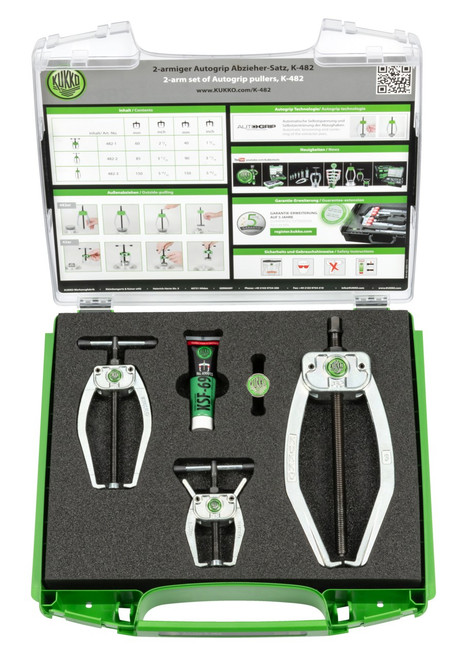
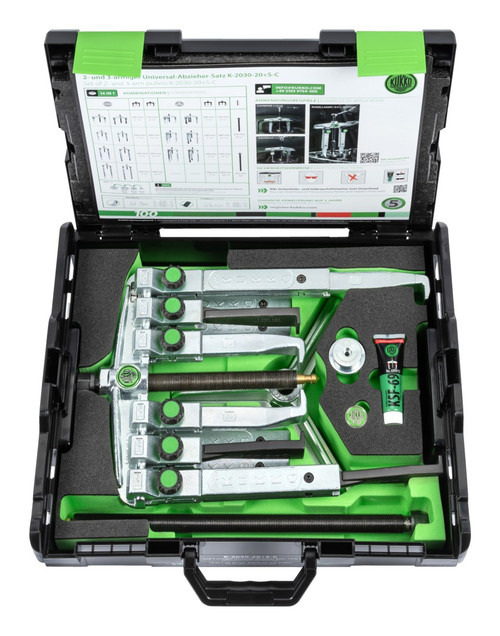
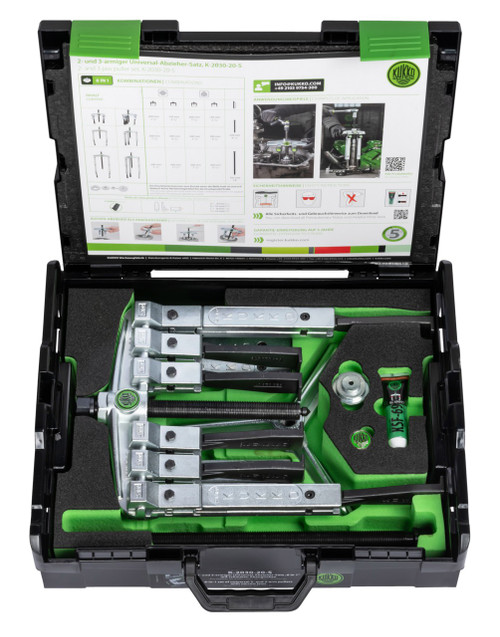
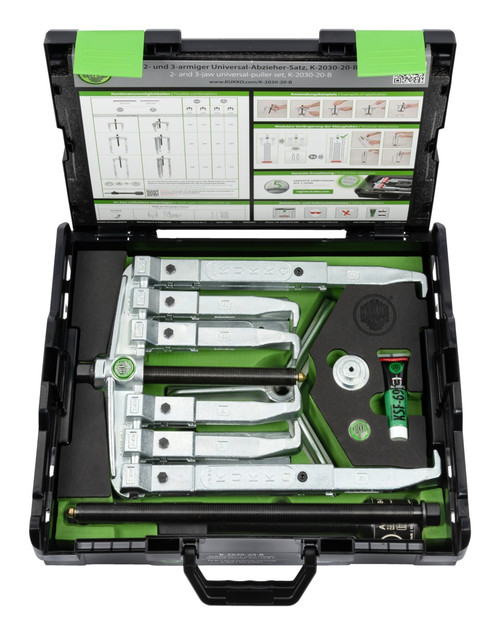
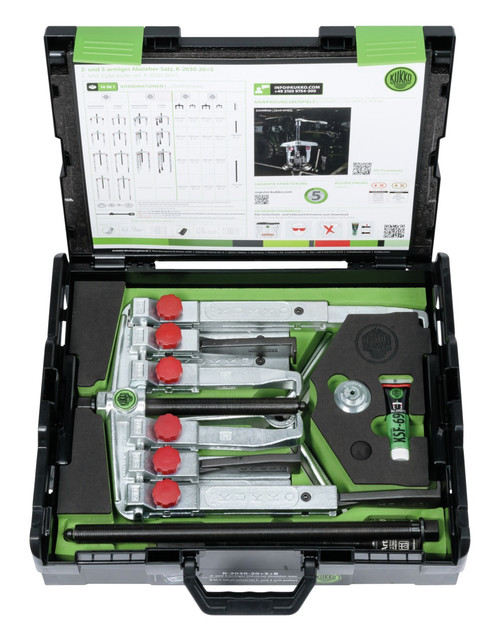
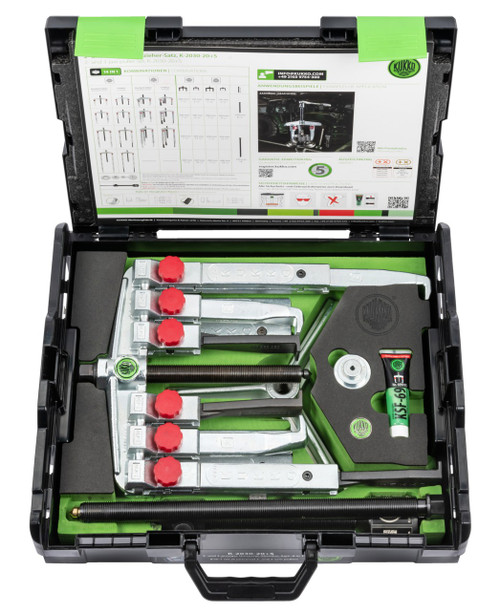
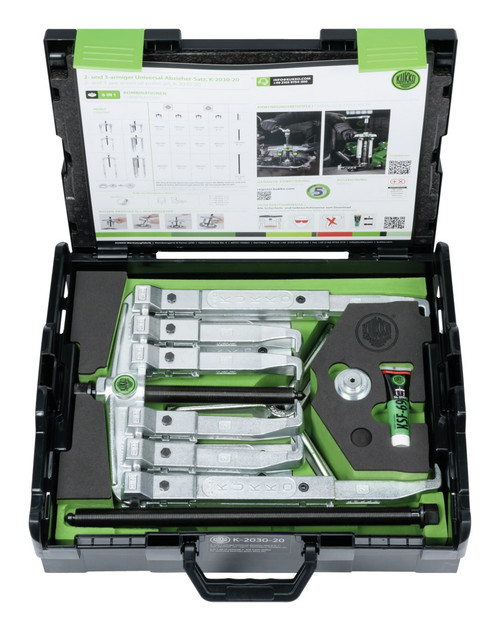
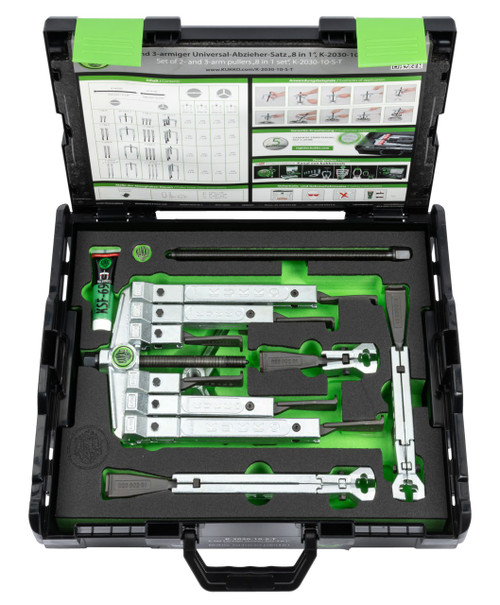
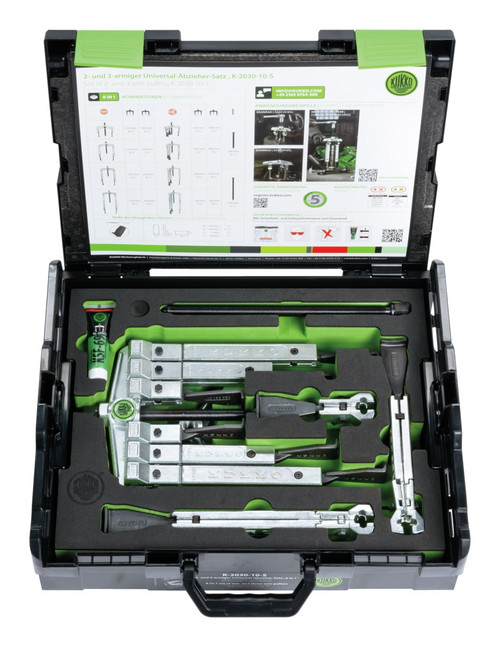
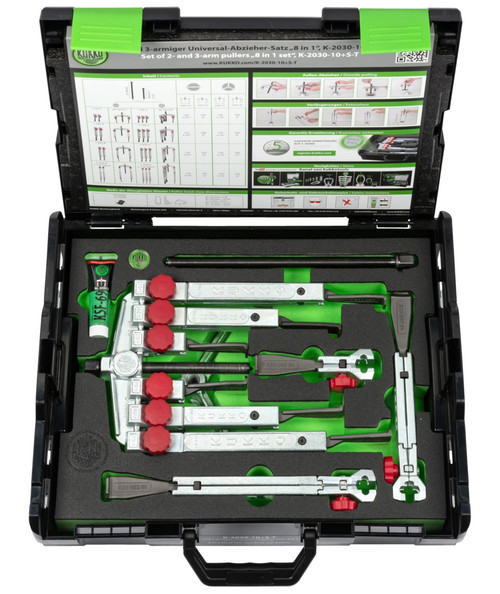
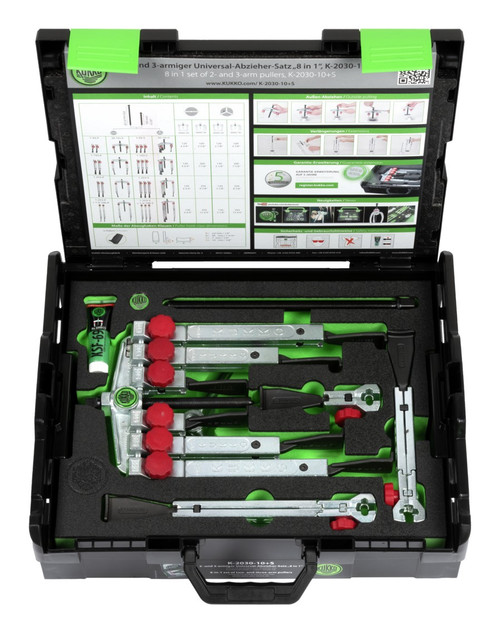
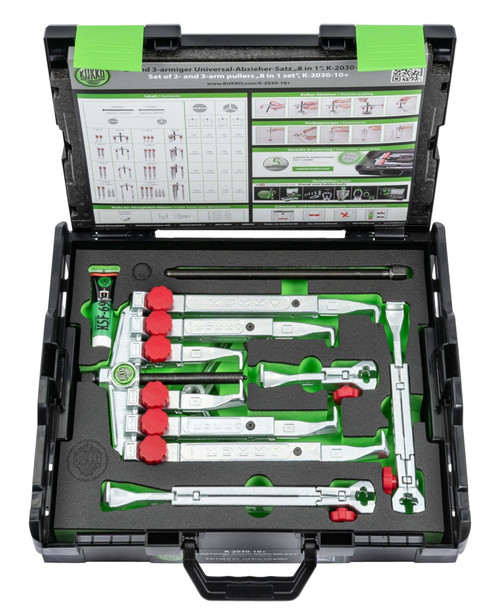
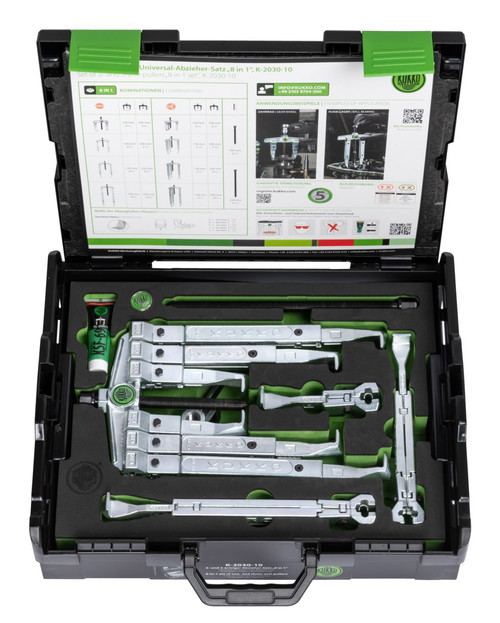
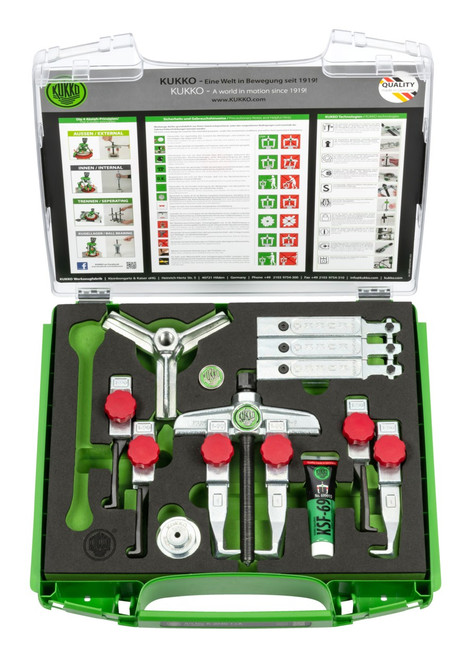
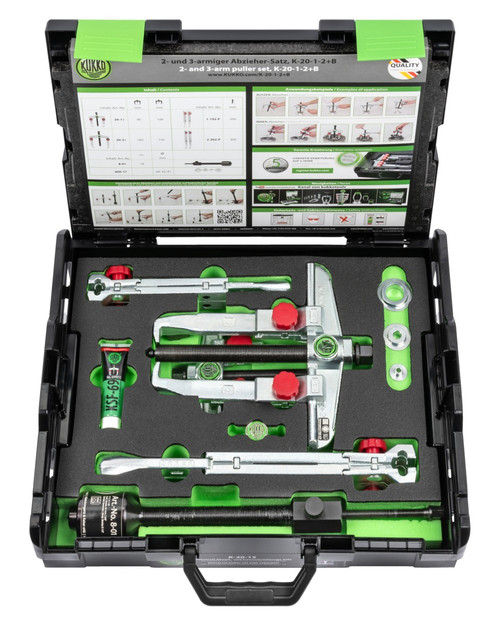
Choose a 2-jaw puller around the available access
Look behind the gear or pulley first. Two clear openings on opposite sides can suit a two jaw puller, but an opening is useful only if the hook can seat on a solid rear face. A hook balanced on a tooth tip or the corner of a thin flange can slip as tension rises. Remove obstructions only as allowed by the equipment procedure.
Offer up the unloaded tool and look from the side as well as the front. A crossbar that leans toward one jaw is a warning that the hooks are not seated equally. Correct that before tightening. When a round part has room for a third contact, 3-Jaw Pullers give you another arrangement to consider.
Parallel jaws or intersecting arms
The KUKKO Techno 110 has slender jaws that remain parallel and a locking pin to retain them on the crossbar. Its listed options start at 50 mm spread with 50 mm reach, about 2 in each, and extend to 350 mm spread with 350 mm reach, about 13.8 in each. Reversing its jaws permits internal extraction where the part and reaction surface allow it.
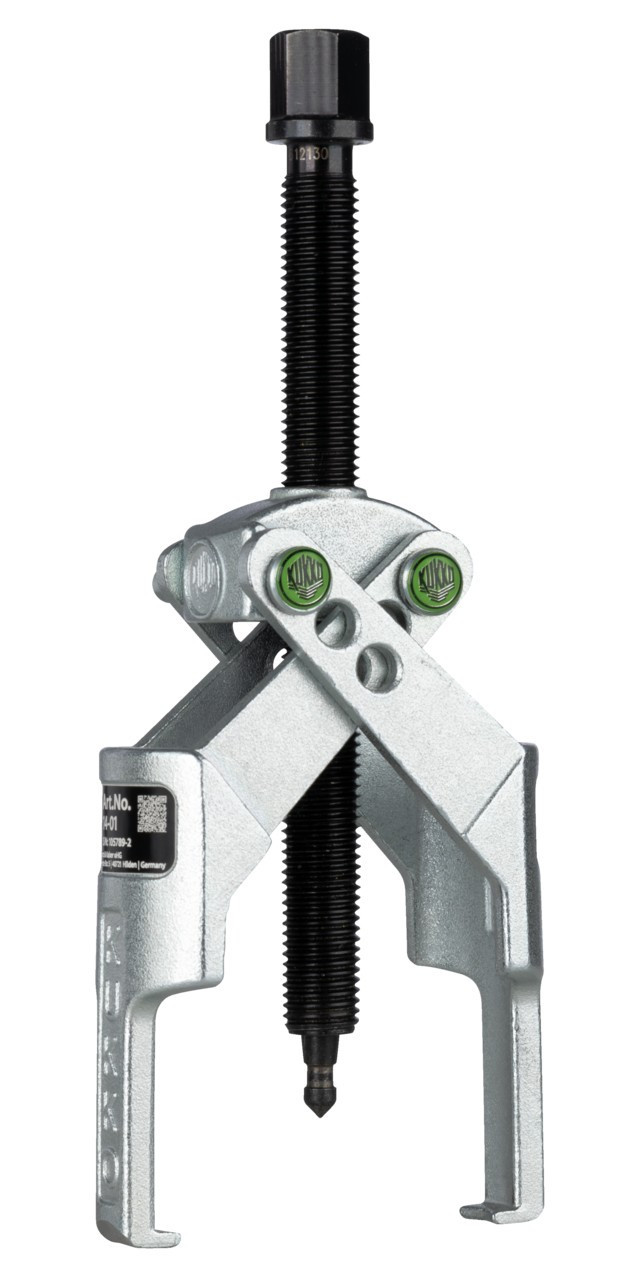
The KUKKO series 14 takes a different approach. Intersecting arms press the claws against the component during pulling. One listed option covers 6 to 100 mm spread with 85 mm reach, about 0.24 to 3.94 in spread and 3.35 in reach. It is intended for sprockets, pulleys and similar parts in tight spaces. Check the arm path too, not just the hook opening.
A sliding crossbar and a scissor-style arm do not occupy the same space around a machine. Lay out where the arms will sit when the part has moved outward, as well as where they start. A 2-jaw puller that clears a bracket initially may meet that bracket before the part comes free.
Spread and reach must work together
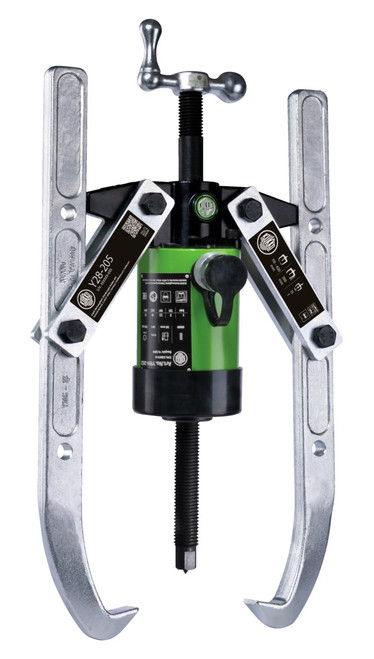
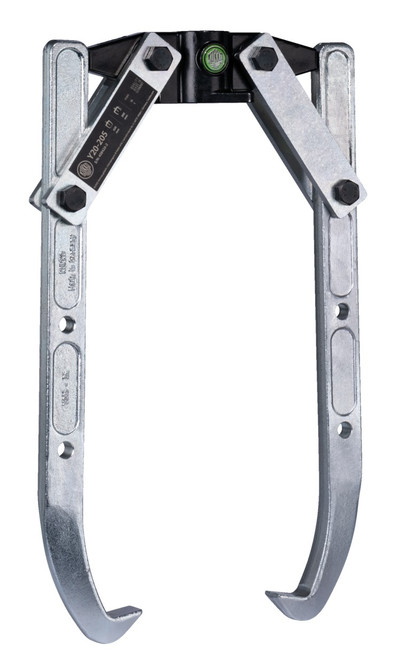
The KUKKO Classic series 20 includes standard and extended-reach options. For example, listed choices include 90 mm spread with 100 mm reach, about 3.5 in by 3.9 in, and 90 mm spread with 200 mm reach, about 3.5 in by 7.9 in. These share a spread figure but solve different depth problems.
Measure the outside diameter at the intended grip and the distance from that rear face to the shaft end. Then check the actual item's minimum opening, maximum spread, reach and available spindle travel. Our puller size guide explains the measurements. A nominal opening in the product name cannot tell you whether a particular jaw tip will enter a narrow gap.
Using a two jaw bearing puller
For a bearing fitted to a shaft, aim to pull on the inner ring. Gripping only the outer ring sends removal force through the rolling elements and can damage the bearing. If the inner ring sits too close to a shoulder for the hooks, consider a bearing separator rather than forcing the jaws into the gap.
Keep both contacts level, center the spindle and tighten gradually. Wear eye protection and use a rated pulling guard or safety cover. If either hook walks outward, stop and release the load. Never reach into the loaded tool to push a jaw back into place. See how to use a gear puller for the full setup sequence.
Choosing a set for recurring jobs
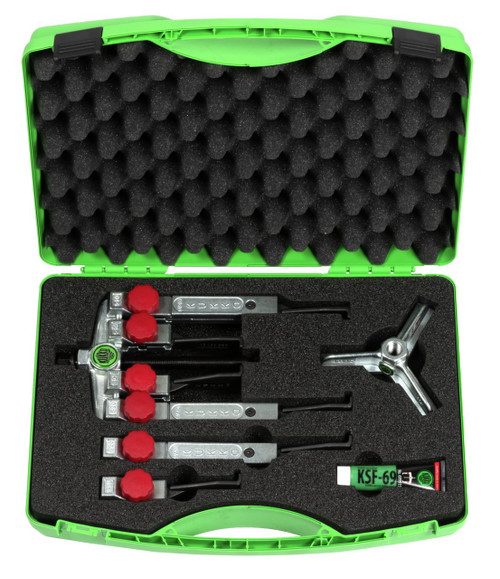
A 2-jaw puller set makes sense when its included jaw lengths and spindles match the assemblies you service. Record the spread and reach needed for each job before choosing. Use only manufacturer-approved combinations of jaws, crossbars and spindles. For the wider range of jaw arrangements, return to Gear & Jaw Pullers; the smallest tool is not automatically the best fit for restricted access.
Frequently asked questions
When should I choose a 2-jaw puller?
Choose it when the part offers two sound opposing grip points and a third arm cannot fit around the assembly. Both hooks must seat at the same depth. If the available grip points force the spindle away from the shaft center, change the setup rather than pulling at an angle.
Can two jaws remove a pulley?
They can when the pulley has a suitable rear shoulder and the equipment procedure permits jaw pulling. Do not assume a thin rim or belt groove can carry the removal force. Check for retaining hardware and use the gripping surface specified for that assembly before putting the tool under load.
What is the difference between spread and reach?
Spread is the jaw opening; reach is the distance the jaws extend from the crossbar to their gripping points. You need enough opening for the part and enough depth to reach behind it while the spindle meets the shaft. Jaw-tip thickness is a separate clearance check.
Do self-gripping jaws eliminate the need for a guard?
No. Self-gripping describes the jaw action, not containment if a part breaks or a hook slips. Keep the spindle centered, inspect the gripping surfaces and fit a rated pulling guard or safety cover. Wear eye protection and stay clear of the loaded tool's line of pull.
Can I reverse any two-jaw tool for internal pulling?
No. Use that arrangement only when the manufacturer specifies reversible jaws for the model and the assembly provides a suitable reaction surface. The KUKKO Techno 110 description includes internal extraction by reversing the jaws. That feature does not make it a substitute for every blind-hole bearing extractor.