
Gear & Jaw Pullers
A gear puller hooks behind a gear, pulley, bearing or sprocket while its center spindle bears against the shaft end. At BRAIGG, you'll find KUKKO jaw pullers with parallel, pivoting, narrow and self-centering jaws. Start with the part you can actually grip, not the largest tool that will fit around it. Two jaws suit opposing access points; three jaws distribute the pull around an accessible round shoulder. Measure spread, reach and the gap behind the part before choosing. The guide below explains the differences and points you toward the right jaw arrangement for your setup.
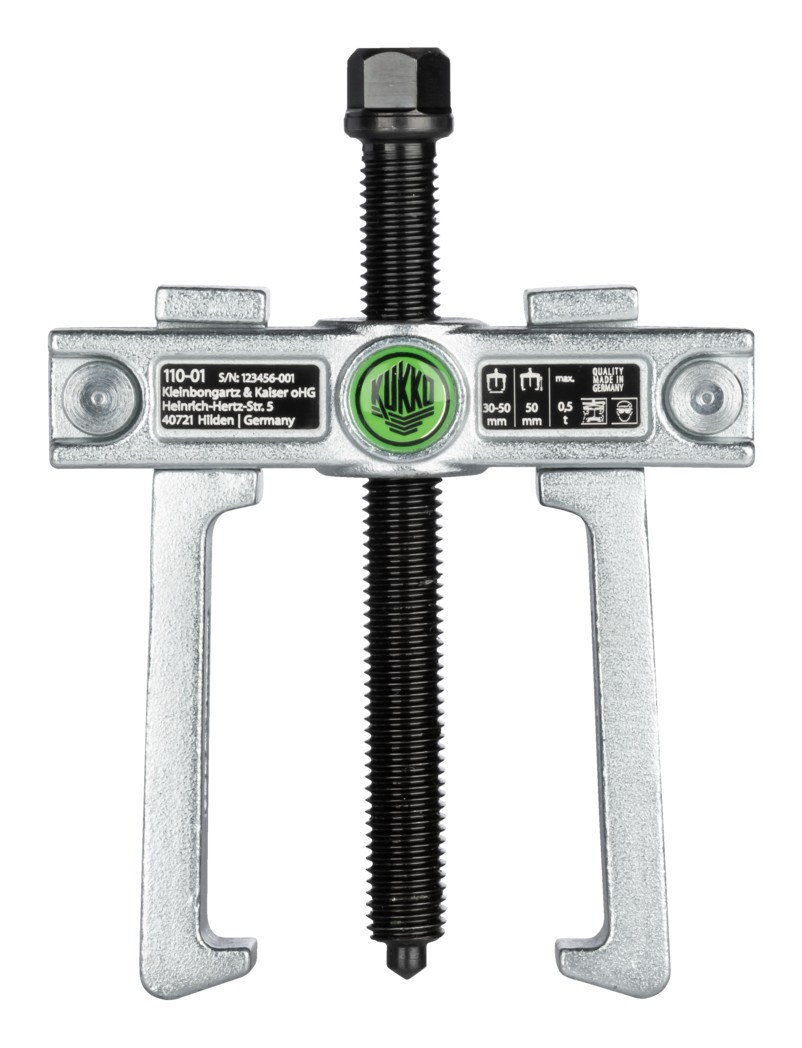
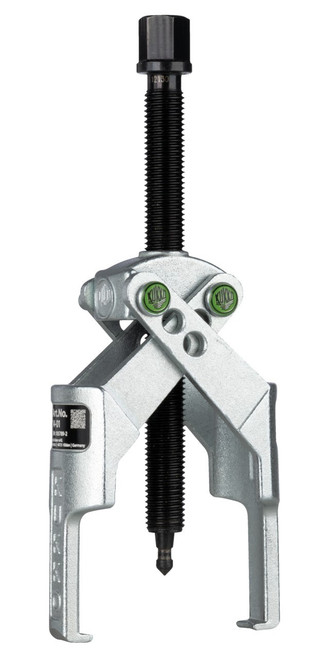
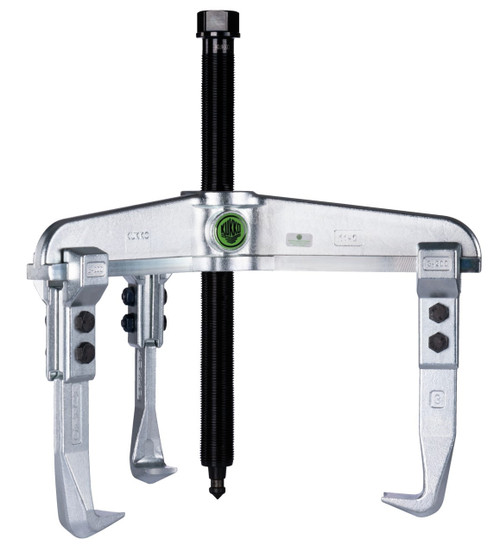
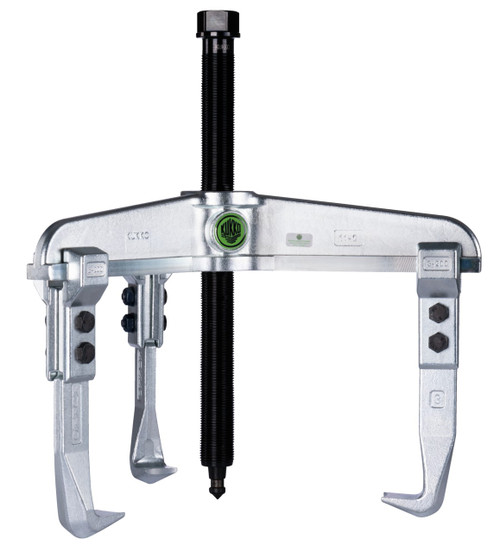

Size a gear puller by spread and reach
Spread describes the opening between the jaws. Reach describes how far the jaws extend from the crossbar to their gripping points. Both must suit the assembly at the same time. A tool that opens wide enough can still run out of reach on a long shaft, and long arms do not solve a jaw tip that cannot enter the rear gap.
KUKKO lists dimensions in millimeters. For example, a 160 mm spread and 150 mm reach correspond to about 6.3 in and 5.9 in. Measure the part's outside diameter and the distance from its rear gripping face to the shaft end. Then check the selected item's working dimensions, spindle travel and jaw geometry. Our puller size guide explains those measurements in more detail.
Choose two jaws or three
Use 2-Jaw Pullers when a bracket, housing or the shape of the part leaves two opposing places to grip. The spindle still needs to sit on the shaft axis. Two convenient hooks are not enough if they sit at different depths and tilt the crossbar.
Choose 3-Jaw Pullers when the rear shoulder is accessible around the circumference. Three contacts distribute the load around a round component, provided every jaw seats properly. A third jaw perched on an edge does not improve the setup. For the trade-offs, read 2-jaw vs 3-jaw pullers.
KUKKO families for different access problems
The Techno 110 jaw puller uses slender, parallel jaws and a locking pin that retains the jaws on the crossbar. Listed options range from 50 mm spread with 50 mm reach (about 2 in each) to 350 mm spread with 350 mm reach (about 13.8 in each). Its reversible jaws also support internal extraction where the assembly provides suitable access and support.
The Alligator series 12 uses a tensioning key to close and secure its three jaws. Listed combinations include 100 mm spread with 100 mm reach, about 3.9 in each, and 200 mm spread with 165 mm reach, about 7.9 in by 6.5 in. The locking method addresses jaw retention; it does not remove the need to check the rear shoulder.
For jobs that alternate between jaw arrangements, the series 114 combination puller converts between two and three jaws and has self-centering jaws. Choose the specific model by its dimensions and rating. If you're assembling a gear puller kit for several machines, record those machines' access measurements first rather than buying extra jaws on guesswork.
Know when a gear puller tool cannot get a grip
A gear puller needs a sound shoulder behind the part. If a bearing is tight against a shaft shoulder and the jaws cannot engage its inner ring, look at bearing separators. Do not substitute a weak gear tooth or thin flange for a proper gripping surface. For bearings trapped inside a housing, start with Pilot Bearing & Blind Hole Pullers, not an external jaw arrangement.
Check the setup before applying force
Remove retaining rings, nuts and other hardware specified in the equipment procedure. Keep the spindle centered, seat every jaw fully and use the shaft protection specified for the tool. Wear eye protection and fit a rated pulling guard or safety cover. Stand clear of the line of pull. If a jaw lifts or the part starts to cock, release the load before making changes.
Our gear puller setup steps cover the sequence from inspection to removal. For other extraction methods, return to Pullers & Extractors. More wrench effort is not a substitute for correcting a bad grip.
Frequently asked questions
What size gear puller do I need?
Measure the part's diameter, the depth from its rear gripping face to the shaft end and the available gap for the jaw tips. Match all three to the selected model. Spread alone is not enough, and a longer reach does not tell you the tool's pulling-force rating.
Is a 2-jaw or 3-jaw puller better?
Two jaws help when you have only two opposing access points. Three jaws distribute the load around an accessible round shoulder. Choose the arrangement that lets every jaw seat fully while the spindle stays on the shaft axis. Neither arrangement makes an unsuitable gripping surface safe.
Can I use a gear puller to remove a bearing?
Yes, if the jaws can engage a suitable surface and the spindle has a suitable reaction point. For a bearing fitted to a shaft, gripping the outer ring rather than the fitted inner ring transmits force through the rolling elements and can damage the bearing. A separator behind the inner ring may give you better access.
What is the benefit of a combination puller?
A combination tool such as KUKKO series 114 lets you switch between two and three jaws as access changes. That can be useful across several assemblies. You still need to check the selected model's spread, reach and pulling rating; changing the jaw arrangement does not make one size suitable for every job.
What should I do if the part does not move?
Stop and unload the tool before inspecting it. Check for missed retaining hardware, tilted jaws, an off-center spindle or a puller operating outside its limits. Follow the equipment procedure for the next removal method. Do not add a handle extension or strike a loaded spindle to force movement.