
Hammers & Striking Tools
Striking tools cover more than a hammer and a nail. At BRAIGG, this section holds KUKKO gear for three jobs: soft face hammers that move parts without marring them, letter and number stamps for marking steel, and hollow punches for cutting gaskets and seals. KUKKO has been making tools in Germany since 1919. Every hammer here takes replaceable faces or is built for a special setting, such as the non-sparking 345F. Pick a subcategory below, or read on to match the tool to the work on your bench.
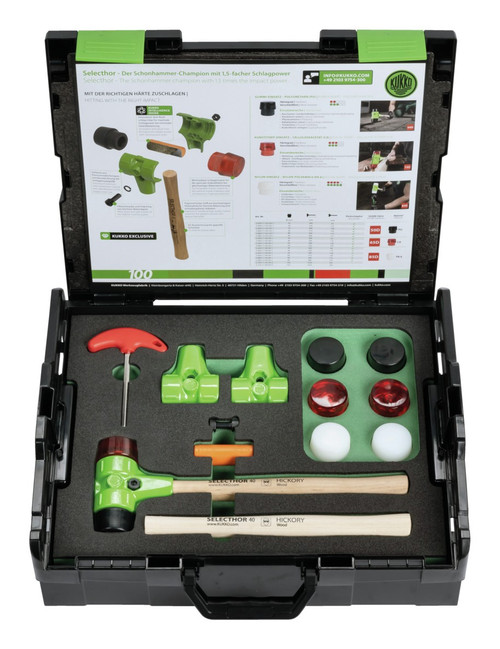
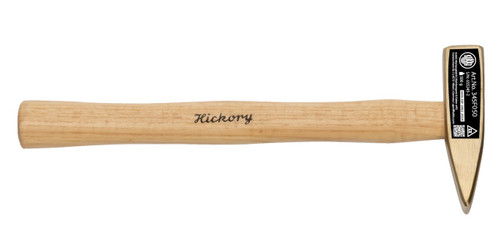
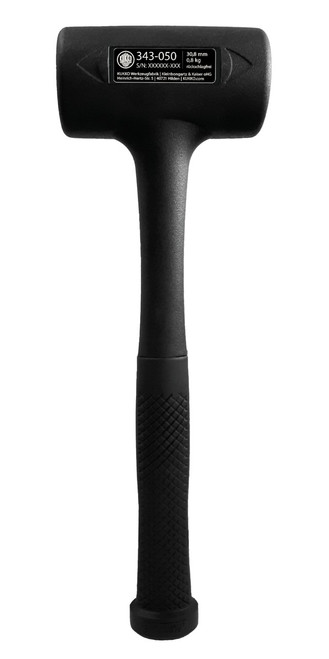
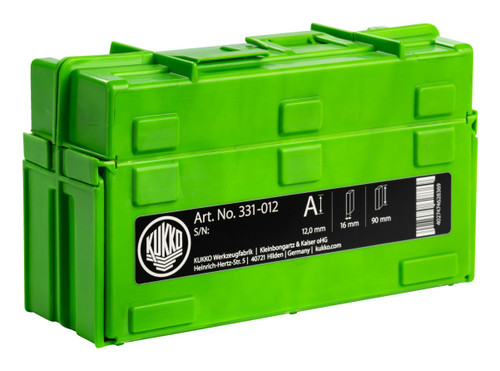
Three kinds of striking tools in this section
- Hammers: Selecthor soft face hammers in five head diameters, swap-in faces in three hardnesses, a recoil-free nitrile rubber hammer and a non-sparking metalworker's hammer.
- Letter and number stamps: 9-piece number sets and 27-piece letter sets in standard and extra-heavy grades, from 1 mm character height up to 10 mm.
- Punches and chisels: hollow punches, ring punch sets and screw punches for soft sheet stock like rubber, cork, felt, leather and plastic.
Choosing a soft face hammer
The Selecthor system is built around one handle and head that accept different faces. Pick the face by how much the part can take:
- Selecthor GU runs rubber faces rated Shore 50D. It damps the blow, so it suits pavers, curbs, fence posts and finished parts you can't dent.
- Selecthor KU uses Shore 75D plastic faces, a middle ground for general assembly, sheet metal and carpentry. KU is offered only in 30, 40, 50 and 60 mm heads.
- Selecthor NY carries white nylon faces at Shore 85D, the hardest of the three. KUKKO lists machine building, bending and folding, body work and knocking loose stuck wheels.
GU and NY come in 30, 40, 50, 60 and 80 mm head diameters (about 1-3/16 to 3-1/8 in), and the 80 mm also comes with a long handle. For heavy straightening, the larger Selecthor runs 100 and 125 mm heads. Each Selecthor has an anti-rebound inlay that KUKKO says gives 50 percent more impact power than a conventional soft face hammer while sparing your wrist and elbow.
Soft faces are the wear parts on these striking tools, and that's the point of the system. Rubber, plastic and nylon impact inserts are sold by diameter, and the head halves are sold separately if the housing gets cracked. You can also mix faces, say rubber on one end and nylon on the other.
Hammers for special conditions
The recoil-free nitrile rubber hammer has steel balls inside the head that shift on impact, so the hammer lands dead instead of bouncing back. It comes in 50 and 60 mm and is rated from -20 to 90 °C (-4 to 194 °F).
The non-sparking metalworker's hammer, series 345F, is made from copper-beryllium or aluminum-bronze alloys for ATEX explosive zones, such as fuel, gas and solvent areas. It's offered in 500 g and 1000 g (about 1.1 and 2.2 lb).
Letter stamps and number stamps for metal
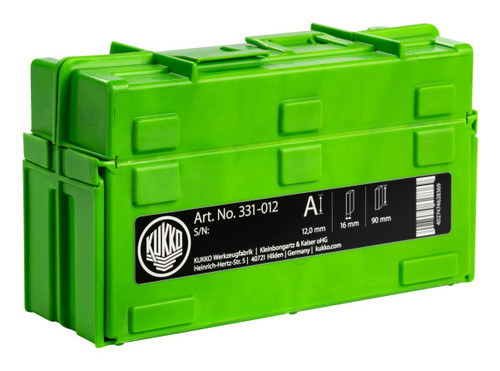
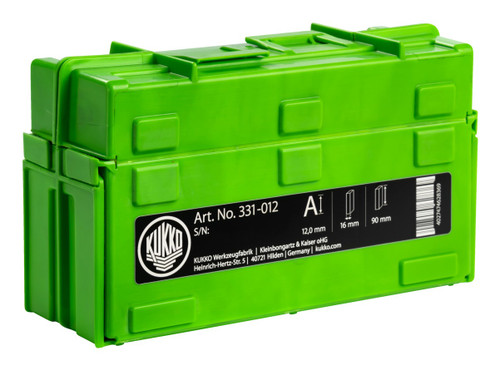
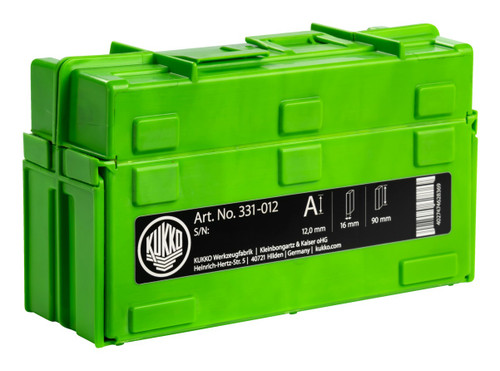
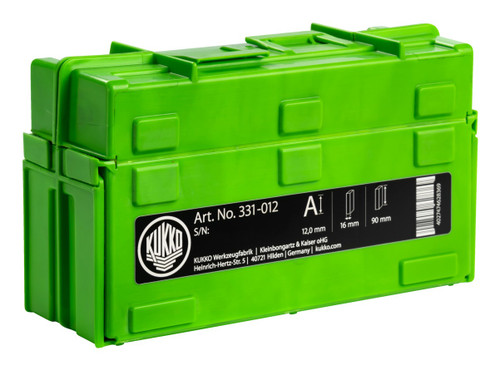
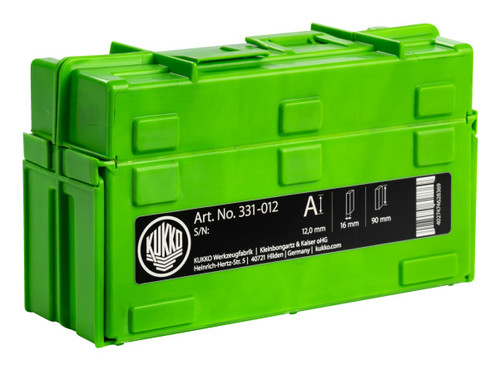
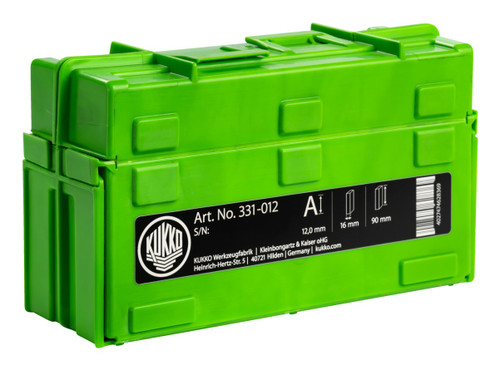
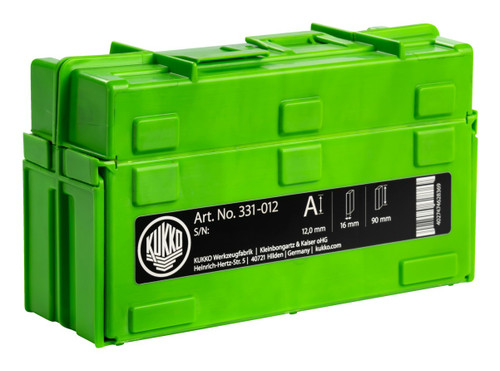
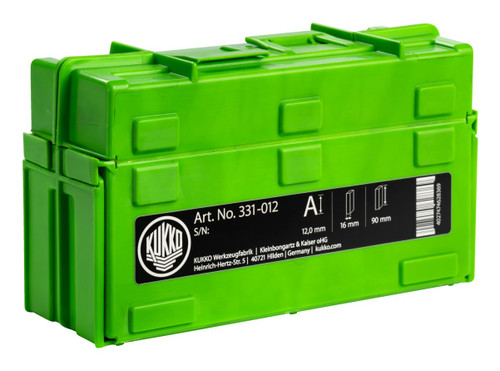
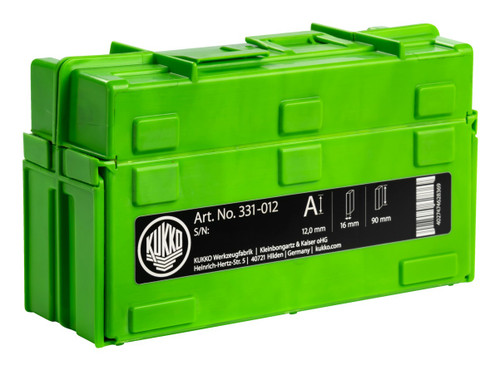
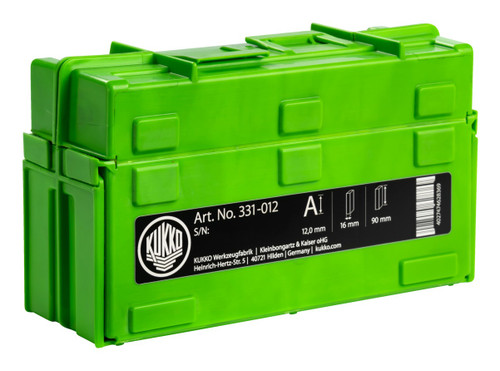
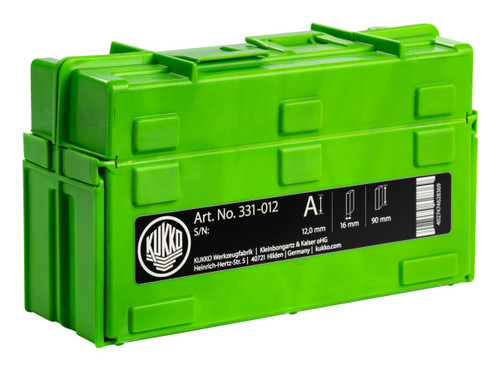
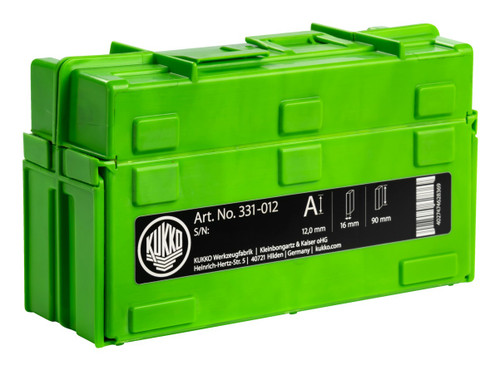
Metal stamps are graded by how hard a workpiece they can mark. KUKKO's standard series 328 number sets and 329 letter sets mark steel up to 900 N/mm² (27 HRC). The extra-heavy series 330 numbers and 331 letters have a larger shank and are rated for workpieces up to 1300 N/mm² (42 HRC). Both grades are hardened to 58 to 61 HRC at the character and use the DIN 1451 typeface, so marks look uniform.
Number sets are 9 pieces, 0 to 9, with the 6 turned over to make a 9. Letter sets are 27 pieces. The extra-heavy range comes in four variants:
- Right-engraved characters read correctly on the stamp face, for marking molds or dies whose print comes out mirrored.
- Impact-hardened heads take repeated hammer blows with less mushrooming.
- Dotted characters, in 3 to 10 mm heights, use a dot pattern that needs less force on hard or thin parts.
- Lowercase letter sets for when capitals won't do.
Standard sets of these striking tools run from 1 to 6 mm character height (about 3/64 to 1/4 in). For serial numbers and part IDs on finished parts, 3 mm (about 1/8 in) is a common choice.
Hollow punches and ring punches
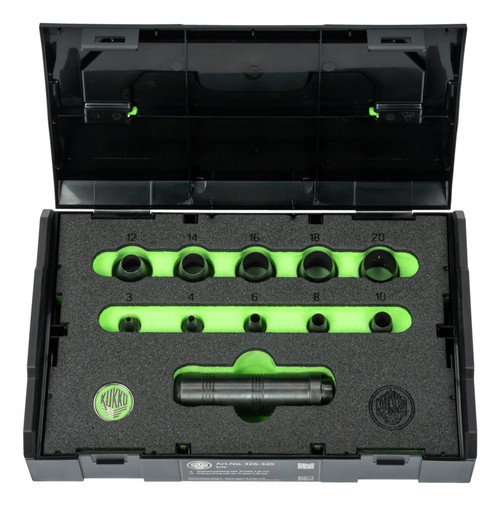
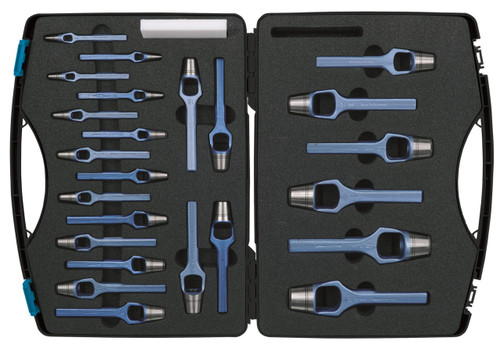
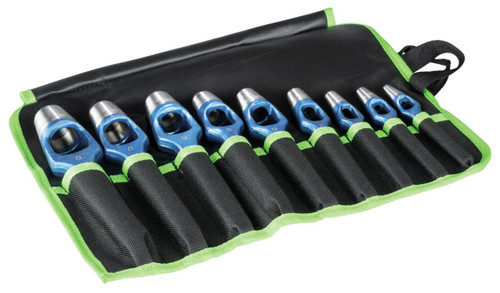
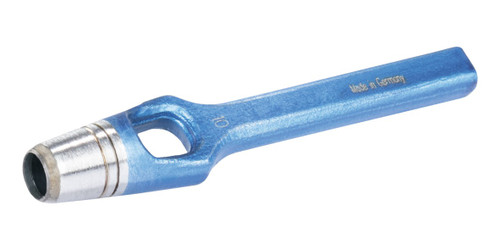
Punches are the striking tools for soft materials. A hollow punch is a short, sharp-edged tube you drive with a hammer to cut round holes in gaskets, leather, felt, cork and plastic. Sets range from the 9-piece 326-KS (3 to 19 mm) to the 15-piece set (2 to 30 mm), plus a 24-piece set with a plastic cutting plate and case.
The ring punch sets hold two punches of different diameters in one holder, so a sealing ring is cut in one blow. Sets run from 11 pieces (3 to 20 mm) up to 38 pieces (2 to 60 mm, about 2-3/8 in). For clean holes without a hammer, the series 121 screw punch pairs a punch, die and pressure screw in sizes from 18.2 to 26.5 mm.
Safe use of striking tools
- Wear safety glasses. Stamp heads and punches can chip when struck hard.
- Match the hammer to the tool: drive stamps and punches with a steel or non-sparking hammer, not a nylon face.
- Replace a cracked or deeply cut soft face before it splits under a blow.
- Back hollow punches with a plastic or wood block, never steel, or the edge will dull at once.
- Hold stamps square and hit once, firmly. A second blow usually blurs or doubles the mark.
You'll find more KUKKO striking tools and pullers on the KUKKO brand page. Parts that won't tap free often need a puller from our pullers and extractors range, and the rest of the bench tools are under hand tools, including pliers as well as hex keys and screwdrivers.
Frequently asked questions
What counts as striking tools?
Striking tools are anything you hit, or hit with, to do the work. Here that means KUKKO hammers, letter and number stamps, and hollow and ring punches. The hammers deliver the blow; the stamps and punches take it and turn it into a mark or a clean hole. Chisels and drifts are part of the same family.
Which soft face hammer insert should I choose?
Go by how delicate the part is. The rubber insert, Shore 50D, is the softest and won't mark finished or painted surfaces. The plastic insert, Shore 75D, is a general-purpose middle ground. White nylon, Shore 85D, is the hardest and moves stubborn steel parts. Selecthor hammers let you fit a different face on each end.
Can I replace the faces on a Selecthor hammer?
Yes. Rubber, plastic and nylon impact inserts are sold by head diameter, from 30 mm up to 125 mm for nylon. If the housing itself is damaged, KUKKO also sells replacement head halves, series 30003004. Order inserts by the head diameter of your hammer.
Do I need standard or extra-heavy metal stamps?
Check how hard your workpiece is. KUKKO standard stamps, series 328 and 329, are rated for steel up to 900 N/mm², about 27 HRC. The extra-heavy series 330 and 331 have a larger shank and handle steel up to 1300 N/mm², about 42 HRC. For tool steel, heat-treated parts or frequent use, choose extra-heavy.
What is a right-engraved stamp used for?
A normal stamp has a mirror-image character so it reads correctly on the part. A right-engraved stamp has the character the right way round on its face, so the mark comes out mirrored. It's used to mark molds, dies and patterns, where the mirrored mark reads correctly on the finished casting or pressing.
Where would I use a non-sparking hammer?
Use one where a spark could ignite fuel vapor, gas or dust, such as refineries, fuel tanks, paint booths and grain handling. KUKKO's series 345F hammer is made from copper-beryllium or aluminum-bronze for ATEX zones. These alloys are softer than steel, so inspect the face and dress or replace it when it mushrooms.